Farooq Abdullah's Jantar Mantar protest: Statehood demand or strategic timing?
Synopsis
Farooq Abdullah's July 20 Jantar Mantar protest for J&K statehood arrives days after he co-signed a letter urging India-Pakistan reconciliation — and with Hurriyat chairman Mirwaiz Umar Farooq on the invite list. In a Valley showing rare signs of stability, the timing, the guest list, and the collective silence on PoK's crackdown are raising questions that go well beyond a routine statehood demand.
Key Takeaways
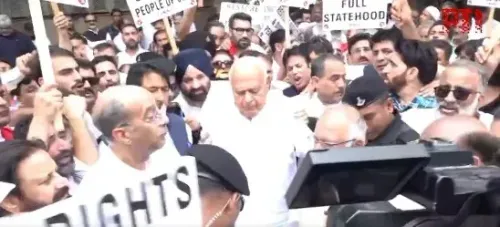
Farooq Abdullah has called a protest at Jantar Mantar , New Delhi , on 20 July — the opening day of Parliament's Monsoon Session — demanding restoration of statehood to Jammu and Kashmir .
He has invited 52 political leaders , including the full INDIA bloc Opposition spectrum and BJP leaders from J&K.
The most scrutinised invitee is Hurriyat Conference chairman Mirwaiz Umar Farooq , long associated with separatist and pro-Pakistan engagement politics.
The protest follows a letter co-signed by Abdullah urging New Delhi and Islamabad to end 'prolonged hostility'.
Mainstream Kashmiri leaders, including Abdullah, have been notably restrained in responding to reports of a Pakistani crackdown in Pakistan-occupied Kashmir (PoK) , where dozens are reportedly killed and residents face food, fuel and medicine shortages.
The Valley has seen significant stability since the abrogation of Article 370 on 5 August 2019 , with tourist arrivals recovering after the Pahalgam attack and Operation Sindoor .
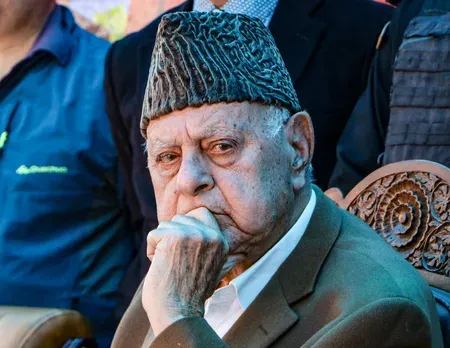
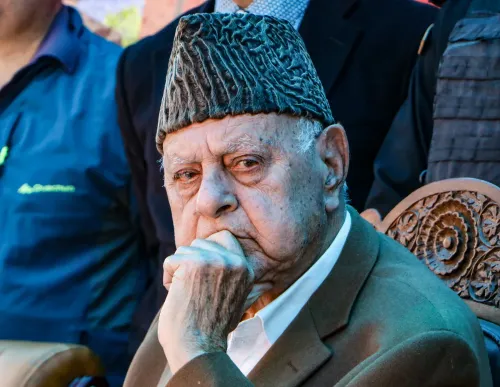
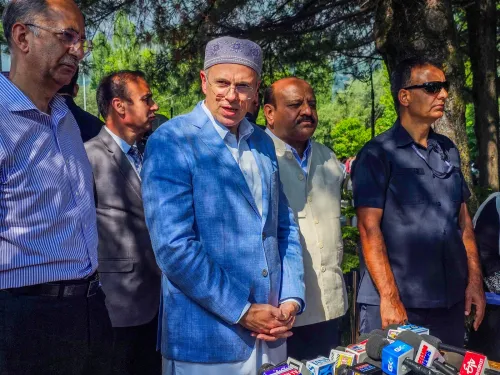
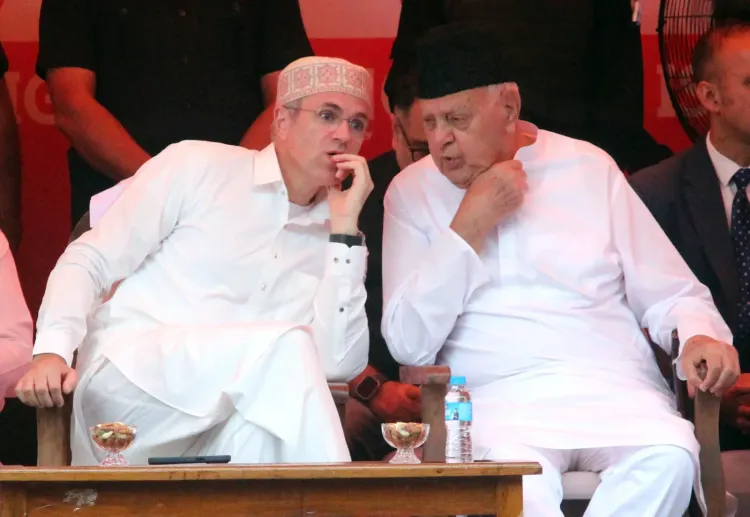
Farooq Abdullah, former Chief Minister of Jammu and Kashmir and president of the National Conference, has called a protest at Jantar Mantar in New Delhi on 20 July — the opening day of Parliament's Monsoon Session — demanding the restoration of statehood to the Union Territory. The move has drawn attention not merely for its stated purpose, but for its timing, its guest list, and the broader political context in which it has been announced.
The Invitation List and Its Most Striking Name
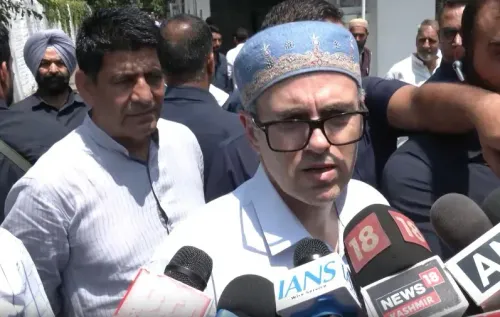
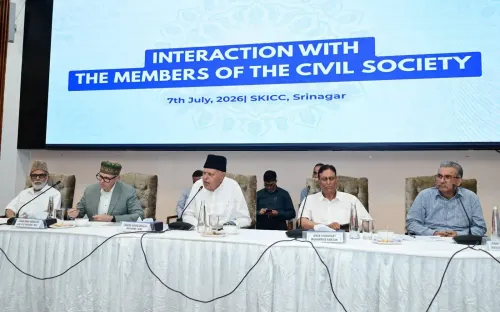
Abdullah has written to 52 prominent political leaders, inviting virtually the entire Opposition spectrum and his INDIA bloc allies. The list includes Sonia Gandhi, Rahul Gandhi, Mamata Banerjee, Akhilesh Yadav, C. Joseph Vijay, Sharad Pawar, Uddhav Thackeray, Naveen Patnaik, Asaduddin Owaisi, Arvind Kejriwal, Communist Party of India (Marxist) General Secretary M.A. Baby, and several others. Bharatiya Janata Party (BJP) leaders from Jammu and Kashmir have also been included.
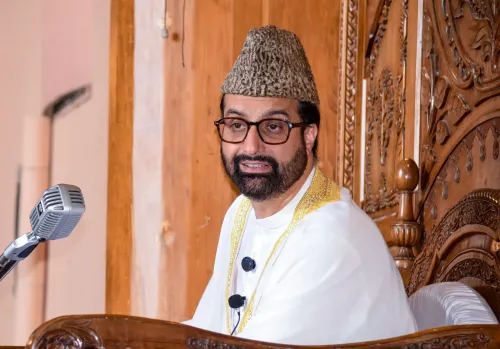
But the name that has attracted the most scrutiny is that of Hurriyat Conference chairman Mirwaiz Umar Farooq — an organisation long associated with separatist politics and, historically, with advocacy for Pakistani engagement and international intervention on the Kashmir issue.
What Preceded the Protest Call
The announcement did not arrive in isolation. Barely days before the protest invitation was issued, a letter surfaced in which Abdullah was among the signatories urging New Delhi and Islamabad to end their 'prolonged hostility', arguing that it was denying millions of young people opportunities, prosperity and a secure future. The sequence has invited questions about the intent and coordination behind the moves.
The protest call also coincides with a period of significant turbulence in Pakistan-occupied Kashmir (PoK), where public unrest against the Pakistani establishment has intensified. Reports indicate that protesters have faced a sweeping crackdown by Pakistani security forces, with dozens reportedly killed. Residents have complained of shortages of food, fuel and medicines following what local leaders describe as an economic blockade. Sardar Aman Khan, leader of the Joint Awami Action Committee (JAAC), has reportedly appealed to New Delhi to send humanitarian assistance and open the Line of Control for relief.
The Silence on PoK
What critics have found equally notable is what has not been said. Mirwaiz Umar Farooq's public response to the PoK crisis has been measured — calling for 'engagement and peaceful redressal' — but he has neither demanded protests against Pakistan nor sought international attention for the suffering of people there. The contrast with the Hurriyat's historically vocal posture on events within Jammu and Kashmir has not gone unnoticed.
Mainstream Kashmiri leaders — including Farooq Abdullah, Omar Abdullah, and Mehbooba Mufti — have also been far more restrained in reacting to reports of repression in PoK than they typically are when commenting on security operations within the Valley. At a time when several PoK leaders have themselves sought India's assistance, that collective restraint has, according to analysts, inevitably attracted attention.
The Backdrop: A Valley Showing Signs of Stability
The protest comes at a moment when Jammu and Kashmir has largely remained peaceful since the abrogation of Article 370 on 5 August 2019. Security challenges persist, but the Valley has witnessed a degree of stability that had eluded it for decades. Tourist arrivals, which had dipped sharply following the 22 April 2025 Pahalgam terror attack and the subsequent Operation Sindoor, have steadily recovered. Businesses have revived, markets are active once more, and normal life has largely returned.
For Pakistan's establishment, unrest in PoK has become an embarrassment. Repeated attempts to push militants across the border, revive militancy and create fresh disturbances have, according to Indian security officials, been foiled. Several infiltration bids have been neutralised, as have plans to establish terror modules in different parts of the country.
History Casts a Long Shadow
The years between 1988 and 1990 witnessed the rise of Pakistan-sponsored terrorism in Kashmir, targeted killings of those perceived to be pro-India, and the forced exodus of Kashmiri Hindus. Farooq Abdullah headed the government during much of that turbulent period. His administration is widely held to have failed in its primary duty of enforcing the rule of law as militancy tightened its grip on the Valley.
It was during those years that militants were reportedly released from custody, a large section of the administration and police became compromised, and hundreds of young men crossed into Pakistan-occupied Kashmir for arms training. Farooq Abdullah's government never regained control of the situation. A judicial commission or court of inquiry into the exodus of Kashmiri Hindus, the targeted killings of pro-India voices, and the collapse of governance was never constituted. Questions relating to the roles of the Abdullah leadership and the then Union Home Minister, the late Mufti Mohammad Sayeed, remain, critics argue, inadequately addressed.
Whether the 20 July protest succeeds in elevating the statehood demand into the dominant political narrative — or provokes reactions that extend beyond Delhi's protest grounds — remains to be seen. The endorsement by Mirwaiz Umar Farooq signals that the separatist camp has chosen to back the exercise. The more consequential question, analysts suggest, is how the people of Jammu and Kashmir themselves respond to the mobilisation.
Point of View
Is the political architecture around it. Scheduling the demonstration on Parliament's opening day, co-signing a India-Pakistan reconciliation letter days earlier, and extending an invitation to the Hurriyat Conference is not a random cluster of decisions; it is a sequenced political signal. The collective silence of Kashmir's mainstream leadership on the documented repression in PoK — at the very moment PoK civil society leaders are appealing to New Delhi for help — reveals a selective internationalism that undermines the moral authority of the statehood argument. History adds weight to the caution: the 1988-1990 governance collapse under Abdullah's watch, which enabled the Kashmiri Hindu exodus, has never been subjected to formal accountability. A Valley that has finally found a degree of stability deserves political leadership that is as vocal about suffering across the Line of Control as it is about constitutional arrangements on this side of it.
NationPress
11 Oct 2026
Frequently Asked Questions
Why is Farooq Abdullah holding a protest at Jantar Mantar on July 20?
Farooq Abdullah is organising the protest to demand the restoration of statehood to Jammu and Kashmir, which became a Union Territory after the abrogation of Article 370 on 5 August 2019. He has chosen July 20 — the opening day of Parliament's Monsoon Session — to maximise political and media attention.
Who has been invited to the Jantar Mantar protest?
Abdullah has written to 52 political leaders, including INDIA bloc allies such as Sonia Gandhi, Rahul Gandhi, Mamata Banerjee, Akhilesh Yadav, Sharad Pawar, Uddhav Thackeray, Arvind Kejriwal, and Asaduddin Owaisi. BJP leaders from J&K and Hurriyat Conference chairman Mirwaiz Umar Farooq are also on the list.
Why is Mirwaiz Umar Farooq's inclusion on the invite list significant?
The Hurriyat Conference has long been associated with separatist politics and advocacy for Pakistani engagement on the Kashmir issue. Mirwaiz Umar Farooq's inclusion signals that the separatist camp has chosen to back the statehood protest, which critics argue complicates the democratic framing of the exercise.
What is happening in Pakistan-occupied Kashmir (PoK) at the same time?
Public unrest in PoK has intensified, with Pakistani security forces reportedly conducting a sweeping crackdown in which dozens have been killed. Residents face shortages of food, fuel and medicines. JAAC leader Sardar Aman Khan has reportedly appealed to New Delhi to send humanitarian assistance and open the Line of Control for relief.
What is the historical context behind scrutiny of Farooq Abdullah's political moves?
Farooq Abdullah headed the Jammu and Kashmir government during the turbulent 1988-1990 period, when Pakistan-sponsored militancy rose sharply, Kashmiri Hindus were forced to flee the Valley, and governance effectively collapsed. Critics argue that his administration's failure to enforce the rule of law during that period has never been subjected to formal judicial inquiry, leaving key accountability questions unanswered.