Five tortured Baloch bodies found in Gwadar; rights groups allege extrajudicial killings
Synopsis
Five tortured Baloch men — including a school principal and two fishermen — were recovered in Gwadar's Jiwani area on 4 July. Pakistan's military says they were militants killed in a counter-operation; rights groups say at least four had been forcibly disappeared months earlier, with families having protested their missing status before any operation occurred. The divergence between official and rights-body accounts points to a long-documented pattern in Balochistan.
Key Takeaways
Five tortured bodies were recovered from the Panwan area of Jiwani , Gwadar district , on 4 July .
Four were identified: Abdul Haq (school principal), Peeri Assa (28, fisherman), Shah Bakhsh Umar (33, fisherman), and Haider Ali Mohammad .
Pakistani military attributed the deaths to a security operation against the Baloch Liberation Army's Majeed Brigade .
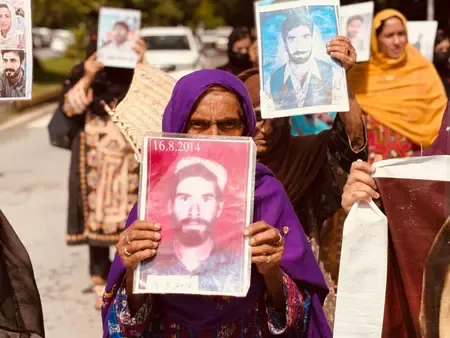
The BYC , VBMP , and Paank allege at least four were victims of enforced disappearance, with families having protested their absence prior to the operation.
Peeri Assa was reportedly taken from his home during a late-night raid on 6 January ; Shah Bakhsh Umar had allegedly been missing for nearly six months .
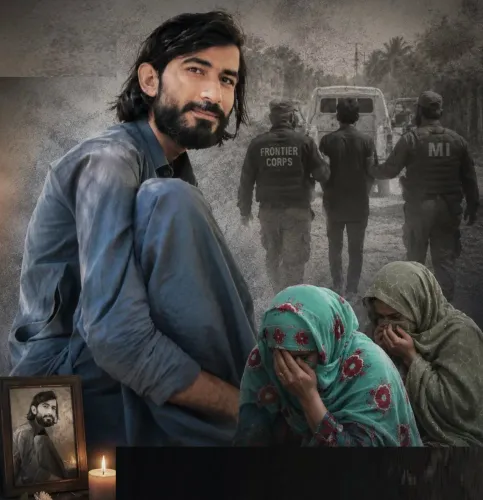
Rights groups describe the killings as part of a systematic pattern of enforced disappearance followed by extrajudicial killing in Balochistan.
Five tortured bodies of Baloch men were recovered from the Panwan area of Jiwani in Gwadar district, Balochistan, on 4 July, with families and human rights organisations alleging that at least four of the deceased had been forcibly disappeared months before their deaths. The recoveries have drawn sharp condemnation from multiple rights bodies, who allege a systematic pattern of enforced disappearance followed by extrajudicial killing.
The Recovered Bodies
Four of the five deceased were identified as Abdul Haq, Peeri Assa, Shah Bakhsh Umar, and Haider Ali Mohammad. The identity of the fifth person had not been confirmed at the time of reporting. According to rights groups, Abdul Haq was the principal of Memar-e-Nau Academy in Gwadar, while Peeri Assa, 28, and Shah Bakhsh Umar, 33, were both fishermen from the Jiwani region.
Official Version vs. Rights Groups' Account
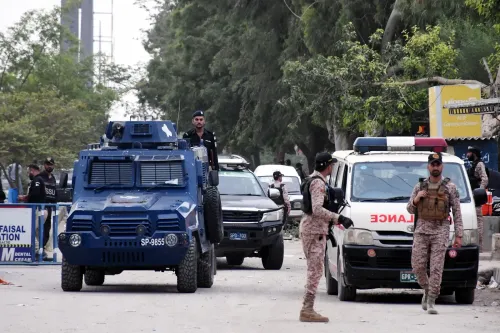
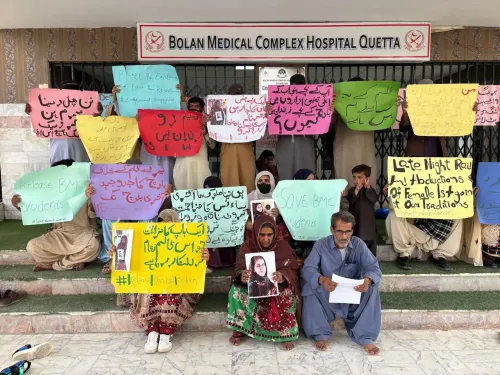
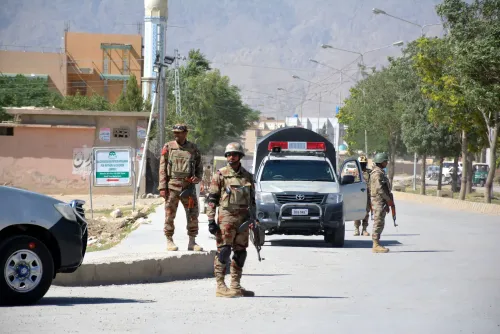
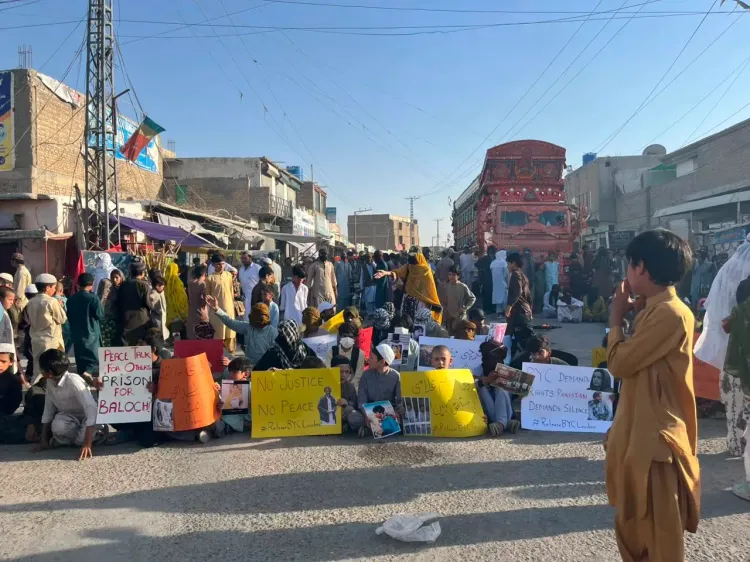
Pakistani military officials stated that the five were armed men killed during a security operation launched in response to a vehicle-borne attack by the Baloch Liberation Army's (BLA) Majeed Brigade on a Pakistan Coast Guards camp in the Panwan area of Jiwani on the preceding Friday. However, the Baloch Yakjehti Committee (BYC), the Voice for Baloch Missing Persons (VBMP), activists, journalists, and relatives of the deceased rejected this account. They cited documented records of the men's enforced disappearances and said their families had staged protests over their missing status well before the operation took place, according to reports from The Balochistan Post.
Rights Bodies Detail Individual Cases
Paank, the human rights department of the Baloch National Movement, stated on Monday that Abdul Haq was extrajudicially killed by Pakistani forces after months of enforced disappearance. The Baloch Voice for Justice (BVJ) described his killing as part of a 'systematic pattern in which enforced disappearance is followed by the recovery of mutilated bodies.'
The BYC stated that Peeri Assa was forcibly taken from his home in Jiwani during a late-night raid on 6 January, and that his whereabouts had remained unknown until his body was recovered. 'The killing of Peeri Assa adds another name to the growing list of victims,' the BYC said, adding that 'for decades Baloch people have endured state atrocities, repeatedly receiving the broken and tortured bodies of their loved ones.'
Regarding Shah Bakhsh Umar, the BYC alleged he had been disappeared for nearly six months before his body was recovered bearing extensive signs of abuse. The committee further alleged that 'whenever security failures occur, the bodies of previously disappeared Baloch are frequently produced and labeled as terrorists in an attempt to justify their deaths.'
Broader Pattern and Human Rights Concerns
The BVJ characterised the killings as reflective of 'a defining feature of the ongoing campaign of Baloch genocide, where families are subjected to prolonged uncertainty, psychological torture, and irreversible loss.' Rights organisations have for years documented allegations of enforced disappearances in Balochistan, a province where the Pakistani state has been conducting counterinsurgency operations against armed separatist groups. This is not the first time that families of missing persons have publicly disputed the official framing of killed individuals as militants following security incidents in the region.
Pakistani authorities have not responded publicly to the specific allegations raised by rights groups regarding the prior disappearances of the four identified men. The situation in Gwadar remains closely watched by human rights observers as tensions in the region persist.
Point of View
Documented disappearance dates, and families who protested before the operation even occurred. The pattern alleged by the BYC — where previously disappeared persons are posthumously labelled militants after security incidents — has been raised repeatedly by international human rights monitors, yet accountability mechanisms remain absent. Pakistan's counterinsurgency strategy in Balochistan has long operated in a zone of near-total opacity, and that opacity is itself a human rights concern that mainstream coverage consistently underweights.
NationPress
5 Oct 2026
Frequently Asked Questions
Where and when were the five Baloch bodies recovered?
The five tortured bodies were recovered from the Panwan area of Jiwani in Gwadar district, Balochistan, on 4 July. Rights groups publicly condemned the recoveries on Monday, 6 July.
What is the Pakistani military's explanation for the deaths?
Pakistani military officials stated that the five men were armed militants killed during a security operation conducted in response to a vehicle-borne attack by the Baloch Liberation Army's Majeed Brigade on a Pakistan Coast Guards camp in the Panwan area of Jiwani.
Why do rights groups reject the official account?
Rights organisations including the BYC and VBMP say at least four of the deceased had been documented as forcibly disappeared months before the operation, with their families having staged protests over their missing status prior to the military action. They argue the men were victims of enforced disappearance, not combatants killed in a legitimate operation.
Who were the identified victims?
Four of the five were identified as Abdul Haq, principal of Memar-e-Nau Academy in Gwadar; Peeri Assa, a 28-year-old fisherman reportedly disappeared on 6 January; Shah Bakhsh Umar, a 33-year-old fisherman missing for nearly six months; and Haider Ali Mohammad. The fifth victim's identity had not been confirmed.
What is the broader human rights context in Balochistan?
Rights organisations have for years documented allegations of enforced disappearances and extrajudicial killings in Balochistan, where Pakistan conducts counterinsurgency operations against armed separatist groups. The Baloch Voice for Justice described the latest killings as part of a systematic pattern in which disappearances are followed by recovery of tortured bodies, a practice it characterised as a feature of what it called an ongoing campaign against the Baloch people.