Fast Track Special Courts disposed 66,500 rape, POCSO cases in 2025: Meghwal
Synopsis
India's 775 Fast Track Special Courts disposed of 66,500 rape and POCSO cases in 2025 — but pending cases jumped to 2.45 lakh, up from 2.04 lakh the previous year. With disposals falling year-on-year and the scheme on a temporary extension, the data raises pointed questions about whether court creation is keeping pace with the volume of crimes against women and children.
Key Takeaways
775 Fast Track Special Courts , including 398 exclusive e-POCSO Courts , are operational across 29 States/UTs .
The courts disposed of 66,500 cases in 2025 , down from 85,595 in 2024 and 76,319 in 2023 .
Pending cases rose to 2.45 lakh at end-2025, compared with 2.04 lakh at end-2024.
The FTSC scheme, launched in October 2019 , has been temporarily extended to 30 September 2026 .
The Centre has released ₹1,259.51 crore to States/UTs since the scheme's inception.
A separate judicial infrastructure scheme has provided ₹4,519.47 crore under the XV Finance Commission cycle.
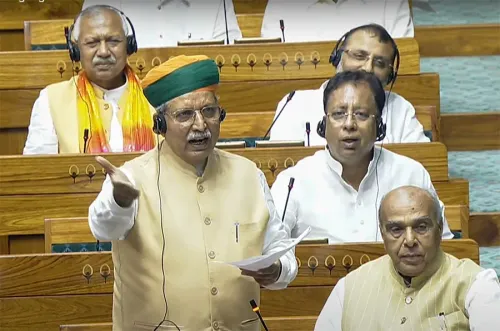
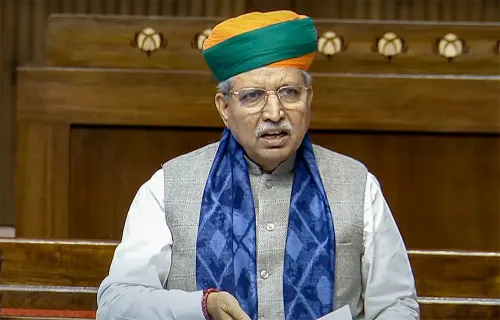
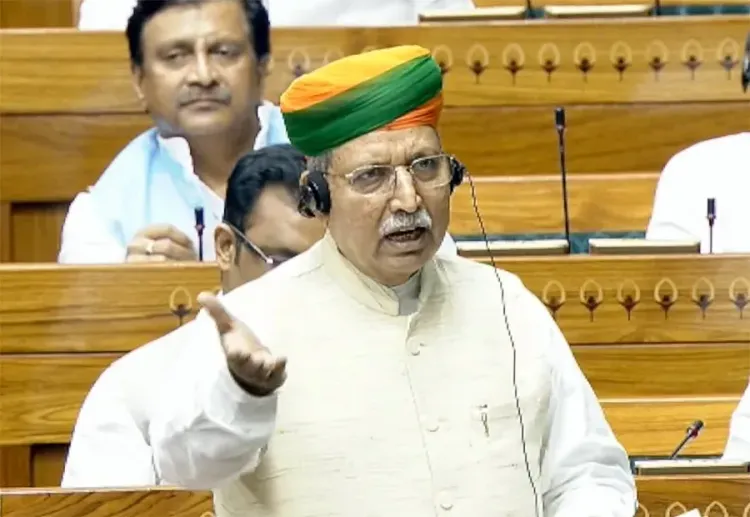
Union Minister of State for Law and Justice Arjun Ram Meghwal informed the Lok Sabha on 25 July 2025 that 775 Fast Track Special Courts (FTSCs) — including 398 exclusive POCSO (e-POCSO) Courts — operational across 29 States and Union Territories disposed of 66,500 cases related to rape and child sexual offences in 2025. Despite the progress, 2.45 lakh cases remained pending at the close of the calendar year, underscoring the scale of the challenge before the judicial system.
Year-on-Year Disposal Trend
The disposal figures reveal a declining trend over three years. The FTSCs disposed of 85,595 cases in 2024 and 76,319 cases in 2023, compared with 66,500 in 2025. Correspondingly, the backlog has grown: pending cases stood at 2.02 lakh at end-2023, rose to 2.04 lakh at end-2024, and climbed further to 2.45 lakh at end-2025. The widening gap between disposals and pendency points to a steady inflow of fresh cases outpacing the courts' current throughput.
About the FTSC Scheme
The Centrally Sponsored Scheme to establish FTSCs was launched in October 2019 with the mandate to expedite trials in rape and Protection of Children from Sexual Offences (POCSO) Act, 2012 cases. The scheme was originally designed for 790 FTSCs and has been extended twice — most recently to 31 March 2026, with a further temporary extension granted up to 30 September 2026, Meghwal said.
Funding and Financial Outlay
Under the scheme, the Centre reimburses States and UTs for the salaries of one Judicial Officer and seven support staff per FTSC, along with a Flexi Grant for day-to-day operational expenses. Funds are released after receipt of expenditure statements from the respective States and UTs. Since inception, the government has disbursed a cumulative ₹1,259.51 crore to States and UTs to sustain the courts' functioning.
Judicial Infrastructure Push
Meghwal also highlighted a separate Centrally Sponsored Scheme for Development of Infrastructure Facilities for District and Subordinate Courts, operational since 1993–94. The scheme provides financial assistance across five components: Court Halls, Residential Units, Lawyers' Halls, Toilet Complexes, and Digital Computer Rooms. Under the XV Finance Commission cycle, ₹4,519.47 crore has been extended to States and UTs for judicial infrastructure development.
What This Means for Justice Delivery
Notably, the FTSC scheme represents one of the Centre's most targeted interventions in criminal justice reform, specifically addressing crimes against women and children — categories that have historically suffered prolonged trial timelines. Critics and legal observers, however, argue that rising pendency despite six years of operation signals that court creation alone is insufficient without commensurate increases in judicial manpower and investigative quality at the police level. The scheme's extension to September 2026 keeps the framework alive, but a longer-term legislative mandate remains under discussion.
Point of View
And it is not keeping up. Disposals have fallen for two consecutive years while pendency has climbed — a structural mismatch that court extensions alone cannot fix. The Centre has spent over ₹1,259 crore since 2019, yet the backlog has grown by more than 20% in a single year. The harder question — whether the bottleneck lies in police chargesheeting, forensic delays, or judicial vacancies — is conspicuously absent from the parliamentary reply. Extending the scheme to September 2026 buys time, but without a root-cause audit, the next data cycle risks showing the same widening gap.
NationPress
23 Oct 2026
Frequently Asked Questions
How many cases did Fast Track Special Courts dispose of in 2025?
Fast Track Special Courts disposed of 66,500 rape and POCSO cases in 2025, according to a statement made in the Lok Sabha. This compares with 85,595 disposals in 2024 and 76,319 in 2023.
How many POCSO and rape cases are still pending in Fast Track Courts?
As of the end of 2025, 2.45 lakh cases remained pending before Fast Track Special Courts. The backlog has grown steadily from 2.02 lakh at end-2023 and 2.04 lakh at end-2024.
When was the Fast Track Special Courts scheme launched and how long will it run?
The Centrally Sponsored Scheme for Fast Track Special Courts was launched in October 2019. It has been extended twice and is currently on a temporary extension valid until 30 September 2026.
How much has the Centre spent on Fast Track Special Courts?
The Centre has released a cumulative ₹1,259.51 crore to States and UTs since the scheme's inception to fund salaries of judicial officers, support staff, and day-to-day operational expenses.
What is the POCSO Act and why are dedicated courts needed?
The Protection of Children from Sexual Offences (POCSO) Act, 2012 is a law that criminalises sexual offences against minors and mandates time-bound trials. Dedicated e-POCSO Courts were created to fast-track these sensitive cases and reduce prolonged trial timelines that have historically affected justice delivery for child victims.