Gayle arrived, Messi never did: Kerala's two-superstar contrast explained
Synopsis
Kerala managed an unlikely double header: Chris Gayle actually showed up — privately funded, helicopter-borne, and stadium-scouting — while Lionel Messi, backed by government approvals and public spending, never did. Now a formal probe into the Messi project has been ordered, turning a football fantasy into an accountability story.
Key Takeaways
Chris Gayle visited Thiruvananthapuram and Puthuppally, Kottayam , attending two Kerala Premier League matches — the trip was privately organised by the Oommen Chandy Foundation at no cost to the state.
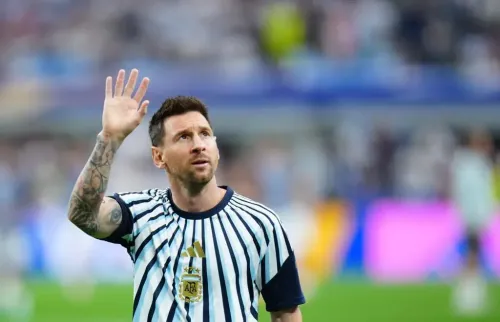
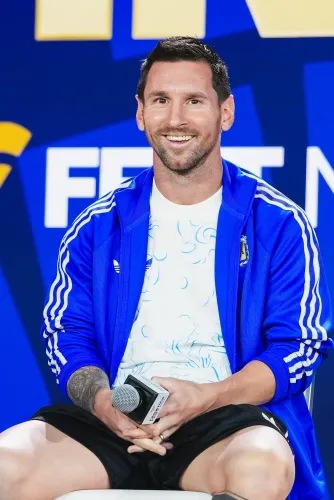
Lionel Messi's proposed visit to Kerala was first announced in 2024 and has been repeatedly deferred; Messi has not visited.
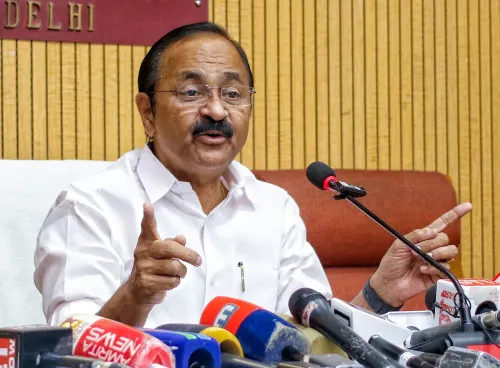
The Messi project reportedly involved public expenditure and is now under a comprehensive investigation ordered by Chief Minister V.D.
The probe covers financial transactions, sponsor selection, government approvals, stadium handover, and foreign trips linked to the proposed event.
The episode has become a flashpoint in Kerala politics, with Congress and Left-aligned voices trading barbs over which failure is more damaging.
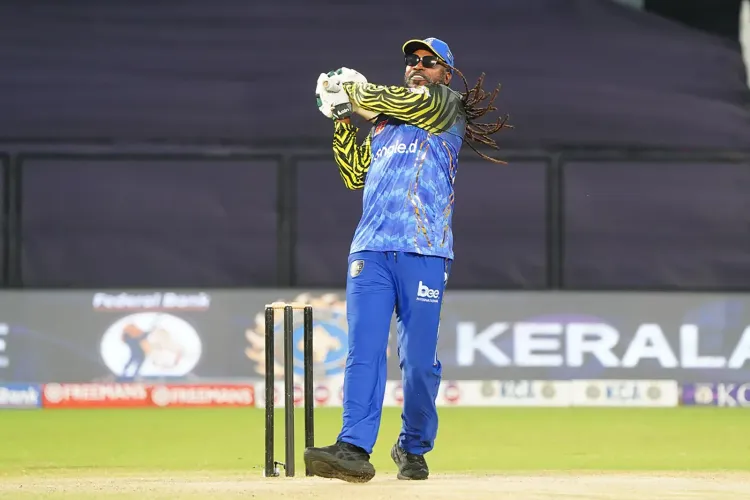
Chris Gayle touched down in Thiruvananthapuram by helicopter, watched Kerala Premier League cricket, paid his respects at a statesman's tomb, and toured potential stadium sites — all without a rupee from the state exchequer. Lionel Messi, meanwhile, has yet to set foot in Kerala despite years of official announcements, government approvals, and public spending. Now, Chief Minister V.D. Satheesan has ordered a comprehensive investigation into the Messi project, making Kerala's contrasting saga of two sporting superstars one of the more unusual political stories of the year.
How Gayle's Visit Unfolded
The West Indies batting legend arrived in the state capital on Saturday and attended two Kerala Premier League matches before travelling to Puthuppally, Kottayam the following day. The visit was organised by Congress MLA Chandy Oommen, son of the late former Chief Minister Oommen Chandy, under the banner of the Oommen Chandy Foundation.
Gayle first visited the tomb of Oommen Chandy, then attended a meeting at a local school, before being driven around proposed sites for an international cricket stadium. The stadium, envisaged under a public-private partnership (PPP) model, is described as the brainchild of the Congress lawmaker. Crucially, the entire visit drew no funding from the already strained state government.
The Messi Project: Promises, Delays, and a Probe
The plan to bring Lionel Messi and the Argentine national football team to Kerala was first announced in 2024, generating considerable excitement among the state's passionate football following. When 2024 passed without the visit, officials pointed to 2025. Then the target shifted to 2026. Messi, however, has remained firmly elsewhere at every proposed date.
Unlike Gayle's privately funded trip, the Messi project reportedly involved expenditure from the public purse. It has since attracted scrutiny over its financial transactions, the selection of sponsors, government approvals granted, stadium handover arrangements, and foreign trips undertaken in connection with the proposed event.
On Monday, Chief Minister Satheesan recommended a wide-ranging investigation covering all these aspects of the project. The probe marks a significant escalation in official accountability over what critics describe as a prolonged exercise in unfulfilled promises.
The Political Fallout
The contrast between the two visits has predictably ignited debate on social media. Left-leaning commentators have focused on perceived shortcomings in the organisation of Gayle's trip. Congress supporters, in turn, have redirected attention to the Messi episode, arguing that the choreography of a cricketer's private visit is a secondary concern when a government-backed football spectacle never materialised at all.
Notably, the two episodes differ fundamentally in their financial and institutional character: one was a privately organised cultural gesture, the other a state-associated project now under administrative scrutiny.
What the Investigation Covers
According to reports, Chief Minister Satheesan's recommended probe will examine the full lifecycle of the Messi project — from initial agreements and sponsor selection through government approvals, stadium handover terms, and any foreign visits made by officials in connection with the proposed event. The scope suggests authorities are looking beyond a single transaction to assess systemic accountability in how the project was conceived and executed.
What Comes Next
The investigation is expected to shed light on how much public money was committed, to whom, and under what authorisation. For Kerala's football community, the outcome may also clarify whether a rescheduled event remains possible or whether the Messi project is effectively closed. Gayle, for his part, left behind photographs, matches, and a stadium proposal — a tangible, if modest, legacy from a visit no one had to pay the government to arrange.
Point of View
But the serious question is institutional: how does a government-backed project consume public funds and official bandwidth across multiple years without producing the event it promised? Chief Minister Satheesan's probe is a necessary step, but its credibility will depend on whether it names individuals and quantifies losses — or settles for a report that goes nowhere. Kerala's enthusiasm for football is genuine and deep; that enthusiasm deserves better than a recurring cycle of superstar announcements that serve political calendars more than sporting ambitions.
NationPress
16 Oct 2026
Frequently Asked Questions
Why is there a probe into the Messi Kerala visit project?
Chief Minister V.D. Satheesan ordered a comprehensive investigation after the proposed Lionel Messi and Argentina visit — announced as early as 2024 — repeatedly failed to materialise despite reportedly involving public expenditure and multiple government approvals. The probe covers financial transactions, sponsor selection, stadium handover, and foreign trips linked to the project.
What did Chris Gayle do during his Kerala visit?
Gayle arrived in Thiruvananthapuram by helicopter, watched two Kerala Premier League matches, visited the tomb of former Chief Minister Oommen Chandy in Puthuppally, Kottayam, and toured proposed sites for an international cricket stadium. The visit was organised by the Oommen Chandy Foundation and did not draw state government funding.
Who organised Chris Gayle's visit to Kerala?
The visit was coordinated by Congress MLA Chandy Oommen, son of the late former Chief Minister Oommen Chandy, under the Oommen Chandy Foundation. It was privately funded and unconnected to the state government.
When was Messi's Kerala visit first announced and why did it not happen?
The plan to bring Lionel Messi and the Argentine team to Kerala was first announced in 2024. It was subsequently deferred to 2025 and then to 2026, with no visit materialising at any stage. Officials have not publicly explained the specific reasons for each deferral.
What is the PPP cricket stadium proposal linked to Gayle's visit?
Congress MLA Chandy Oommen has proposed an international cricket stadium in Kerala under a public-private partnership model. Gayle's visit included a tour of potential sites for this stadium, which is described as the lawmaker's own initiative and is separate from any state government project.