Could the Gaza Reconstruction Plan Open Doors for Indian Firms?
Synopsis
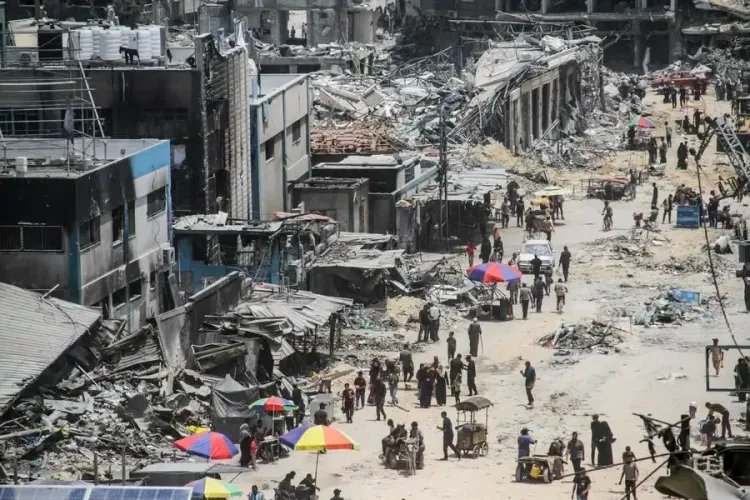
The recent announcement from the U.S. regarding Gaza's transformation into a technocratic administration may spell new opportunities for Indian businesses in civilian reconstruction. However, officials caution that significant rebuilding will only commence once security and governance stabilize in the region.
Key Takeaways
The U.S. is pursuing a technocratic administration for Gaza.
Reconstruction opportunities may emerge for Indian firms in civilian sectors.
Rebuilding will only begin after stabilizing security and governance.
Indian companies have a history of working in challenging environments.
Initial efforts will focus on essential needs like housing and healthcare.
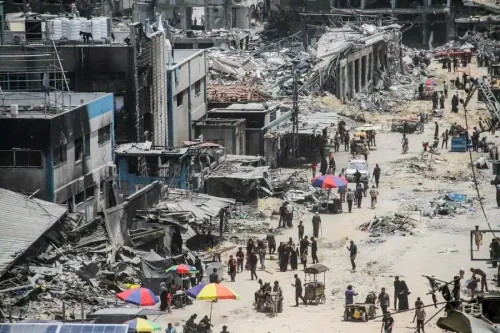
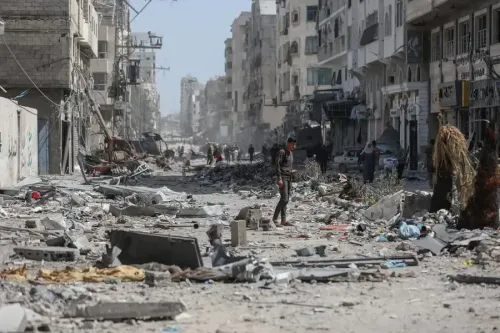
Washington, Jan 15 (NationPress) The United States has decided to establish a technocratic Palestinian administration in Gaza, paving the way for future reconstruction efforts that could present significant opportunities for Indian companies in the civilian sector. Officials have emphasized that rebuilding efforts will commence only after the security and governance conditions have stabilized.
On Wednesday, senior officials from the US administration detailed phase two of President Donald Trump's Gaza plan, which includes the formation of the National Committee for the Administration of Gaza (NCAG). This plan shifts the focus away from ceasefire management, concentrating instead on demilitarization, governance, and reconstruction.
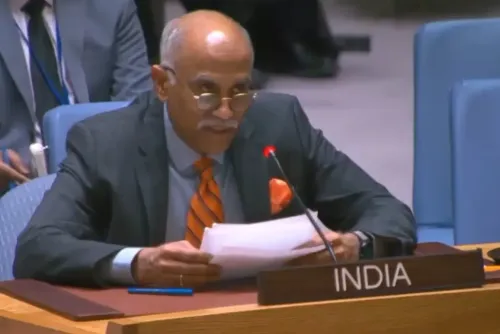
Although India was not specifically mentioned during the briefing, no official role has been assigned to New Delhi or its firms. However, the framework being established mirrors post-conflict models where Indian companies have successfully operated through international and donor-supported initiatives in the past.
Officials highlighted that reconstruction would occur in a systematic manner. Armed infrastructure must be dismantled first, and basic security must be established before large-scale rebuilding can proceed. They indicated that commercial involvement would likely be facilitated later through multilateral channels instead of political agreements.
For India, any potential involvement would be restricted to civilian sectors. Indian firms have a proven history in executing infrastructure projects abroad, covering areas such as housing, roads, power, water, and sanitation, often in challenging environments under the supervision of the UN or other donors.
The initial reconstruction efforts in Gaza are anticipated to prioritize essential needs. Key areas of focus will include housing, electricity, clean water, waste management, and healthcare facilities. These are fields in which Indian companies tend to excel, especially in terms of cost-effectiveness and adherence to deadlines.
Officials made it clear that foreign participation would not include security-related roles. Demilitarization and policing will be managed separately, thus excluding military or enforcement functions and limiting contributions to civilian activities.
India’s broader regional stance may also play a crucial role. New Delhi maintains collaborative relationships throughout West Asia, generally refraining from taking sides in regional disputes while focusing on development and humanitarian efforts. This approach has historically enabled Indian firms to function in sensitive environments.
At present, officials have advised against overinterpreting the potential for future participation. Gaza is still in the early stages of transition, with the technocratic administration needing to establish its authority and credibility first. Sustained peace is critical.
Only when these conditions are satisfied will reconstruction contracts likely become available. Until then, discussions surrounding private-sector participation—including those involving Indian companies—will remain speculative rather than immediate.
Point of View
We recognize the noteworthy developments surrounding Gaza's reconstruction. While the U.S. approach may present opportunities for Indian firms, one must remain cautious about the stability of governance and security in the region before expecting substantial engagement.
NationPress
2 Oct 2026
Frequently Asked Questions
What is the Gaza reconstruction plan?
The Gaza reconstruction plan involves establishing a technocratic Palestinian administration to facilitate rebuilding efforts focused on governance and demilitarization.
How could Indian firms benefit from this plan?
Indian firms may find opportunities in civilian projects, particularly in infrastructure, housing, and essential services, as the reconstruction efforts unfold.
When will the reconstruction efforts begin?
Reconstruction efforts are expected to commence only after security and governance conditions stabilize in Gaza.
What sectors will Indian companies focus on?
Indian companies are likely to engage in sectors such as housing, electricity, water management, and healthcare facilities during the reconstruction.
Will security roles be included for foreign firms?
No, foreign involvement will exclude security roles, focusing solely on civilian work.