How is Army Chief General Upendra Dwivedi Advocating the ‘IKIGAI’ Framework at the Japan-hosted ‘Land Forces Summit’?
Synopsis
Army Chief General Upendra Dwivedi presented the innovative ‘IKIGAI’ Framework at the Japan-hosted Land Forces Summit, aiming to deepen military cooperation in the Indo-Pacific. This initiative seeks to enhance collaboration among regional armies to address emerging security challenges together.
Key Takeaways
IKIGAI Framework enhances Indo-Pacific military collaboration.
Focus on interoperability and information sharing.
Six core pillars guide the framework’s objectives.
Summit strengthens Army-to-Army defense ties.
Promotes regional stability and security.
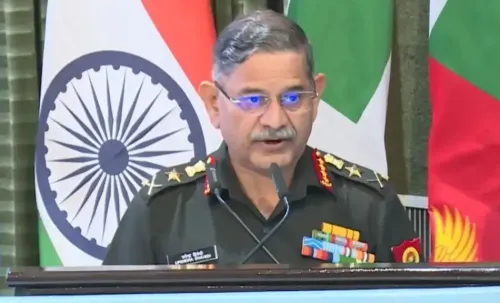
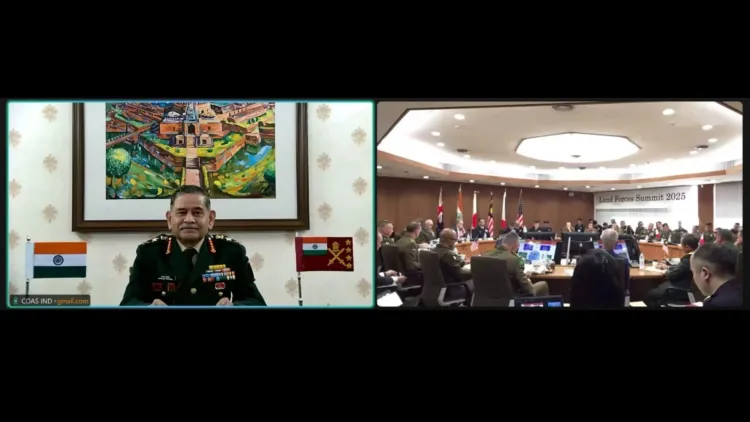
New Delhi, Dec 18 (NationPress) Army Chief General Upendra Dwivedi addressed the 3rd Land Forces Summit, conducted virtually by the Japan Ground Self-Defence Force (JGSDF), presenting India’s vision for enhanced land power cooperation in the Indo-Pacific through the innovative ‘IKIGAI’ Framework.
This prestigious summit convened military leaders and Army Chiefs from crucial Indo-Pacific nations, such as Australia, Japan, the Philippines, Malaysia, and the United States, underscoring the increasing focus on multilateral military collaboration amidst shifting regional security landscapes.
In his speech, General Dwivedi outlined the IKIGAI Framework as a detailed roadmap intended to enhance collaboration among Indo-Pacific land forces. By fostering a shared regional perspective, the framework aims to bolster coordination, preparedness, and trust among allied armies to confront both traditional and non-traditional security challenges.
The IKIGAI Framework is built upon six fundamental pillars: (I) Interoperability and Information Sharing for seamless coordination and intelligence exchange; (K) Knowledge and Professional Military Education to cultivate a common understanding and leadership skills; (I) International Humanitarian Assistance and Disaster Relief; (G) Generative Technological Partnerships; (A) Assurance for Security Partnerships; and (I) Integrated Logistics and Sustainment.
General Dwivedi emphasized three crucial convergence pillars vital for effective multilateral collaboration—Shared Diagnosis, Shared Principles, and Shared Actions.
According to the Army Chief, the IKIGAI Framework signifies a unified goal among Indo-Pacific nations to leverage collective land power to foster regional peace, stability, and prosperity, while adhering to sovereignty and international law.
He reiterated that the IKIGAI Framework embodies a collective intention among Indo-Pacific nations to mobilize joint land power in pursuit of regional peace, stability, and prosperity.
The Land Forces Summit serves as a pivotal multilateral forum aimed at enhancing Army-to-Army defense cooperation through senior leadership dialogues and structured engagements.
This platform is essential for promoting mutual understanding, improving interoperability, and establishing enduring partnerships among participating nations, in light of the increasingly intricate Indo-Pacific security environment.
Point of View
I believe that the 'IKIGAI' Framework presented by General Dwivedi represents India's proactive stance in enhancing regional security. It underscores the importance of multilateral cooperation in addressing both traditional and emerging security challenges, which is vital for maintaining peace and stability in the Indo-Pacific region. This approach aligns with our national interests and strengthens our partnerships with key allies.
NationPress
22 Sept 2026
Frequently Asked Questions
What is the IKIGAI Framework?
The IKIGAI Framework is a structured roadmap proposed by General Upendra Dwivedi to enhance collaboration among Indo-Pacific land forces, focusing on interoperability, information sharing, and mutual assistance.
Which countries participated in the Land Forces Summit?
Key participants included military leaders from Australia, Japan, the Philippines, Malaysia, and the United States.
What are the main pillars of the IKIGAI Framework?
The framework is based on six pillars: Interoperability, Knowledge and Education, Humanitarian Assistance, Technological Partnerships, Security Assurance, and Integrated Logistics.
Why is the Land Forces Summit important?
The summit is crucial for strengthening Army-to-Army defense cooperation and fostering long-term partnerships amid complex security challenges in the Indo-Pacific.
How does the IKIGAI Framework contribute to regional security?
The IKIGAI Framework aims to unify Indo-Pacific nations in leveraging collective land power to support peace, stability, and respect for sovereignty.