How is Germany Strengthening Its Ties with India Amid a Shifting Geopolitical Landscape?
Synopsis
Germany is solidifying its diplomatic and economic partnership with India, driven by a shifting geopolitical landscape and growing supply chain vulnerabilities. This collaboration offers promising opportunities for both nations, enhancing market access, defense cooperation, and innovation-driven growth. Explore how this evolving relationship is set to reshape their futures.
Key Takeaways
Germany's Focus on India strategy aims to strengthen economic ties.
Bilateral trade exceeded €35 billion in 2025, marking significant growth.
19 MoUs were signed during Chancellor Merz's visit, enhancing cooperation.
Defense partnerships are evolving into robust industrial collaborations.
Future projections target €50 billion in trade by 2030.
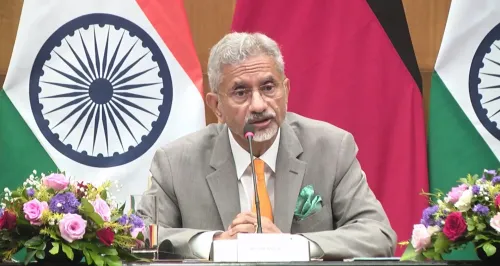
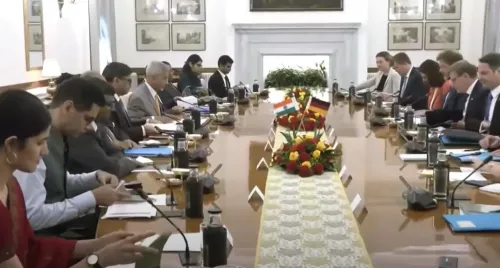
New Delhi, Jan 20 (NationPress) Germany has enhanced its relationship with India amidst significant geopolitical changes and vulnerabilities in global supply chains that have become evident in the worldwide economy.
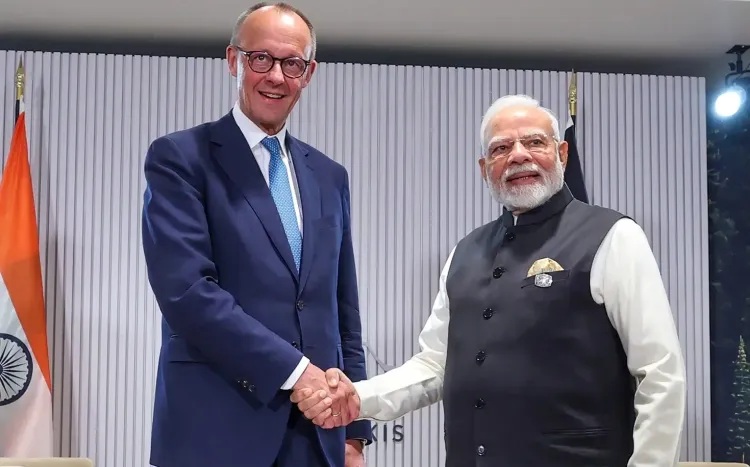
The Chancellor, Friedrich Merz, regards India as a “partner of choice” for Germany, presenting vast opportunities in the face of global uncertainties.
For Germany, the economic powerhouse of Europe, this alliance offers considerable advantages: improved market access, decreased reliance on China, increased defense exports, and growth driven by innovation, as stated in an article by Mirium Baumann in One World Outlook.
The German government’s “Focus on India” strategy, launched in 2024, acknowledges India’s trajectory towards becoming the world’s third-largest economy by 2027, with a growing middle class and digital expertise. Bilateral trade exceeded €35 billion in 2025, reflecting a 15 percent year-on-year growth, while German FDI in India cumulatively reached US$15.11 billion from 2000 to March 2025. Over 2,000 German companies operate in India, employing 400,000 local workers and creating synergies in sectors such as automobiles, chemicals, and renewables, according to the article.
The upcoming EU-India FTA could further amplify these benefits by reducing tariffs—averaging 12 percent on EU goods entering India—and unlocking an additional €20 billion in trade, it suggests.
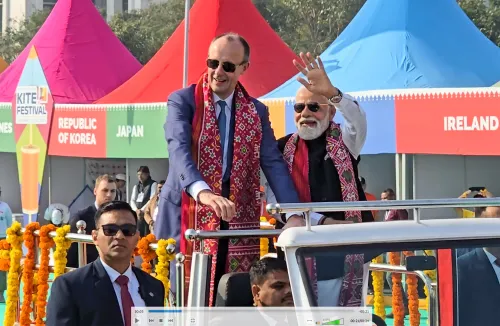
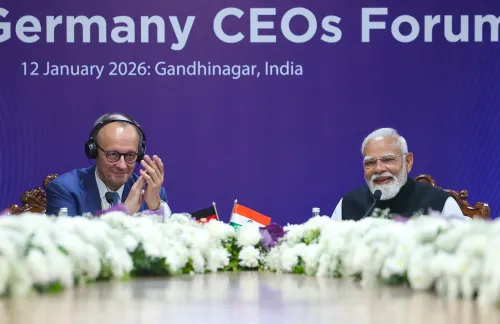
Chancellor Merz’s recent visit to India yielded 19 Memoranda of Understanding (MoUs) and Joint Declarations of Intent in areas including defense, technology, critical minerals, and green energy.
The defense relations between the two nations have evolved from mere consultative dialogues to strong industrial partnerships, yielding direct economic and strategic benefits for Germany. The Joint Declaration of Intent on Strengthening Bilateral Defense Industrial Cooperation, signed during Merz’s visit, sets the stage for co-development, technology transfer, and co-production of advanced platforms, as noted in the article.
German firms like Thyssenkrupp Marine Systems (TKMS) are poised to benefit from India’s Project 75I, a €5 billion plan to construct six AIP-equipped submarines in collaboration with Mazagon Dock Shipbuilders Limited (MDL).
This agreement not only secures high-value exports for Germany, creating jobs, but also positions Berlin as a central player in India’s naval modernization, thereby decreasing New Delhi’s reliance on Russian suppliers amid Western sanctions, the article indicates.
Strategically, this partnership enhances Germany’s Indo-Pacific presence, aligning with its 2020 guidelines for the region. In light of China’s assertiveness, collaborative maritime domain awareness and logistics support further solidify a rules-based order, benefiting German trade routes—90 percent of which navigate through the Indian Ocean.
The article emphasizes that trade is the foundation of Germany-India relations, with Germany being India’s top EU partner, constituting 25 percent of India’s trade with the EU.
In 2024, the exchange of goods and services between the two nations exceeded US$50 billion, continuing into 2025, with German exports to India reaching US$18.3 billion—predominantly machinery, electrical equipment, and chemicals.
India’s exports, comprising pharmaceuticals and automotive components, totaled US$10.54 billion, showcasing a balanced yet expanding trade relationship. Projections target €50 billion by 2030 under Germany’s “India First” initiative, fueled by diversified supply chains, as the article concluded.
Point of View
I see this strengthening of ties between Germany and India as a strategic move. In an era marked by global uncertainties, such partnerships are essential for economic growth and security. This relationship not only benefits both nations but also contributes to a more stable geopolitical environment. It’s crucial that we monitor these developments closely.
NationPress
27 Sept 2026
Frequently Asked Questions
What are the key benefits of the Germany-India partnership?
The partnership offers enhanced market access, reduced reliance on China, increased defense exports, and innovation-driven growth.
What is the significance of the EU-India FTA?
The EU-India FTA could significantly reduce tariffs and unlock an additional €20 billion in trade, enhancing economic ties.
How many German companies operate in India?
Over 2,000 German companies operate in India, providing employment to around 400,000 locals.
What is Project 75I?
Project 75I is a €5 billion initiative to build six AIP-equipped submarines in collaboration with Mazagon Dock Shipbuilders Limited.
What are the future trade projections between Germany and India?
Projections aim for €50 billion in trade by 2030 under Germany's 'India First' doctrine.