Ghaziabad blast: TuM claim puts Pakistan-backed proxy network under scanner
Synopsis
A blast at a Ghaziabad police outpost has opened a window into India's growing challenge with Pakistan-backed proxy terror networks. The TuM's social media claim of responsibility may point less to a resurgent old outfit and more to a deliberate disinformation strategy — agencies are now examining whether this is a newly fabricated offshoot designed to draw investigative attention away from larger, active groups.
Key Takeaways
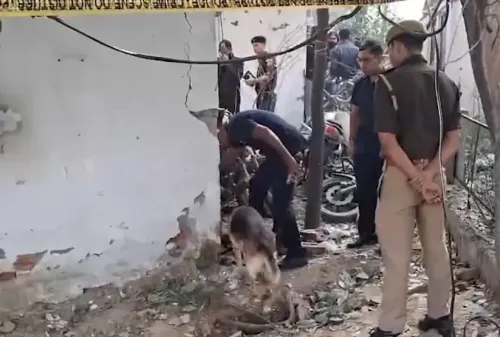
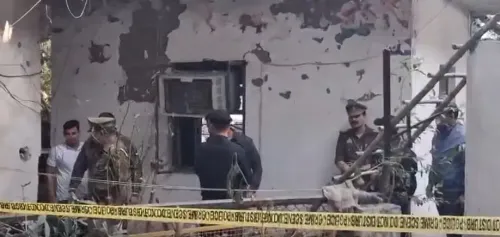
A blast at the Vasundhara police outpost in Ghaziabad, Uttar Pradesh injured one food delivery executive ; the NIA has begun a probe.
A group calling itself the Tehreek-ul-Mujahideen (TuM) claimed responsibility via a social media post.
The original TuM was founded in 1990 by Yunus Khan ; its current narcotics module is reportedly managed by Pakistan-based Mushtaq Ahmad Khan alias Khalid Bhai .
Investigators are examining whether the claiming faction is a newly fabricated offshoot — part of a wider pattern of Pakistan-backed proxy proliferation allegedly accelerated after Operation Sindoor .
Officials named The Resistance Front , PAAF , JKGF , ULF , Kashmir Tigers , and Tehreek-e-Taliban Hindustan as examples of alleged Pakistan-facilitated proxy groups.
India is reportedly gearing up for a large-scale anti-proxy war to counter disinformation-driven terror claims.
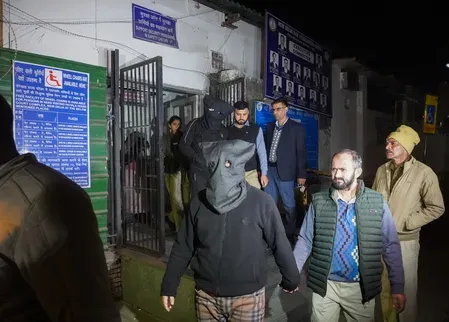
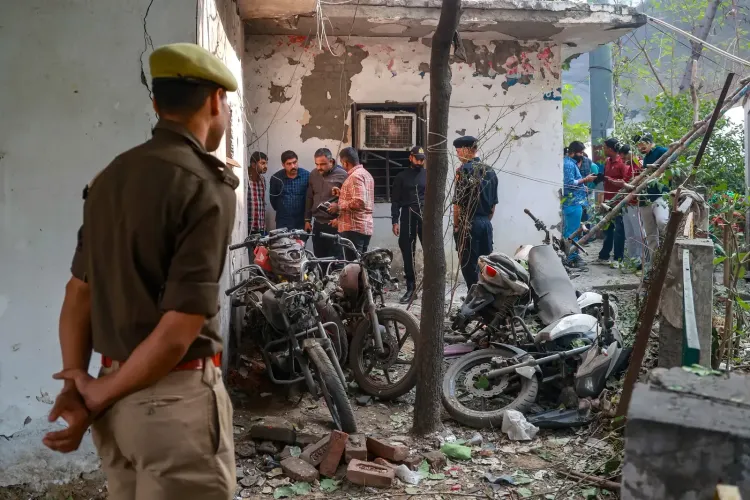
A suspected terror link is being investigated after a blast at the Vasundhara police outpost in Ghaziabad, Uttar Pradesh, with a National Investigation Agency (NIA) team visiting the site to gather evidence. One food delivery executive was injured in the incident. At the centre of the probe is a claim of responsibility posted on social media by a group identifying itself as the Tehreek-ul-Mujahideen (TuM), according to officials.
Who Is the Tehreek-ul-Mujahideen
The TuM is not a new name in India's security landscape. The original outfit was founded in 1990 by Yunus Khan, with its stated primary objective being the 'liberation' of Jammu and Kashmir from India. The group initially carried out grenade attacks before pivoting toward radicalisation and providing logistical support to outfits such as the Hizbul Mujahideen and Lashkar-e-Taiba.
Its operational structure has since transformed significantly. Recent charge sheets by Jammu and Kashmir's State Investigation Agency (SIA) uncovered a prominent narcotics module linked to the group, which is currently reportedly managed by Pakistan-based Mushtaq Ahmad Khan, alias Khalid Bhai. According to officials, the outfit also raises funds through the narcotics trade for other terror groups operating in Jammu and Kashmir. Several splinter factions of the TuM have been investigated for orchestrating cyber crimes and smaller ground-level operations.
Is This a Newly Fabricated Offshoot
What agencies are now specifically examining is whether the faction that claimed responsibility for the Ghaziabad incident is a freshly created offshoot of the original group, an Intelligence Bureau official said. The claim, officials noted, fits a pattern of proxy organisations that have mushroomed in recent months — particularly, according to officials, after Operation Sindoor.
Some of these proxies act as fronts for larger terror organisations such as the Lashkar-e-Taiba and Jaish-e-Mohammed, while others reportedly maintain only an online presence, issuing threats that serve as a smokescreen, an official said.
Pakistan's Alleged Proxy Proliferation Strategy
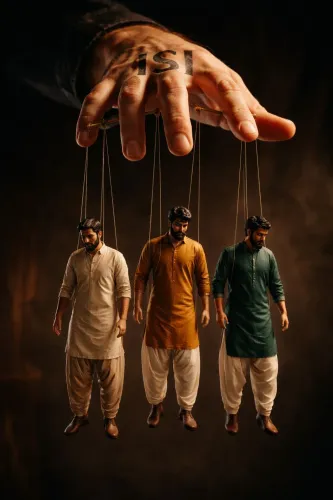
Officials allege that Pakistan has deliberately facilitated the proliferation of such proxy groups to confuse investigators and derail probes. Among the groups cited are The Resistance Front, the People's Anti-Fascist Front (PAAF), the Jammu and Kashmir Ghaznavi Force (JKGF), the United Liberation Front (ULF), and the Kashmir Tigers (KT) — each reportedly a proxy of either the Lashkar, the Jaish, or the Hizbul Mujahideen, according to officials.
The primary function of these groups, officials contend, is to flood social media with false claims, drawing agency resources onto their trail and providing cover for the larger organisations to plan operations undetected. Another example cited by officials is the Tehreek-e-Taliban Hindustan (TTH), reportedly created through the Shehzad Bhatti network as a notional Indian offshoot of the Tehreek-e-Taliban Pakistan (TTP). Officials allege Pakistan is attempting to construct an India link by floating non-existent groups such as the TTH, particularly as it faces pressure from the TTP domestically.
India's Anti-Proxy Response
Officials indicated that beyond countering Pakistan-backed terrorists on the ground, India is also preparing for what they describe as a large-scale anti-proxy war. Investigators stress the need to probe such claims swiftly and call them out publicly before they can cause further disruption to intelligence operations, an official said. The NIA's visit to Ghaziabad marks an early step in that effort.
Point of View
But officials are openly questioning whether it has been appropriated by a newly minted, Pakistan-manufactured proxy. That is the more troubling scenario: if established group names can be cloned to generate false leads, India's investigative resources face a structural stress test. The post-Operation Sindoor surge in proxy activity suggests Islamabad has concluded that disinformation and claim-flooding are cost-effective substitutes for direct ground operations — a strategy that is harder to counter than a conventional attack. The NIA must not only solve the Ghaziabad incident but establish a credible public attribution framework that pre-empts the smokescreen effect these proxies are designed to create.
NationPress
9 Nov 2026
Frequently Asked Questions
What happened in the Ghaziabad Vasundhara outpost blast?
A blast occurred at the Vasundhara police outpost in Ghaziabad, Uttar Pradesh, injuring one food delivery executive. The NIA has visited the site to investigate, and a group calling itself the Tehreek-ul-Mujahideen (TuM) has claimed responsibility via social media.
Who is the Tehreek-ul-Mujahideen (TuM)?
The TuM is a militant outfit originally founded in 1990 by Yunus Khan, with a stated objective of the 'liberation' of Jammu and Kashmir. It evolved from carrying out grenade attacks to supporting Hizbul Mujahideen and Lashkar-e-Taiba, and is now reportedly linked to narcotics trafficking managed from Pakistan.
Why are agencies questioning the TuM's claim for the Ghaziabad blast?
Intelligence officials are probing whether the faction claiming responsibility is a newly created offshoot, possibly fabricated to mislead investigators. This fits a pattern of Pakistan allegedly manufacturing proxy groups after Operation Sindoor to divert attention from larger, active terror organisations.
What other Pakistan-backed proxy groups are on India's radar?
Officials have named The Resistance Front, the People's Anti-Fascist Front (PAAF), the Jammu and Kashmir Ghaznavi Force (JKGF), the United Liberation Front (ULF), the Kashmir Tigers, and the Tehreek-e-Taliban Hindustan (TTH) as alleged Pakistan-facilitated proxies for Lashkar, Jaish, or Hizbul Mujahideen.
What is India's strategy to counter these proxy terror groups?
According to officials, India is preparing for a large-scale anti-proxy campaign alongside its ground-level counter-terror operations. The approach involves probing social media claims quickly and issuing public rebuttals to prevent proxy disinformation from disrupting intelligence operations.