Faridabad terror module sought Sharia, not Azadi: NIA probe reveals Al-Qaeda link
Synopsis
The Faridabad terror module did not want freedom for Kashmir — it wanted Sharia law. NIA's probe reveals the group masked itself as JeM to recruit youth, while actually operating under Al-Qaeda's AGuH banner, with ISI handlers in J&K pulling strings. The ideological shift from Azadi to Sharia marks a more dangerous, globally-aligned template of radicalisation on Indian soil.
Key Takeaways
The Faridabad terror module operated under Al-Qaeda -affiliated Ansar Ghazwat-ul-Hind (AGuH) , not Jaish-e-Mohammad as initially believed.
Module leader Umar Un Nabi , a doctor, briefly used the JeM name to attract youth due to its stronger recognition.
The group's ultimate goal was implementation of Sharia law in Jammu and Kashmir — not political Azadi.
ISI -linked handlers in Jammu and Kashmir guided the module; Dr.
Shaheen Shahid was in contact with Mufti Irfan Ahmad Wagay .
Blasts were planned in New Delhi and multiple other cities to create panic and fuel anti-government agitation.
The module ran online radicalisation channels alongside planned attacks, mirroring Al-Qaeda and Islamic State tactics.
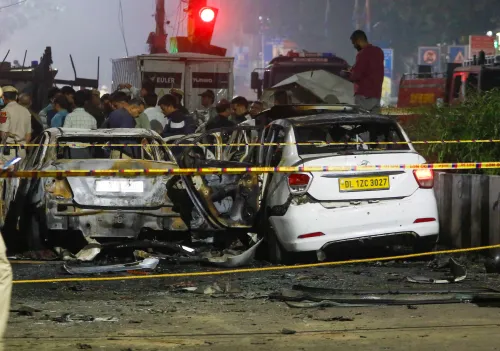
The Faridabad terror module, initially linked to Jaish-e-Mohammad (JeM), was in fact operating under the banner of the Al-Qaeda-affiliated Ansar Ghazwat-ul-Hind (AGuH), a National Investigation Agency (NIA) probe has found. The module, led by Umar Un Nabi — a doctor by profession — had temporarily used the JeM name as a recruitment tool, exploiting its stronger brand recognition among radicalised youth in India.
Why the Module Masked Itself as JeM
According to NIA investigators, the module adopted the JeM label briefly because the outfit resonates more strongly with young recruits compared to the lesser-known AGuH. The AGuH, while primarily active in Jammu and Kashmir, had not managed to build a significant footprint in India. Crucially, its affiliation is with Al-Qaeda — not with JeM or Lashkar-e-Tayiba (LeT).
Officials said this was a deliberate strategy to maintain plausible deniability. A direct JeM or LeT connection would have immediately exposed the Pakistan and ISI link, which handlers sought to avoid. Al-Qaeda, being perceived as a global organisation, carries comparatively limited visible Pakistan linkages, an official noted.
ISI Handlers and the J&K Connection
Although the Faridabad module — which executed the Delhi Red Fort blast — appeared to function independently, investigators found it was not entirely autonomous. ISI-linked handlers based in Jammu and Kashmir guided the module in its early stages.
Dr. Shaheen Shahid, a key module member, maintained regular contact with Jammu and Kashmir-based Mufti Irfan Ahmad Wagay. According to the NIA, the duo handled both logistics and the radicalisation drive that drew new recruits into the network.
Sharia Over Azadi: A Dangerous Ideological Shift
One of the most significant findings of the probe is the module's ideological orientation. Investigators found that the group's ultimate goal was not Azadi — political freedom for Jammu and Kashmir — but the implementation of Sharia law across the Union Territory.
According to officials, members believed that establishing Sharia would lead to a deeply radicalised society, which they viewed as the path to 'liberation'. An Intelligence Bureau (IB) official said the module appeared to be consciously moving away from the political freedom narrative, concluding it would gain little traction going forward.
The shift toward religious propaganda, officials noted, mirrors the strategy employed by Al-Qaeda and the Islamic State (IS), both of which have used Sharia as a mobilising ideology to drive radicalisation globally.
Planned Blasts Beyond Kashmir
The module's ambitions extended well beyond Jammu and Kashmir. According to investigators, blasts were being planned in New Delhi and several other locations across India. The long-term strategy was to create widespread panic and fear, triggering public agitation against the Indian government.
In addition to the planned attacks, the module ran active messaging channels to push radical ideology and recruit youth, with a specific focus on promoting the idea of Sharia implementation.
What the Findings Signal
Umar Un Nabi was reportedly attempting to replicate the IS model — combining kinetic attacks with ideological outreach. Officials said the dual-track approach of bomb blasts and online radicalisation reflects a more sophisticated and dangerous operational template than earlier Kashmir-centric modules. Investigations into the module's full network are ongoing.
Point of View
Not a weakness.
NationPress
20 Sept 2026
Frequently Asked Questions
What is the Ansar Ghazwat-ul-Hind (AGuH) and how is it linked to the Faridabad module?
Ansar Ghazwat-ul-Hind is an Al-Qaeda-affiliated terror outfit that primarily operates in Jammu and Kashmir. The NIA probe found that the Faridabad module led by Umar Un Nabi operated under AGuH's banner, using the JeM name only briefly as a recruitment tactic.
Why did the Faridabad module use the Jaish-e-Mohammad name if it was linked to Al-Qaeda?
According to the NIA, the module temporarily adopted the JeM label because it resonates more strongly with radicalised youth in India compared to the lesser-known AGuH. It was a deliberate strategy to attract recruits, not an actual organisational affiliation.
What was the Faridabad module's actual goal — Azadi or Sharia?
The NIA probe found the module's ultimate goal was the implementation of Sharia law in Jammu and Kashmir, not political Azadi. Members believed that establishing Sharia would create a radicalised society they viewed as a path to liberation.
How was Pakistan's ISI connected to the Faridabad module?
Although the module appeared largely independent, ISI-linked handlers in Jammu and Kashmir guided it in its early stages. Key member Dr. Shaheen Shahid maintained contact with J&K-based Mufti Irfan Ahmad Wagay, who helped manage logistics and radicalisation efforts.
Were attacks planned beyond the Delhi Red Fort blast?
Yes. According to investigators, the module was planning blasts in New Delhi and several other locations across India. The long-term strategy was to generate widespread panic and trigger public agitation against the Indian government.