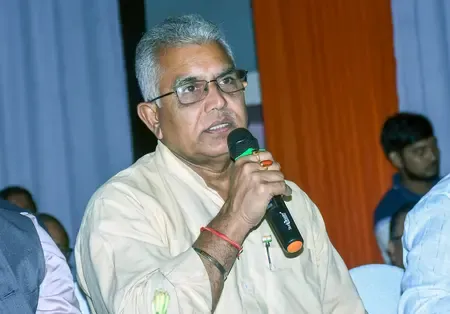
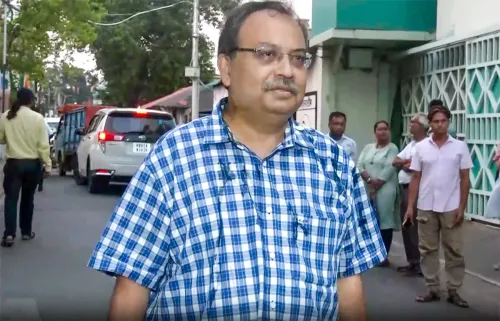
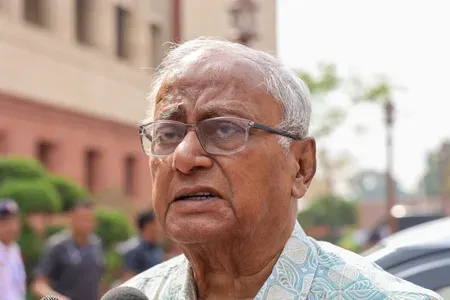
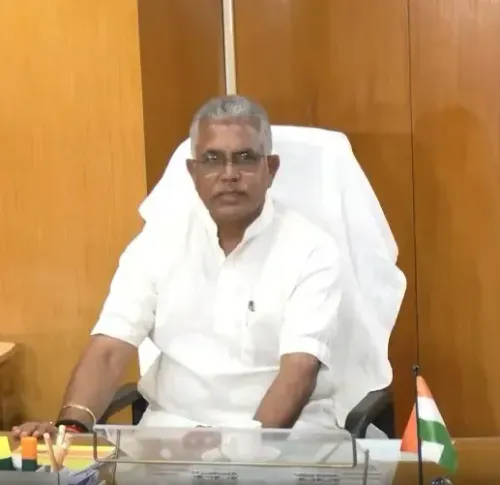
Dilip Ghosh mocks Anubrata Mondal after TMC office vandalised in Birbhum
Synopsis
The 'tiger of Birbhum' sat in his own ransacked party office as three youths attacked it with sticks — and the next morning, Bengal's new BJP minister publicly called him a 'cat.' Anubrata Mondal's first visit to Suri since losing power ended in humiliation, crystallising how completely Bengal's political order has inverted.
Key Takeaways
Anubrata Mondal’s TMC office in Suri, Birbhum , was vandalised on Wednesday night while he was present inside.
Three youths attacked the office with sticks, shouting ‘Jai Shri Ram’ slogans; they claimed no party affiliation.
Mondal sustained minor facial injuries ; the three were arrested and released Thursday morning after he declined to file a complaint.
BJP minister Dilip Ghosh mocked Mondal, saying the ‘tiger of Birbhum has turned into a cat,’ while nominally condemning violence.
It was Mondal’s first visit to the Suri office since the BJP won the recent West Bengal Assembly elections.
Ghosh recalled being barred from holding meetings in Birbhum for 10 years under the previous TMC government.
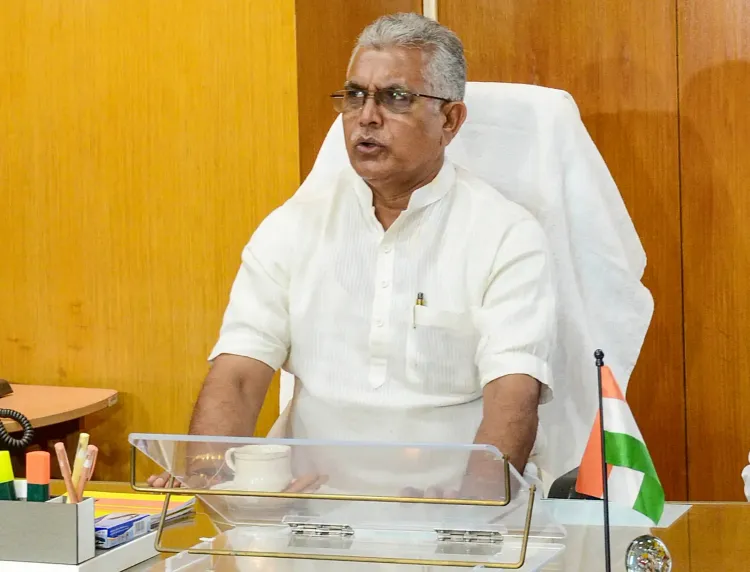
West Bengal Panchayat and Rural Development Minister Dilip Ghosh on Thursday, 2 October 2026, took a pointed swipe at Trinamool Congress (TMC) strongman Anubrata Mondal, saying the ‘tiger of Birbhum has now turned into a cat’ — a remark that came a day after Mondal’s party office in Suri, Birbhum district, was ransacked in his presence. The incident marks one of the most visible symbols of the political reversal in Bengal following the Bharatiya Janata Party (BJP)’s victory in the recent state Assembly elections.
The Vandalisation Incident
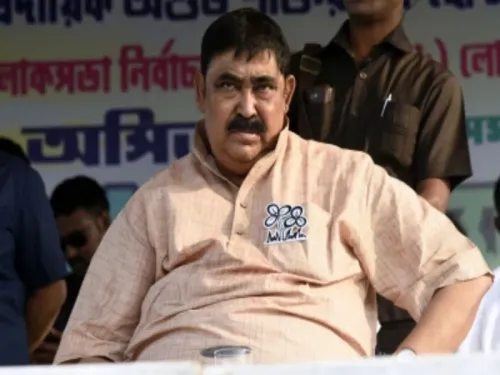
On Wednesday night, Mondal — who has long wielded significant political influence in Birbhum — visited the Trinamool Congress office near the Suri Old Bus Stand for the first time since the Assembly election results were declared earlier this year. The visit was intended to assess the situation and engage with local party leadership.
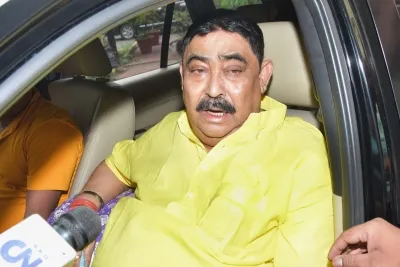
While Mondal was seated inside, three youths entered the premises and attacked the office with thick wooden sticks, ransacking it and verbally threatening him over what they described as his ‘past atrocities.’ The youths claimed they were not affiliated with any political party. However, they were heard shouting ‘Jai Shri Ram’ slogans as the police escorted them away. Mondal sustained minor facial injuries but no serious harm, according to reports. Police swiftly arrested the three individuals, who were subsequently released on Thursday morning after Mondal chose not to file a formal complaint.
What Dilip Ghosh Said
Speaking to reporters, Ghosh framed the incident within the broader arc of political change in the state. ‘Politics is like this. Some people are sometimes up and some are sometimes down. If someone gets power, they have to use it properly. Power was misused during the Trinamool Congress era. People have suffered. They will get the results for their misdeeds,’ he said.
On the ‘Jai Shri Ram’ slogan shouted by the accused, Ghosh distanced the BJP from any direct involvement: ‘Jai Shri Ram is not the slogan of the BJP. Every person in India can say ‘Jai Shri Ram’. The administration can say who did it.’ He also added that ‘no revenge can be taken with the help of violence.’
He went further, recalling his own political marginalisation in the district under the previous TMC regime: ‘I could not hold any meeting in Birbhum for 10 years. The police did not give permission. Once they gave permission by mistake. That time, water was pumped from another place and poured into the meeting ground. We received the most votes in Birbhum. People will not forget everything overnight. But we have to maintain peace and develop Bengal.’
Anubrata Mondal’s Political Decline
The incident is a stark illustration of how fortunes can shift in Bengal’s volatile political landscape. Anubrata Mondal, popularly known by his nickname ‘Kesto’, was once considered the undisputed boss of Birbhum, commanding grassroots TMC networks with an iron grip. His clout, however, has eroded considerably — partly due to his prolonged legal troubles in a cattle-smuggling case, during which he spent time in judicial custody, and now compounded by his party’s loss of power in the state.
Notably, Wednesday’s visit to the Suri office was his first such appearance since the election results, underscoring how dramatically the political ground has shifted beneath him.
Wider Implications for Bengal’s Political Climate
The vandalisation of a former ruling party’s office — with its leader present — points to the fragility of law and order during political transitions in Bengal, a state with a long history of post-poll violence. While the BJP’s Ghosh condemned violence in principle, critics may note the optics of a ruling-party minister publicly mocking an opposition figure hours after the attack, rather than unequivocally demanding accountability. The prompt release of the accused, given the absence of a complaint from Mondal, raises questions about how political calculations continue to shape policing decisions in the state.
With the BJP now in power, all eyes will be on whether the new dispensation can break Bengal’s cycle of political retribution or whether the patterns of the past simply change hands.
Point of View
Delivered hours after Mondal’s office was trashed, is as revealing for what it says about the BJP’s political culture as for what it says about Mondal’s fall. Condemning violence with one breath while gleefully cataloguing an opponent’s humiliation with the next is a template Bengal has seen before — just from the other side. The release of the three accused, enabled by Mondal’s silence rather than any official magnanimity, shows that political pressure still shapes policing in the state. If Bengal’s new rulers cannot resist the temptations of score-settling that defined their predecessors, the change of government risks becoming a change of beneficiaries rather than a change of norms.
NationPress
1 Oct 2026
Frequently Asked Questions
What happened at Anubrata Mondal's Birbhum office?
Three youths vandalised the Trinamool Congress office in Suri, Birbhum on Wednesday night while Anubrata Mondal was seated inside, attacking it with thick wooden sticks and verbally threatening him. Mondal suffered minor facial injuries but no serious harm, and the attackers were arrested before being released the next morning after Mondal chose not to file a complaint.
What did Dilip Ghosh say about Anubrata Mondal?
West Bengal minister Dilip Ghosh said the 'tiger of Birbhum has now turned into a cat,' a jibe at Mondal’s political decline following the BJP’s victory in the recent state Assembly elections. Ghosh also said power was misused during the TMC era and that TMC leaders would face consequences for their actions, while nominally adding that violence is not the right way to settle scores.
Why were the three accused released so quickly?
The three youths who vandalised the office were released on Thursday morning because Anubrata Mondal did not file a formal police complaint against them. In the absence of a complainant, police had no legal basis to detain them further.
Why is Anubrata Mondal politically weakened?
Anubrata Mondal’s influence has declined due to two main factors: his prolonged judicial custody in a cattle-smuggling case, and the TMC’s loss of power in the West Bengal Assembly elections to the BJP. Wednesday’s Suri visit was his first to the office since the election results were announced, reflecting how dramatically his standing has changed.
Did the BJP claim responsibility for the attack?
No. Dilip Ghosh explicitly distanced the BJP from the incident, saying ‘Jai Shri Ram is not the slogan of the BJP’ and that any person in India can use that chant. The three accused youths also claimed they were not affiliated with any political party.