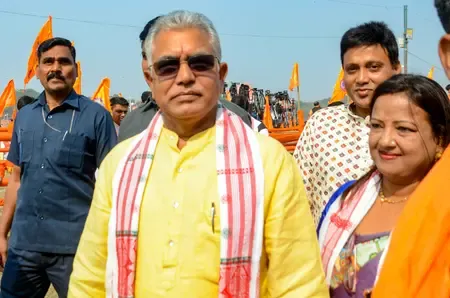
Crime culture in Bengal must end at all costs, says Dilip Ghosh
Synopsis
BJP leader Dilip Ghosh has put Bengal's entrenched crime economy — 'Tolabaji', 'Syndicate', 'Cut-money' — squarely on notice, promising new legislation and holding out the prospect of police accountability. The statement arrives as a rebel TMC faction deepens its civil war with Mamata Banerjee's camp over Assembly bypolls, leaving Bengal's political and law-order landscape in simultaneous flux.
Key Takeaways
West Bengal Minister Dilip Ghosh on 15 September 2026 pledged new legislation to eliminate Bengal's entrenched crime culture.
He specifically named 'Tolabaji' , 'Syndicate' and 'Cut-money' as uniquely Bengali extortion phenomena harming industry and citizens.
Ghosh said even police personnel would be held accountable as part of the law-and-order tightening already underway.
On the New Education Policy , he credited PM Modi with ending decades of inaction and said state-by-state rollout was progressing.
Rebel TMC faction led by Ritabrata Banerjee named candidates for bypolls to two Assembly seats , deepening its clash with the Mamata Banerjee -led camp; ECI has yet to decide on symbol claims.
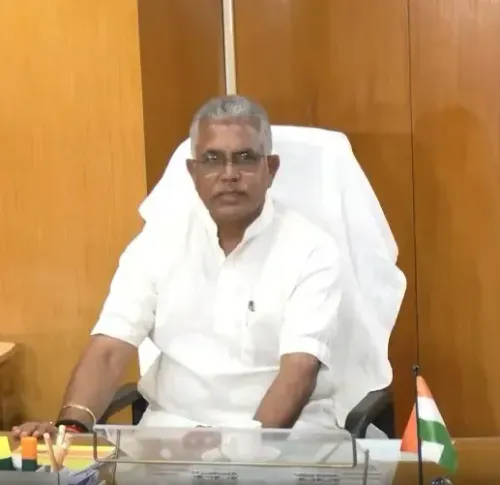
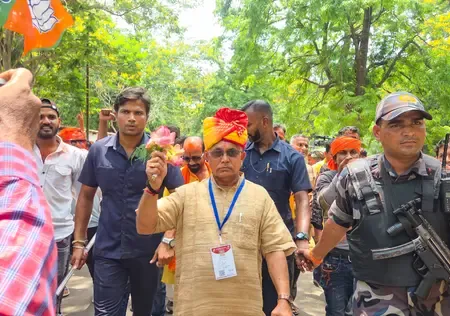
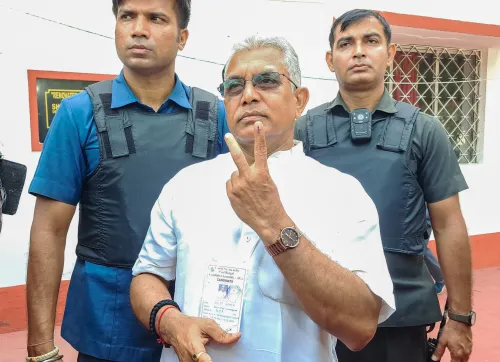
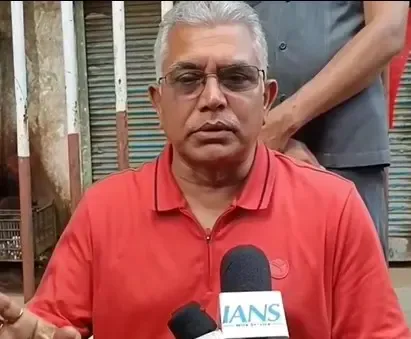
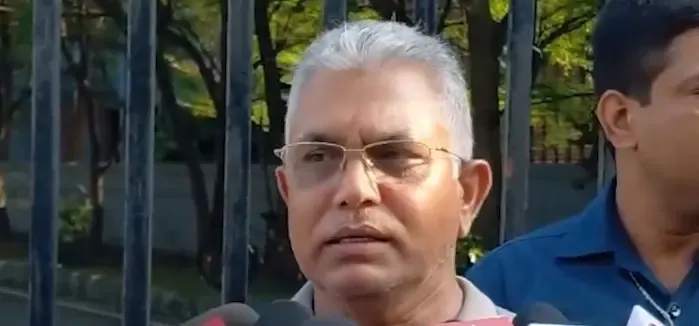
West Bengal Minister Dilip Ghosh on Tuesday, 15 September 2026, declared that antisocial elements had long held unchecked dominance in the state and asserted that the government would legislate whatever measures are necessary to root out criminal activity. Speaking to reporters in Newtown, Ghosh framed the issue as a systemic threat to Bengal's economy and public order.
What Ghosh Said on Crime and Law Enforcement
'In Bengal, antisocial elements had complete dominance for a long time. All these people, in collusion with political forces, have severely troubled the general public here. Terms like 'Tolabaji', 'Syndicate' and 'Cut-money' are heard exclusively in Bengal. Because of this, industries and businesses here have suffered, and the public is distressed,' Ghosh said.
He added that the administration was already tightening its grip on law and order, and that even police personnel would be held accountable. 'This crime culture must be stopped at all costs, and the government is making all necessary preparations for it,' he said. The remarks are notable for explicitly extending accountability to the police force — a signal that the crackdown is intended to be institutional rather than selective.
Ghosh on the New Education Policy
Shifting focus, Ghosh credited Prime Minister Narendra Modi with ending decades of inaction on education reform. He noted that debates over the direction of Indian education had persisted since Independence, but no government had acted on them until Modi introduced the New Education Policy (NEP) after extensive consultations, seminars, and public opinion-gathering.
'It is now being implemented step-by-step across states. Once fully implemented, society will reap its benefits, though it will take some time,' he said. The NEP rollout has been uneven across states, with some, including Bengal, moving at a slower pace than others.
On TMC's Internal Feud
Asked about visible fissures within the ruling All India Trinamool Congress (TMC), Ghosh said the Bharatiya Janata Party (BJP) had no interest in wading into the opposition party's internal affairs. 'Whether old, new, good or bad, we don't want to get into the internal matters of the Trinamool Congress. They should take their issues to the Election Commission and resolve them. The Commission is looking into it,' he said.
This came a day after the rebel TMC faction led by Ritabrata Banerjee announced candidates for bypolls to two Assembly seats in West Bengal, escalating its confrontation with the Mamata Banerjee-led camp. The rival faction has asserted its right to contest under the official TMC name and symbol; the Election Commission of India (ECI) has yet to adjudicate the competing claims.
Broader Context
Ghosh's remarks on crime culture land against a backdrop of persistent concerns about extortion networks and political patronage in Bengal, issues that have featured prominently in both judicial proceedings and central government reports. This is not the first time a BJP leader has raised these specific terms — 'Tolabaji' and 'Syndicate' have been recurring flashpoints in Bengal's political discourse for several years, and critics argue that enforcement action has repeatedly stalled at the political interface. Whether the latest legislative push translates into structural change will depend heavily on the state's law enforcement apparatus, whose own accountability Ghosh has now publicly flagged.
Point of View
'Syndicate' and 'Cut-money' is less a fresh revelation than a politically targeted framing — these terms have been in circulation for years without producing durable enforcement outcomes. The real signal in Tuesday's remarks is the explicit inclusion of police accountability, which, if acted upon, would mark a qualitative shift from past announcements. Bengal's crime-politics nexus is structurally deep, and legislation alone has historically proved insufficient without insulation of investigative agencies from political pressure. The simultaneous TMC civil war over bypolls adds an electoral dimension: a crackdown narrative suits the BJP's positioning in Bengal ahead of any fresh polls, whether or not the legislative follow-through materialises.
NationPress
15 Sept 2026
Frequently Asked Questions
What did Dilip Ghosh say about crime in West Bengal?
West Bengal Minister Dilip Ghosh on 15 September 2026 said antisocial elements had long enjoyed unchecked dominance in Bengal and that the government would enact whatever laws are needed to eradicate activities like 'Tolabaji', 'Syndicate' operations and 'Cut-money'. He also said police personnel would not be spared from accountability.
What are 'Tolabaji', 'Syndicate' and 'Cut-money' in Bengal?
'Tolabaji' refers to extortion, 'Syndicate' to organised cartels controlling construction materials and labour markets, and 'Cut-money' to kickbacks demanded by local political workers for government scheme benefits. Ghosh described these as phenomena heard exclusively in Bengal, arguing they have damaged industry and distressed the public.
What is the TMC rebel faction dispute about?
A rebel All India Trinamool Congress faction led by Ritabrata Banerjee has named candidates for bypolls to two West Bengal Assembly seats and asserted its right to contest under the official TMC name and symbol. The Election Commission of India has yet to decide which group holds the legitimate claim.
What did Ghosh say about the New Education Policy?
Ghosh credited Prime Minister Narendra Modi with implementing the New Education Policy after extensive consultations, calling it the first serious action on education reform since Independence. He said the policy is being rolled out state by state and that its benefits would become clear once fully implemented, though he acknowledged it would take time.
Why did Ghosh decline to comment in detail on TMC's internal differences?
Ghosh said the BJP does not wish to interfere in the internal affairs of the ruling Trinamool Congress, adding that the rival TMC factions should take their dispute to the Election Commission for resolution. He noted the Commission is already examining the matter.