What Are the 22 Approved Projects Under the Electronics Component PLI Worth Rs 41,863 Crore?
Synopsis
The government's approval of 22 projects under the ECMS is a game-changer for India’s electronics sector, promising substantial investments and job creation. This initiative marks a significant step towards enhancing local manufacturing capabilities and reducing import reliance, showcasing India's commitment to becoming a global electronics hub.
Key Takeaways
22 projects approved under ECMS.
Expected investments totaling Rs 41,863 crore .
Creation of 37,000 jobs .
Focus on reducing import dependency .
Projects span across 11 segments of electronics manufacturing.
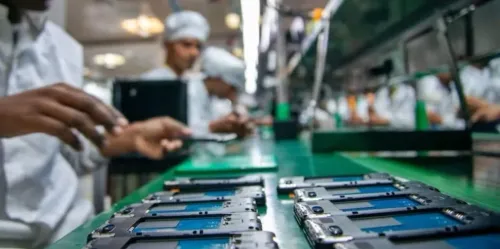
New Delhi, Jan 2 (NationPress) On Friday, the government greenlit 22 new initiatives under the Electronics Components Manufacturing Scheme (ECMS), expected to attract investments totaling Rs 41,863 crore and create approximately 37,000 direct and indirect jobs. This strategic decision aims to bolster domestic supply chains and minimize reliance on imports for essential electronic components.
The output from these 22 sanctioned projects is anticipated to reach Rs 2.58 lakh crore. Notable companies involved in these approved proposals include Dixon, Samsung Display Noida Pvt Ltd, Foxconn’s Yuzhan Technology India Pvt Ltd, and Hindalco Industries.
This latest approval adds to the 24 applications previously accepted, which involved a total investment of Rs 12,704 crore.
The Ministry of Electronics and Information Technology (MeitY) indicates that this batch of approvals encompasses manufacturing across 11 segments, with applications covering mobile phones, telecom, consumer electronics, strategic electronics, automotive, and IT hardware. These projects will be distributed across eight states: Andhra Pradesh, Haryana, Karnataka, Madhya Pradesh, Maharashtra, Tamil Nadu, Uttar Pradesh, and Rajasthan.
Industry leaders have applauded this decision, asserting that the success of the ECMS initiative signifies India’s pivotal transition from plans to action in electronics manufacturing.
“By the end of 2025, India will have established itself as a trusted and investable destination for ESDM. The ECMS initiative is transformative because it lays the groundwork for a robust ecosystem that requires not only semiconductors but also components, materials, and added value in electronics,” stated Ashok Chandak, President of IESA and SEMI India.
The forthcoming phase must prioritize scaling operations, developing strong design teams, sourcing locally, and ensuring top-notch quality in manufactured goods.
“Original Equipment Manufacturers (OEMs) and system companies must proactively embrace Made-in-India components, as generating demand is as crucial as supply creation. Distributors are vital market facilitators in promoting Indian components both domestically and globally,” he emphasized.
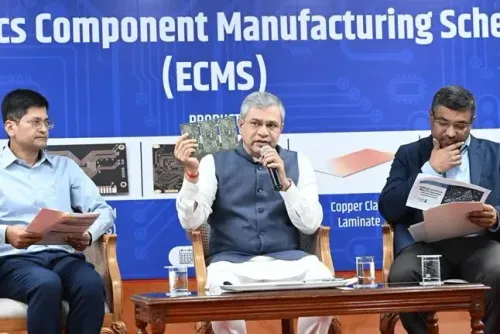
To deepen the value chain further, the government initiated the ECMS scheme in 2025.
This scheme aims to enhance domestic manufacturing of Printed Circuit Boards, electrical and mechanical components, camera modules, and more.
India has made significant strides as an electronics manufacturer, and due to substantial policy efforts, electronics manufacturing has surged nearly sixfold in the past 11 years, increasing from Rs 1.9 lakh crore in 2014-15 to Rs 11.32 lakh crore in 2024-25.
Point of View
The approval of 22 projects under the ECMS is a strategic advancement for India's electronics manufacturing landscape. It highlights the government's commitment to fostering local industries and reducing import dependency, which is essential for economic resilience and growth. This initiative is a clear indicator of India's evolving role in the global electronics supply chain.
NationPress
19 Sept 2026
Frequently Asked Questions
What is the Electronics Components Manufacturing Scheme (ECMS)?
The ECMS is a government initiative aimed at promoting domestic manufacturing of electronic components to strengthen supply chains and reduce import reliance.
How many jobs will be created by the approved projects?
The approved projects are expected to generate nearly 37,000 direct and indirect jobs.
Which companies are involved in the approved projects?
Notable companies include Dixon, Samsung Display Noida Pvt Ltd, Foxconn’s Yuzhan Technology India Pvt Ltd, and Hindalco Industries.
What is the total investment expected from these projects?
The total investment anticipated from these projects is Rs 41,863 crore.
In which states will the projects be set up?
The projects will be established in Andhra Pradesh, Haryana, Karnataka, Madhya Pradesh, Maharashtra, Tamil Nadu, Uttar Pradesh, and Rajasthan.