Is the Government Committed to Enhancing Research with the RDI Fund?
Synopsis
Prime Minister Modi emphasizes the government's commitment to facilitating 'Ease of Doing Research' in India. With the launch of the Rs 1 lakh crore RDI Fund, private-sector investments are expected to soar, revolutionizing the nation's science and innovation landscape. Discover how this initiative fosters a robust research culture across sectors.
Key Takeaways
Government emphasis on 'Ease of Doing Research' Launch of Rs 1 lakh crore RDI Fund Focus on high-risk, high-impact projects Doubling of R&D expenditure in the last decade Significant growth in women's participation in STEM
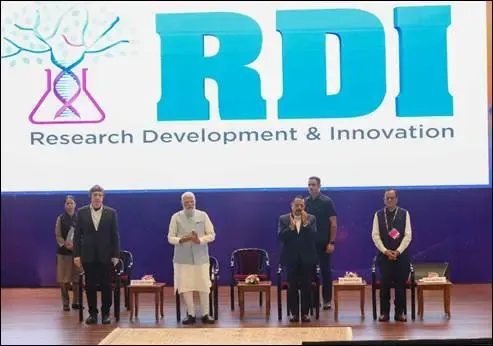
New Delhi, Nov 3 (NationPress) The government is prioritizing the facilitation of 'Ease of Doing Research' to enhance the science and innovation ecosystem within India, stated Prime Minister Narendra Modi on Monday during the launch of the Rs 1 lakh crore RDI Fund aimed at encouraging private-sector investments.
The Research, Development, and Innovation (RDI) initiative was officially unveiled by the Prime Minister at the Emerging Science & Technology Innovation Conclave (ESTIC 2025), taking place in the national capital.
This scheme, which received approval from the Union Cabinet in July, is designed to promote research and development (R&D) in the private sector.
The RDI initiative represents a significant and extensive fund under the Anusandhan National Research Foundation (ANRF), which was established in 2023.
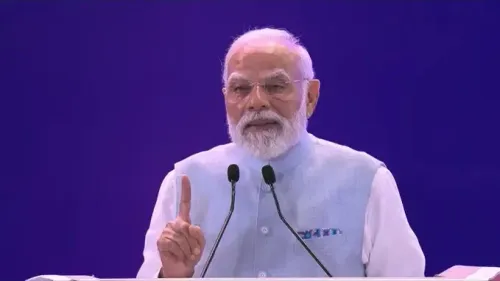
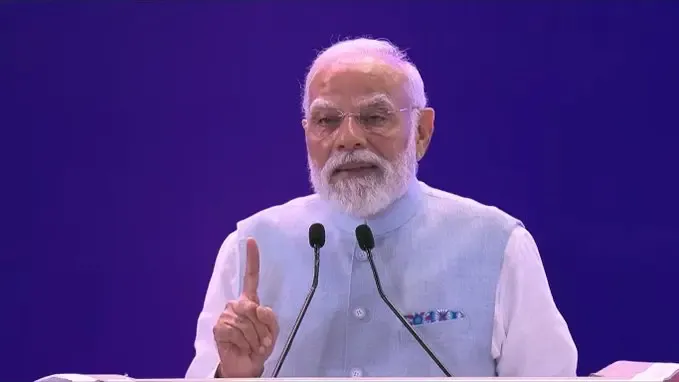
“Our emphasis on Ease of Doing Research aims to cultivate a modern innovation ecosystem in India. To realize this vision, the government has implemented substantial reforms in financial regulations and procurement policies,” PM Modi remarked.
“The launch of the Research, Development, and Innovation initiative is supported by a dedicated allocation of Rs 1 lakh crore. This substantial investment is intended to benefit the public and unlock new opportunities. Our objective is to nurture a culture of research and development within the private sector as well,” he added.
“For the first time, funds are being allocated specifically for high-risk, high-impact projects, ensuring support for groundbreaking endeavors,” the PM emphasized.
Modi highlighted how the government has streamlined multiple incentives and supply chain frameworks to expedite the transition of prototypes from the lab to the market, resulting in increased R&D expenditure, patents, and startups.
“In the last decade, our R&D expenditure has doubled, reflecting our commitment to innovation. Moreover, the number of registered patents has impressively surged by 17 times. In the startup arena, India has risen to become the third-largest ecosystem globally,” the Prime Minister stated.
PM Modi also underscored the ANRF's goal of propelling research and innovation across universities, creating new avenues for growth and advancement.
“You are all acquainted with the vision of Jai Jawan, Jai Kisan for quite some time. While pursuing research, we have also integrated Jai Vigyan and Jai Anusandhan. We have established the National Research Foundation to scale up research and innovation in our universities,” he shared.
A notable example of the government’s commitment to enhancing STEM education in India is illustrated by the increasing number of women participants, the PM noted.
“A decade ago, the annual number of patents filed by women in India was fewer than 100. Today, that figure has skyrocketed to over 5,000 each year. Additionally, women represent 43 percent of those engaged in STEM education in India, which is significantly above the global average,” he said.
Furthermore, the Prime Minister asserted that “when science meets scale, innovation becomes inclusive, and when technology facilitates transformation, the groundwork for significant achievements is established.”
“Over the past 10-11 years, India has embodied this vision in action. India is no longer merely a consumer of technology; it has transformed into a trailblazer of transformation through technology,” PM Modi stated, applauding the nation’s accomplishments in various sectors, particularly in space.
He pointed out the successes of the Chandrayaan mission, Group Captain Shubhanshu Shukla, and the recent launch of the heaviest communication satellite by ISRO.
“Currently, over 6,000 of our deeptech startups are engaged in sectors like clean energy and advanced materials. India’s semiconductor sector has also gained momentum,” PM Modi noted.
The ‘ESTIC 2025’ conclave, taking place from November 3-5, will gather over 3,000 participants from academia, research institutions, industry, and government, alongside Nobel Laureates, distinguished scientists, innovators, and policymakers.
The event will concentrate on 11 vital thematic areas, including advanced materials and manufacturing, artificial intelligence, bio-manufacturing, blue economy, digital communications, electronics and semiconductor manufacturing, emerging agricultural technologies, energy, environment and climate, health and medical technologies, quantum science and technology, and space technologies.
Point of View
I recognize the government's initiative to enhance research as a commendable step toward solidifying India's position in the global innovation landscape. The focus on private-sector partnerships and high-impact projects is essential for fostering a culture of development and ensuring that India remains competitive in the global arena.
NationPress
25 Oct 2026
Frequently Asked Questions
What is the RDI Fund?
The RDI Fund, amounting to Rs 1 lakh crore, is an initiative launched by the Indian government to boost private-sector investments in research and development, enhancing the overall science and innovation ecosystem in the country.
How does the RDI Fund aim to support research?
The RDI Fund aims to support research by providing a dedicated allocation specifically for high-risk, high-impact projects, thus encouraging groundbreaking endeavors across various sectors.
What are the expected outcomes of the RDI initiative?
The expected outcomes include increased private-sector investment in R&D, a rise in patents, and a robust startup ecosystem, alongside the overall growth of India's science and technology landscape.
How has India's R&D landscape changed over the past decade?
India's R&D expenditure has doubled in the past decade, with a remarkable 17-fold increase in registered patents and the establishment of India as the third-largest startup ecosystem globally.
What is the significance of women in STEM education according to PM Modi?
PM Modi highlighted that women now represent 43 percent of those pursuing STEM education in India, with annual patents filed by women rising from below 100 to over 5,000, showcasing significant progress in gender representation in the field.