Gujarat CM Patel pledges to fulfil Modi's Sapt Dhara vision on 80th Independence Day
Synopsis
Gujarat CM Bhupendra Patel used the 80th Independence Day stage in Amreli to tie the state's entire development agenda to PM Modi's seven-pillar 'Shakti ki Sapta Dhara' vision — and backed the rhetoric with concrete announcements: free rural plots, a ₹3,428 crore road upgrade, and higher Anganwadi nutrition budgets. With the 2030 Commonwealth Games also on the horizon, Gujarat is positioning itself as the flagship state for Viksit Bharat.
Key Takeaways
CM Bhupendra Patel addressed the 80th Independence Day celebration in Amreli on 15 August 2025 , pledging to fulfil PM Modi's 'Shakti ki Sapta Dhara' vision.
The state announced ₹3,428 crore for renovation of 210 km of roads across 214 roads .
Daily nutrition allocation for 16.75 lakh Anganwadi children raised from ₹5.10 to ₹8.50 , with ₹173 crore additional outlay.
Income ceiling under the Overseas Education Loan Scheme raised from ₹6 lakh to ₹10 lakh for unreserved-category students.
Four Vibrant Gujarat Regional Conferences generated 13,255 MoUs worth ₹15.89 lakh crore .
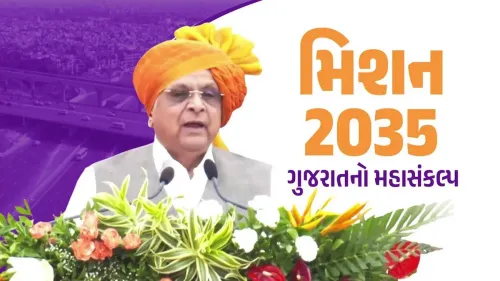
Gujarat is set to host the 2030 Commonwealth Games , with long-term targets of Viksit Gujarat 2047 and 75 years of statehood in 2035 .
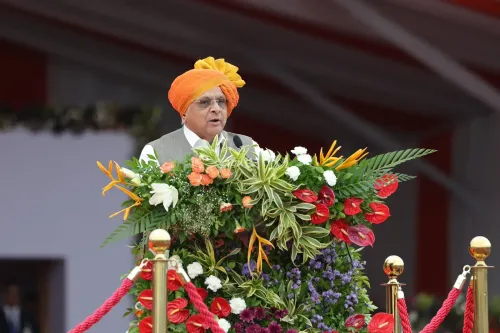
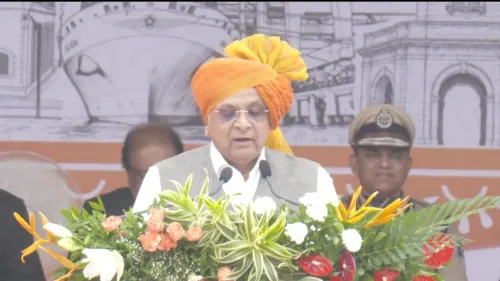
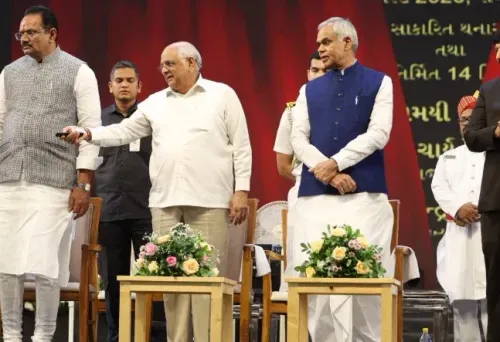
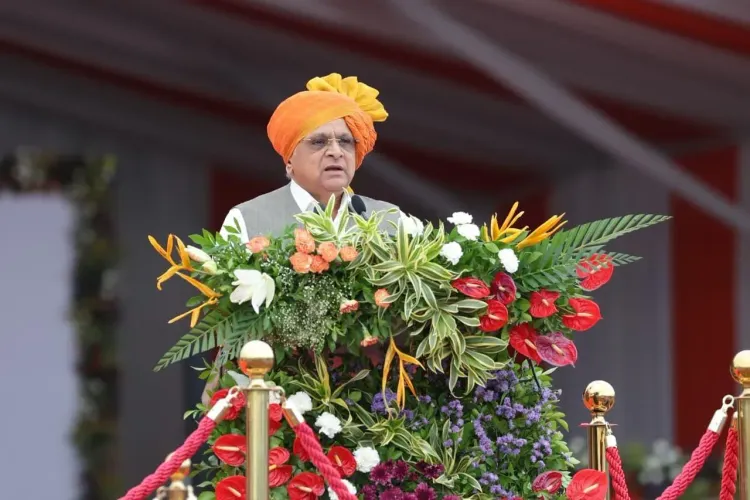
Chief Minister Bhupendra Patel on 15 August 2025 declared that Gujarat would take a leading role in realising Prime Minister Narendra Modi's 'Shakti ki Sapta Dhara' vision for a 'Viksit Bharat', addressing the state-level 80th Independence Day celebration at the Police Parade Ground in Amreli. The seven-pillar framework — spanning manufacturing, agriculture and food processing, innovation, Gati Shakti, defence capabilities and soft power — was originally outlined by the Prime Minister from the Red Fort.
Key Announcements by CM Patel
Patel unveiled a string of welfare and infrastructure measures during his address. The state will provide free residential plots to eligible rural families in areas where government or village settlement land is unavailable, with the government prepared to acquire private land for the purpose. He also announced ₹3,428 crore for the renovation and improvement of 210 km of roads across 214 roads.
For over 16.75 lakh Anganwadi children aged three to six, the daily allocation for hot supplementary nutritious snacks will be raised from ₹5.10 to ₹8.50 for 300 days a year, with an additional ₹173 crore earmarked for the measure. The annual family-income ceiling under the Overseas Education Loan Scheme for students from unreserved categories has been raised from ₹6 lakh to ₹10 lakh.
Gujarat's Economic Record
Patel cited the state's economic momentum, noting that four Vibrant Gujarat Regional Conferences had generated 13,255 MoUs worth ₹15.89 lakh crore, aimed at boosting MSMEs and traditional industries. He added that Gujarat's 1,600-kilometre coastline handles more than 40 per cent of the country's cargo, with modern fishing harbours and cold-chain facilities supporting the fishing community.
The Chief Minister pointed to semiconductor manufacturing, Artificial Intelligence, and green energy as pillars of modern growth, alongside the preservation of Ayurvedic heritage and the reconstruction of the Somnath Temple. 'From semiconductors, AI and green energy to the reconstruction of Somnath, Gujarat represents a remarkable blend of modernity and spirituality,' he said.
Development Pillars and Social Initiatives
Patel identified the Garib, Yuva, Annadata and Nari Shakti — the poor, youth, farmers and women — as the four pillars of Gujarat's development agenda. He said startups, incubation centres and skill-development programmes were generating employment for young people, while farmers were being supported through daytime electricity, adequate water supply and digital platforms such as e-NAM.
The state is also working to expand women's participation in the economy through initiatives including 'Ek Ped Maa Ke Naam' and 'Mission LiFE'. Healthcare infrastructure improvements, including medical colleges, taluka-level dialysis centres and cancer day-care centres, were also highlighted.
Commonwealth Games 2030 and Long-Term Goals
Patel noted that Gujarat's selection to host the 2030 Commonwealth Games reflected the state's organisational capabilities and would offer a platform to showcase its culture and hospitality globally. He set out twin long-term targets: celebrating 75 years of statehood in 2035 and achieving 'Viksit Gujarat 2047' in alignment with the national 'Viksit Bharat' goal.
The celebrations were held in Amreli — the birthplace of the state's first Chief Minister, Dr Jivraj Mehta — and featured a helicopter flower shower, police band performances, a cultural presentation on 'Maru Amreli', a bagpiper band comprising tribal girls from Ambaji, yoga demonstrations, a Nari Shakti programme, women's rifle drill, motorcycle stunts, and dog and horse shows. As Gujarat advances its development roadmap, the coming months will test whether the MoU commitments and welfare announcements translate into measurable outcomes on the ground.
Point of View
Reinforcing the BJP's 'one nation, one vision' narrative ahead of a busy electoral calendar. The ₹15.89 lakh crore MoU figure from Vibrant Gujarat conferences is eye-catching, but MoU-to-investment conversion rates in Indian state summits have historically been contested, and no conversion data was cited. The Anganwadi nutrition hike — from ₹5.10 to ₹8.50 per child per day — is welcome but remains below the nutritional cost benchmarks flagged by independent child-welfare researchers. Gujarat's 2030 Commonwealth Games bid adds a global optics layer, yet the infrastructure and fiscal implications of hosting were not addressed in the address.
NationPress
30 Sept 2026
Frequently Asked Questions
What is PM Modi's 'Shakti ki Sapta Dhara' vision that Gujarat pledged to fulfil?
'Shakti ki Sapta Dhara' is a seven-pillar development framework announced by Prime Minister Narendra Modi from the Red Fort, covering manufacturing, agriculture and food processing, innovation, Gati Shakti, defence capabilities, and soft power. Gujarat CM Bhupendra Patel committed the state to leading the implementation of this vision as part of the broader 'Viksit Bharat' goal.
What major announcements did CM Bhupendra Patel make on Independence Day 2025?
CM Patel announced ₹3,428 crore for road renovation across 214 roads covering 210 km, free residential plots for eligible rural families, a hike in Anganwadi nutrition budgets from ₹5.10 to ₹8.50 per child per day, and an increase in the income ceiling under the Overseas Education Loan Scheme from ₹6 lakh to ₹10 lakh for unreserved-category students.
What is the significance of Gujarat hosting the 2030 Commonwealth Games?
Gujarat's selection to host the 2030 Commonwealth Games, as highlighted by CM Patel, is seen as recognition of the state's organisational capacity and is expected to provide a global platform to showcase Gujarat's culture and hospitality. No further infrastructure or budget details were announced during the Independence Day address.
How large is Gujarat's investment pipeline from Vibrant Gujarat conferences?
Four Vibrant Gujarat Regional Conferences have collectively resulted in 13,255 MoUs worth ₹15.89 lakh crore, according to CM Patel's address. The intent is to accelerate growth in MSMEs and traditional industries, though actual investment conversion figures were not cited.
Why was the Independence Day celebration held in Amreli?
Amreli was chosen as the venue for Gujarat's state-level 80th Independence Day celebration, notably because it is the birthplace of the state's first Chief Minister, Dr Jivraj Mehta. The event featured cultural performances, a helicopter flower shower, and a parade at the Police Parade Ground.