How Did Gujarat CM Bhupendra Patel's Meeting with PM Modi Energize Development Plans?
Synopsis
Gujarat CM Bhupendra Patel's recent meeting with PM Modi in New Delhi was a significant step towards aligning state and national development agendas. The discussions addressed welfare governance, infrastructure projects, and the vision of a prosperous Gujarat. Patel's commitment to improving connectivity and public services marks an ambitious new phase for the state's future.
Key Takeaways
Meeting between Bhupendra Patel and PM Modi focused on development.
Approval for a new bridge to improve connectivity.
Investment of Rs 110 crore for infrastructure.
Emphasis on public welfare and citizen-centric governance.
Alignment of state priorities with national goals .
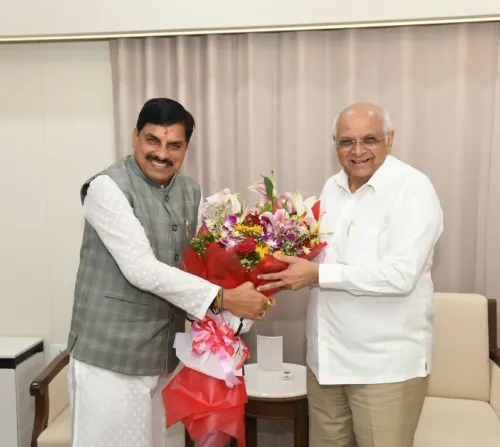
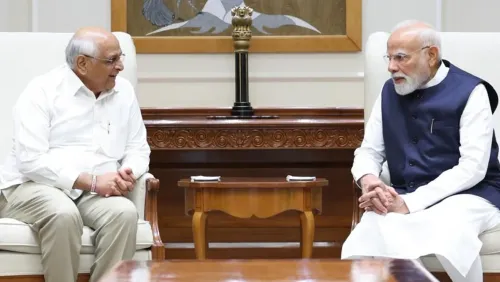
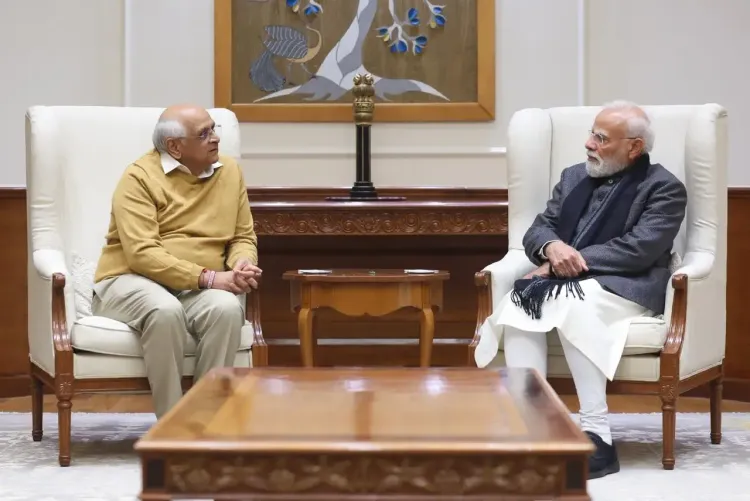
Ahmedabad, Dec 19 (NationPress) The Chief Minister of Gujarat, Bhupendra Patel, recently convened with Prime Minister Narendra Modi in New Delhi, referring to their dialogue as "highly energising".
The meeting took place shortly after the establishment of the new Gujarat Council of Ministers, centering on the state's development strategy and governance focused on welfare.
During their discussions, Chief Minister Patel emphasized the determination of “Team Gujarat” to achieve holistic development and enhance public welfare throughout the state. He informed the Prime Minister about the priorities established by the newly formed cabinet, reaffirming the government's commitment to boost growth while advancing citizen-focused governance.
Topics discussed included the results from the recent state government Chintan Shibir, where significant discussions were held regarding the vision for a “Viksit Gujarat”.
Chief Minister Patel shared valuable insights from the brainstorming sessions and outlined future plans aimed at development.
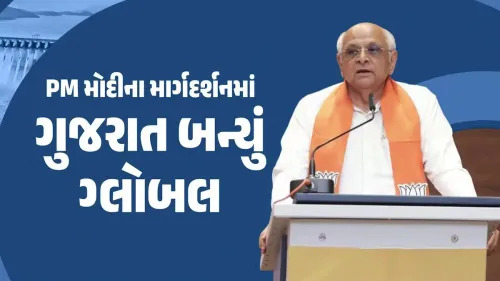
Prime Minister Modi offered essential guidance on the trajectory of Gujarat's growth and governance strategies. This meeting is deemed pivotal in aligning the state's development objectives with national priorities and strengthening collaborative efforts between state and central authorities.
Additionally, Chief Minister Patel has given the green light for a new bridge construction over the Sabarmati River at Rinza village in Tarapur taluka of Anand district, which will be built at an estimated cost of Rs 110 crore.
This decision aims to provide lasting relief to residents of Rinza, Nabhoi, Pachegam, and Dugari villages, who have endured severe connectivity challenges during the monsoon.
The villagers often find themselves isolated from the opposite bank during the rainy season due to the frequent shifting of the Sabarmati's course, disrupting daily life, agricultural pursuits, and access to vital services.
In a responsive and community-oriented approach, Chief Minister Patel acted on requests from local residents and sanctioned the construction of a two-lane bridge along with a new 4-kilometre approach road. The approved funding of Rs 110 crore encompasses land acquisition costs, necessary pre-construction activities like hydraulic surveys, soil investigations, detailed design, and the execution of the bridge and road infrastructure.
Officials have indicated that the project aims to guarantee all-weather connectivity for the affected villages, which currently face isolation during high river flow periods.
Upon completion, the bridge is anticipated to significantly enhance vehicular traffic, promote agricultural and economic activities, and improve the quality of life for local inhabitants.
Point of View
It's crucial to recognize the strategic significance of CM Patel's meeting with PM Modi. This interaction not only underscores Gujarat's commitment to development but also reflects a broader trend of collaboration between state and central governments in addressing public welfare and infrastructure needs.
NationPress
30 Sept 2026
Frequently Asked Questions
What was the main focus of the meeting between CM Patel and PM Modi?
The main focus was on the development roadmap for Gujarat and welfare-oriented governance.
What important infrastructure project was approved by CM Patel?
CM Patel approved the construction of a new bridge over the Sabarmati River at Rinza village.
How much is the estimated cost for the new bridge?
The estimated cost for the new bridge is Rs 110 crore.
What issues are residents facing that the new bridge aims to resolve?
Residents face connectivity problems during the monsoon, often being cut off from essential services.
What is the vision for Gujarat discussed in the meeting?
The vision discussed includes building a 'Viksit Gujarat' through comprehensive development initiatives.