Gujarat clears ₹1,331 crore lift irrigation project for 46 tribal villages in Valsad
Synopsis
Gujarat has cleared a ₹1,331 crore lift irrigation project that will pump water up to 382 metres to reach 46 tribal villages in Valsad that gravity-fed canals have never been able to serve — a rare piece of infrastructure designed around terrain rather than convenience, with 17,000 hectares of farmland and decades of groundwater dependence in the balance.
Key Takeaways
Gujarat CM Bhupendra Patel approved the ₹1,331.30 crore Daman-Ganga Lift Irrigation Project for Valsad district .
The project will irrigate 17,000 hectares across 46 villages in the tribal talukas of Kaprada and Dharampur .
Water will be pumped from Madhuban Reservoir through 53 km of trunk pipeline and over 188 km of branch lines across elevations up to 382 metres .
Three pumping stations with a combined capacity of 56,400 kW will power the system, operating for 100 days annually at 500 cusecs .
Water will be discharged into 26 village ponds and 81 check dams to support groundwater recharge alongside direct irrigation.
A SCADA system will provide real-time monitoring; the project is in its final pre-construction stage.
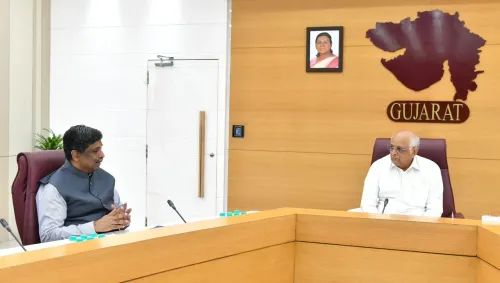
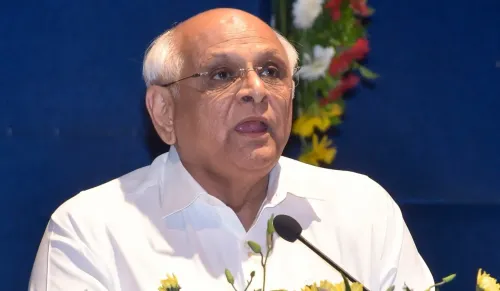
The Gujarat government has approved a ₹1,331.30 crore lift irrigation project to bring 17,000 hectares of farmland under irrigation across 46 villages in the tribal talukas of Kaprada and Dharampur in Valsad district, where hilly terrain has long blocked access to conventional canal networks. Chief Minister Bhupendra Patel granted administrative approval to the Daman-Ganga Lift Irrigation Project, which will draw water from the Madhuban Reservoir and pump it across elevations as high as 382 metres above mean sea level.
Why These Villages Couldn't Be Served Before
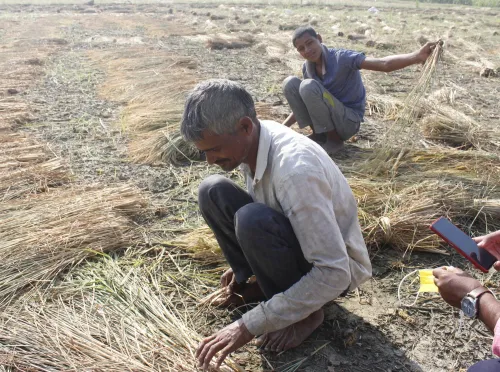
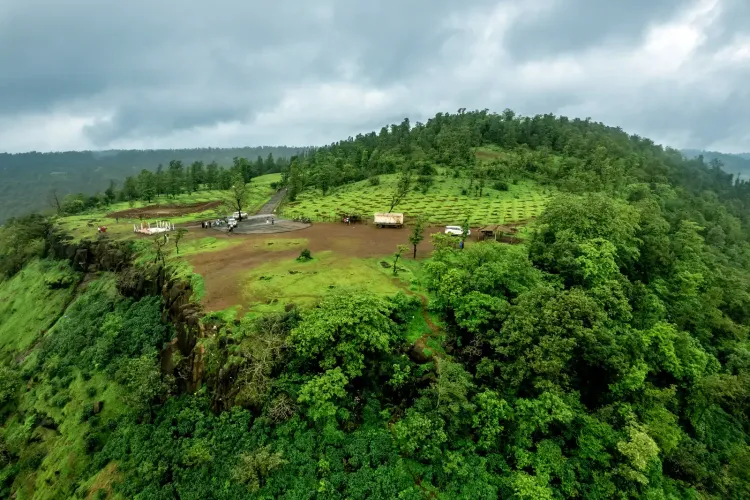
The upland areas of Kaprada and Dharampur lie above the existing gravity-fed canal distribution system that serves the lower coastal plains of South Gujarat. Without canal access, tribal farmers in the region have depended almost entirely on groundwater, significantly limiting their ability to practise multiple cropping and expand agricultural output. The approval addresses a water-access gap that has persisted for decades despite a major reservoir sitting nearby.
How the Engineering Works
Following feasibility studies commissioned by the state's Narmada Water Resources, Water Supply and Kalpsar Department, Alternative-3 was selected as the optimal route. The infrastructure will include a main trunk pipeline of approximately 53 km and more than 188 km of branch and feeder lines.
Three pumping stations will power the system — the first at Fatehpura village near Madhuban Dam, followed by intermediate stations at Burvad and near Kistoniya. The combined pumping capacity will be 56,400 kW, equivalent to 75,600 horsepower. Break pressure tanks near Kaprada village will regulate pressure at higher elevations, allowing water to flow by gravity toward Dharampur via downstream branch networks.
Operational Design and Water Distribution
The project will have a total supply capacity of 500 cusecs and run on a 15-day rotational schedule across two zones during a planned annual operating window of 100 days. Zone 1 will cover 28 villages in Kaprada taluka at a peak demand of 320 cusecs, while Zone 2 will serve 17 villages across Kaprada and Dharampur with an allocation of 180 cusecs.
Rather than relying solely on direct field-level distribution, lifted water will be discharged into 26 village ponds and 81 check dams, supporting groundwater recharge. A dedicated discharge of 1.5 cusecs into the Kangvi River near Barumal village is also planned. Hydrological assessments indicate the Madhuban Reservoir can supply the required 122.33 million cubic metres of water annually without affecting existing domestic or regional allocations.
Smart Monitoring and Expected Impact
The project will incorporate a central Supervisory Control and Data Acquisition (SCADA) system to monitor water flows and manage pipeline pressure in real time. According to the government statement, the project is in its final stage before construction commences.
Once operational, the scheme is expected to support multiple cropping cycles, reduce dependence on groundwater, and improve agricultural livelihoods across the tribal farming communities of Valsad district — one of Gujarat's more historically underserved regions in terms of irrigation infrastructure.
Point of View
Designed to reach communities that geography has systematically excluded. Gujarat's irrigation record in tribal talukas has lagged its broader agricultural performance, and this approval signals a belated recognition of that gap. The SCADA integration and groundwater-recharge design show a maturation in project conception, but the real test is whether construction timelines hold and whether the rotational scheduling — only 100 operating days a year — translates into meaningful productivity gains for farmers who currently have no irrigation safety net at all.
NationPress
10 Oct 2026
Frequently Asked Questions
What is the Daman-Ganga Lift Irrigation Project approved by Gujarat?
It is a ₹1,331.30 crore project approved by Chief Minister Bhupendra Patel to lift water from the Madhuban Reservoir and supply it to 46 tribal villages in Kaprada and Dharampur talukas of Valsad district. The project will bring 17,000 hectares of farmland under irrigation using a pipeline network spanning over 241 km.
Why do these tribal villages in Valsad need a lift irrigation project?
The upland areas of Kaprada and Dharampur lie above the existing gravity-fed canal system that serves lowland South Gujarat, making conventional canal irrigation physically impossible. Farmers there have long depended on groundwater, limiting crop diversity and yields. The lift system is the only feasible solution given the terrain, which rises to 382 metres above mean sea level.
How will water be distributed across the 46 villages?
The project uses two zones: Zone 1 covers 28 villages in Kaprada taluka at 320 cusecs, and Zone 2 serves 17 villages across Kaprada and Dharampur at 180 cusecs, on a 15-day rotational schedule over 100 operating days per year. Water will be discharged into 26 village ponds and 81 check dams to support both direct irrigation and groundwater recharge.
What is the current status of the project and when will it be operational?
The project is in its final stage before commencement, according to the government statement issued on 10 October 2026. A specific construction timeline or completion date has not yet been publicly announced.
Will the project affect existing water allocations from the Madhuban Reservoir?
According to the project's hydrological assessment, the Madhuban Reservoir has maintained near-full capacity in recent years and is considered capable of supplying the required 122.33 million cubic metres annually without affecting existing domestic or regional water allocations.