Gujarat's New Lift Irrigation Initiative to Transform 53,750 Acres for Tribal Farmers
Synopsis
Gujarat's CM Bhupendra Patel has launched a transformative lift irrigation project that will provide water to over 53,750 acres, empowering tribal farmers across multiple villages. This initiative, aligned with PM Modi's vision, promises to enhance agricultural productivity and improve livelihoods in the region.
Key Takeaways
Investment in irrigation: Rs 651.08 crore for the project.
Coverage: Water supply to 53,750 acres across 73 tribal villages.
Further expansion: Rs 210-crore extension planned for 19,141 acres.
Government commitment: Focus on improving irrigation in remote tribal areas.
Holistic development: Rs two lakh crore Tribal Welfare Scheme announced for comprehensive support.
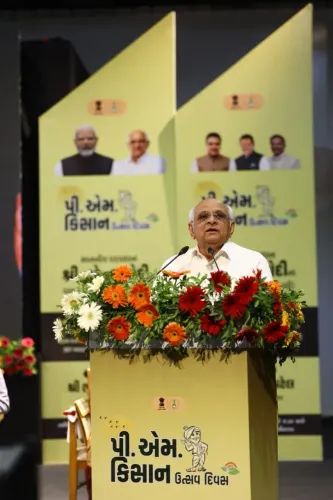
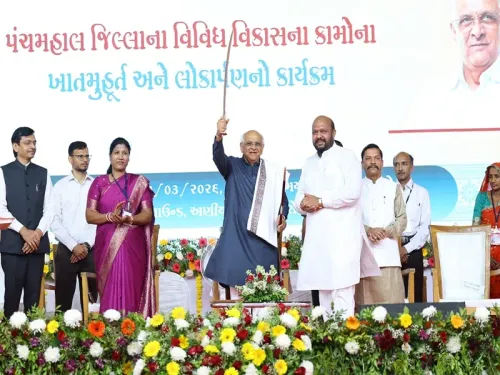
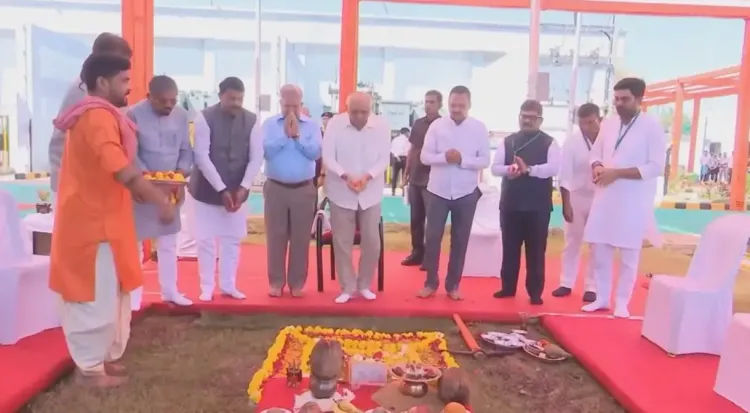
Surat, March 7 (NationPress) The Chief Minister of Gujarat, Bhupendra Patel, officially launched the Tapi-Karjan Link Pipeline lift irrigation initiative on Saturday, which is anchored on the Ukai Reservoir. This project will facilitate water supply to 53,750 acres spanning 73 tribal villages in the Umarpada and Dediapada talukas of Surat and Narmada districts, respectively.
The primary goal of this initiative is to provide dependable irrigation to tribal farmers, thereby enhancing agricultural output.
During the inauguration, the Chief Minister also laid the foundation for a Rs 210-crore expansion of the scheme, which is set to irrigate an additional 19,141 acres across 29 villages in the Umarpada region.
This lift irrigation scheme, established at a total cost of Rs 651.08 crore, utilizes pipelines to transport water from heights reaching up to 87 feet, effectively addressing geographical challenges to deliver water to remote tribal farmlands.
In his address, Chief Minister Patel underscored the significance of the project in fulfilling Prime Minister Narendra Modi's vision for a 'Developed India @2047' and a 'Developed Gujarat'.
"The era of development politics, under Prime Minister Modi's guidance, brings the most marginalized individuals into the development fold. Every initiative focuses on the welfare of the smallest community members," he stated.
Moreover, the Chief Minister inaugurated 12 additional development projects valued at Rs 126 crore in Surat and distributed various benefits—including certificates under the Forest Rights Act, housing assistance from PMAY, storage support, and tractors—to tribal beneficiaries.
The Tribal Development Minister, Naresh Patel, reaffirmed the government's commitment to extending irrigation services to even the most isolated regions.
"From 'Nal Se Jal' to ensuring water access for fields, areas previously neglected are now benefiting from lift irrigation. When farmers have access to water throughout the year, agricultural productivity will rise, positively impacting the state’s economy," he explained.
Ishwarsinh Patel, the Minister of State for Water Supply and Water Resources, pointed out that villages in Umarpada and Dediapada, despite experiencing significant rainfall, struggled with water shortages for rabi and summer crops.
"Through strategic planning and engineering, we have tackled long-standing irrigation issues," he added.
Officials reported that the state has built 14,756 small check dams, which now irrigate 1.52 lakh acres, while 735 large check dams cater to 80,500 acres.
Additionally, 3,500 ponds have been deepened to secure water availability. A Rs 912-crore lift irrigation pipeline is also underway to serve remote areas of Songadh, Uchhal, Nizar, and Kukarmunda, benefiting 69,000 acres and 14,117 families.
To combat water scarcity in southern Gujarat, this year, Rs 522 crore is allocated for 249 check dams and weirs, projected to directly or indirectly benefit 16,990 acres.
MPs Prabhu Vasava and Mansukh Vasava commended the government's efforts in enhancing irrigation and agricultural prospects in tribal regions.
MLA Ganpatsinh Vasava remarked that this project would revolutionize agriculture in the remote hill and forest villages, ensuring water for irrigation while respecting the environment and local traditions.
The Chief Minister emphasized the contributions of the Vanbandhu Welfare Scheme in providing essential services such as education, healthcare, roads, housing, electricity, and water facilities throughout the tribal belt from Ambaji to Umargam.
He also highlighted Prime Minister Modi's recent announcement of a Rs two lakh crore Tribal Welfare Scheme over five years, aimed at the holistic development of tribal areas in Gujarat, with an annual budget of Rs 35,000 crore dedicated to education, health, roads, and infrastructure projects.
Point of View
It's clear that this initiative by Gujarat's government reflects a strategic approach to rural development. By prioritizing irrigation in tribal areas, the project not only addresses immediate agricultural needs but also aligns with broader national development goals. Ensuring water access can significantly uplift communities and foster sustainable growth.
NationPress
20 Sept 2026
Frequently Asked Questions
What is the purpose of the Tapi-Karjan Link Pipeline project?
The project aims to provide reliable irrigation to tribal farmers, enhancing agricultural productivity over 53,750 acres.
How much has been invested in the lift irrigation scheme?
The lift irrigation project has been established at a total cost of Rs 651.08 crore.
Which areas will benefit from this irrigation scheme?
The scheme will benefit 73 tribal villages in Umarpada of Surat district and Dediapada of Narmada district.
What additional projects were launched during the inauguration?
Alongside the irrigation project, 12 development works worth Rs 126 crore were inaugurated in Surat district.
What is the Vanbandhu Welfare Scheme?
The Vanbandhu Welfare Scheme focuses on providing essential services like education, healthcare, and infrastructure in tribal areas.