CM Bhupendra Patel: ₹159.50 Cr Damanganga Barrage for Vapi
Synopsis
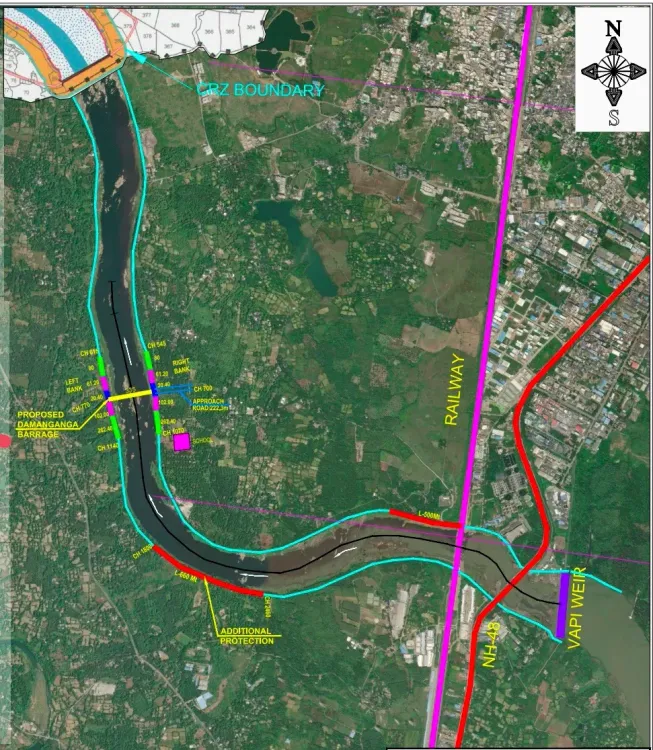
Gujarat Chief Minister Bhupendra Patel announces the ₹159.50 crore Damanganga Barrage in Valsad district, set to irrigate 549 hectares across six villages in Vapi taluka, secure drinking water for Vapi Municipal Corporation, ensure industrial supply for GIDC, block seawater intrusion, and enable riverfront development.
Key Takeaways
The Damanganga Barrage Yojana will be built in Valsad district at a cost of ₹159.50 crore .
Construction work is set to begin shortly , as announced by Gujarat CM Bhupendra Patel on October 12, 2026.
549 hectares of cultivable land across six villages near Namadha, Vapi taluka , will gain irrigation access.
The barrage will meet rising drinking water demand for Vapi Municipal Corporation and water needs of GIDC industries .
The structure will prevent seawater intrusion into the Damanganga riverbed and recharge groundwater levels .
Future plans include riverfront development and recreational facilities along the Damanganga in Vapi city.
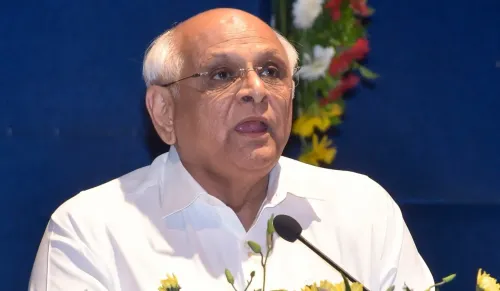
A ₹159.50 crore barrage on the Damanganga river in Valsad district is set to break ground soon — and for south Gujarat, it could rewrite the region's water story. Gujarat Chief Minister Bhupendra Patel announced on Monday, October 12, 2026, that work on the ambitious Damanganga Barrage Yojana will begin shortly, promising irrigation, drinking water, and industrial supply benefits across the region.
549 Hectares of Farmland Unlocked in Vapi Taluka
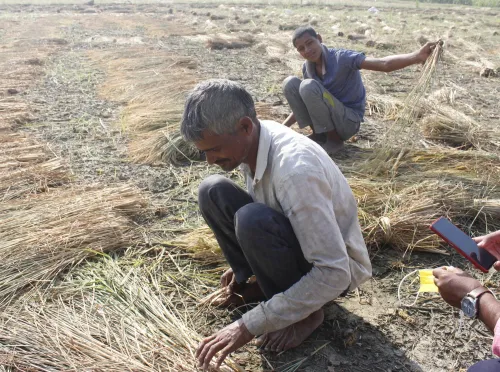
At the core of the project is a direct lifeline for farmers. The barrage will extend irrigation facilities to 549 hectares of cultivable land across six villages near Namadha in Vapi taluka. CM Patel stated that the scheme will boost the economic prosperity of local farmers — communities that have long depended on rain-fed agriculture in this coastal stretch of south Gujarat.
Drinking Water for Vapi Municipal Corporation, Industrial Supply for GIDC
Vapi's elevation to a Municipal Corporation has sharply increased its civic water demand. The barrage is designed to meet that growing need, while simultaneously securing adequate water supply for industries under the Gujarat Industrial Development Corporation (GIDC) — one of the most densely packed industrial corridors on India's western coast. The project, in effect, future-proofs one of Gujarat's key economic engines.
Seawater Intrusion Blocked, Groundwater Recharged
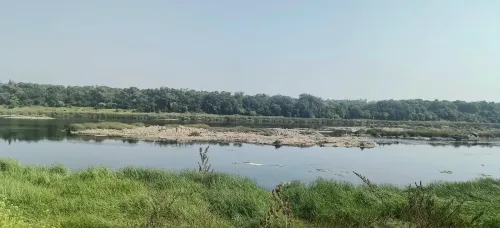
The Damanganga meets the Arabian Sea, making salinity ingress a chronic problem in the river's lower reaches. The barrage will act as a physical barrier, preventing seawater from pushing upstream into the riverbed — a threat that degrades groundwater quality across the surrounding villages. CM Patel noted that the structure will also significantly raise groundwater levels, providing a recharge benefit that extends well beyond the river's immediate banks.
Riverfront and Recreation: Vapi's Urban Future on the Damanganga
Beyond agriculture and industry, the announcement points to a longer urban ambition: riverfront development and recreational facilities along the Damanganga, which CM Patel described as a 'new gift' for Vapi city. The vision echoes similar riverfront projects that have reshaped Gujarat's urban identity — from Sabarmati in Ahmedabad to the Tapi in Surat.
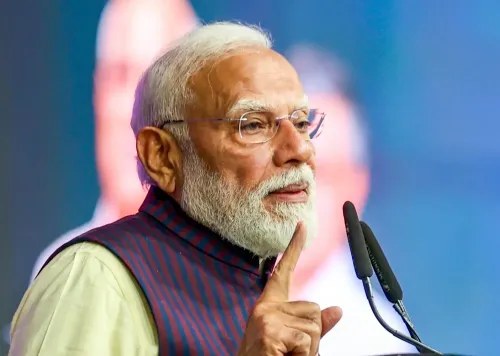
CM Patel credited the project's direction to Prime Minister Narendra Modi's guidance, reaffirming the government's commitment to delivering robust irrigation and drinking water infrastructure to 'the last person' — a phrase the BJP has consistently used to frame its welfare framing in Gujarat.
For Vapi — an industrial city that has grown faster than its civic infrastructure — a barrage that simultaneously addresses farm water, drinking supply, industrial demand, salinity control, and urban aesthetics is a rare all-in-one bet. Whether it delivers on every front will depend on execution timelines. The clock starts now.
Point of View
Industry, civic supply, and urban aesthetics bundled into a single project narrative. For CM Bhupendra Patel, it serves a dual purpose: shoring up farmer and tribal community support in south Gujarat's coastal belt while positioning Vapi's industrial corridor as a forward-looking growth hub. The explicit invocation of PM Modi's guidance signals that the project is being framed as part of a national water-security mission rather than purely local statecraft. Delivery timelines and actual utilisation of the 549-hectare irrigation command area will be the real test of whether the announcement translates into lasting rural impact.
NationPress
12 Oct 2026
Frequently Asked Questions
What is the Damanganga Barrage Yojana in Gujarat?
The Damanganga Barrage Yojana is a ₹159.50 crore water infrastructure project in Valsad district, Gujarat, announced by CM Bhupendra Patel. It will irrigate 549 hectares of farmland, supply drinking water to Vapi Municipal Corporation, meet GIDC industrial water needs, and prevent seawater intrusion in the Damanganga river.
How many villages will benefit from the Damanganga Barrage?
Six villages in Vapi taluka, including Namadha, will benefit from the barrage, gaining irrigation access for 549 hectares of cultivable land.
What is the cost of the Damanganga Barrage project?
The project is estimated to cost ₹159.50 crore and is expected to begin construction shortly, as announced on October 12, 2026.
How will the Damanganga Barrage help Vapi city?
The barrage will address Vapi Municipal Corporation's rising drinking water demand, secure water for GIDC industrial estates, block seawater intrusion into the river, raise groundwater levels, and lay the groundwork for future riverfront and recreational development.
Where is the Damanganga river located in Gujarat?
The Damanganga river flows through Valsad district in south Gujarat, eventually meeting the Arabian Sea. The proposed barrage will be constructed on this river in Vapi taluka.