Gujarat forms panel to cut teachers' non-academic workload
Synopsis
Gujarat has set up a formal committee to cut the administrative load — including multi-portal data entry — that has been eating into teachers' classroom time. Education Minister Pradyuman Vaja's 'mission mode' pledge signals rare institutional intent, but the real test will be whether the committee's report triggers enforceable reforms or becomes another file in Gandhinagar.
Key Takeaways
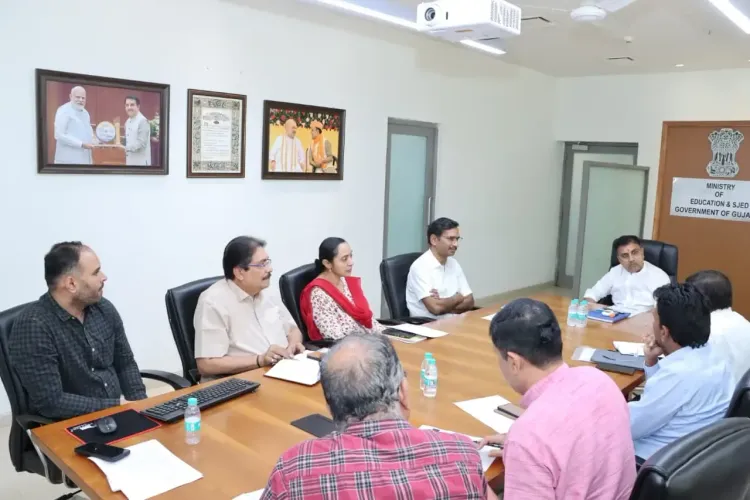
Education Minister Pradyuman Vaja chaired a high-level meeting in Gandhinagar on 17 October 2026 to review teacher workload.
A committee comprising officials from the Education Department , GCERT , Samagra Shiksha , and the Commissioner of Schools has been constituted.
The panel will examine online data entry, multi-portal reporting, and non-academic duties assigned to primary and secondary teachers.
Vaja said the effort is being pursued 'in mission mode' and cited Viksit Bharat 2047 as the broader national backdrop.
Principal Secretary Milind Torawane and Director of Primary Education Prakash Trivedi attended the meeting.
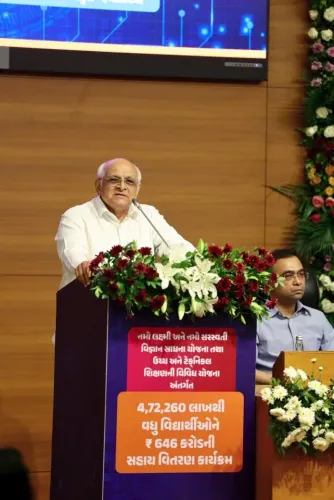
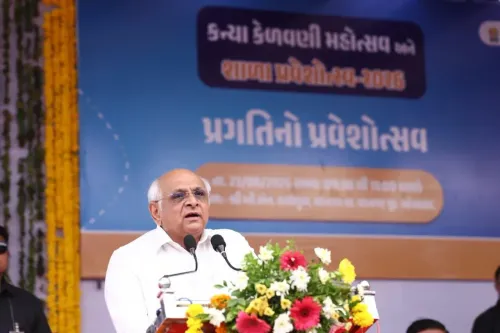
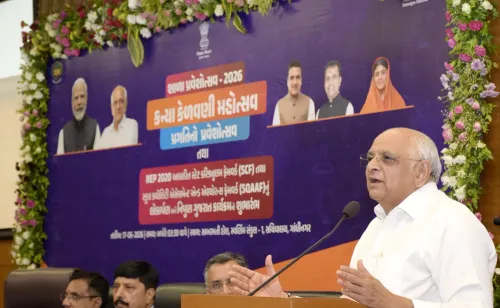
The Gujarat government has moved to address long-standing concerns among schoolteachers about excessive non-academic duties, with Education Minister Pradyuman Vaja on Saturday, 17 October 2026 convening a high-level meeting in Gandhinagar and directing a committee to recommend ways to reduce online data entry and other administrative burdens on primary and secondary school teachers.
What the Committee Will Do
The review panel will include senior officials from the Education Department, the Gujarat Council of Educational Research and Training (GCERT), Samagra Shiksha, and the Commissioner of Schools. It will examine workload arising from reporting obligations, data entry on multiple government portals, and responsibilities assigned by various departments — in addition to teacher training requirements. The committee is expected to submit its findings to the state government, which will take a final call on reforms based on those recommendations.
What the Minister Said
Vaja made clear that the exercise is aimed at restoring classroom time as teachers' primary focus. “The classroom is a teacher's true workplace,” he said, stressing that unnecessary online data entry and non-academic obligations must be reduced. The minister added that efforts to simplify teachers' work are being pursued “in mission mode,” signalling urgency rather than routine review.
Invoking Prime Minister Narendra Modi's national vision, Vaja said: “Education would be key to achieving the target [of Viksit Bharat 2047] and that teachers had an important role to play.” He also called on the government, teachers, and students to collectively contribute to nation-building.
Who Attended and Who Is Affected
Principal Secretary of the Education Department Milind Torawane, Director of Primary Education Prakash Trivedi, and senior officials from GCERT and Samagra Shiksha Abhiyan attended the meeting. The review directly concerns primary and secondary schoolteachers across Gujarat, whose instructional hours have reportedly been squeezed by mounting administrative tasks spread across multiple digital portals.
Why This Review Matters
Teacher workload reform has been a recurring demand across Indian states, where centralised digital governance — while intended to improve transparency — has often translated into hours of clerical work for classroom educators. Gujarat's move mirrors concerns raised at the national level, where the National Education Policy (NEP) 2020 explicitly calls for freeing teachers from non-teaching duties. Notably, this is one of the few instances of a state government institutionalising the review through a formal committee rather than ad-hoc circulars. The committee's report, once submitted, will test whether the stated commitment translates into enforceable simplification or remains aspirational.
Point of View
But the pattern of such exercises across Indian states is instructive: review committees frequently diagnose the problem correctly yet produce recommendations that departments quietly shelve. The NEP 2020 already mandated relief from non-teaching duties nationally — five years on, data entry burdens have multiplied rather than shrunk. What distinguishes enforceable reform from ritual review is a time-bound mandate, measurable reduction targets, and accountability for the departments that generate the portal requirements in the first place. None of those elements are visible yet in Gujarat's announcement.
NationPress
17 Oct 2026
Frequently Asked Questions
Why has Gujarat formed a committee on teachers' workload?
The Gujarat government formed the committee after Education Minister Pradyuman Vaja reviewed the growing administrative burden on primary and secondary schoolteachers, which includes data entry on multiple online portals and non-academic duties assigned by various departments. The stated goal is to free up more time for classroom teaching and improve education quality.
Which departments and bodies are part of the review committee?
The committee includes senior officials from the Gujarat Education Department, the Gujarat Council of Educational Research and Training (GCERT), Samagra Shiksha, and the Commissioner of Schools. It will submit its findings to the state government, which will take the final decision.
What specific issues will the committee examine?
The panel will look at workload from online reporting, data entry on multiple government portals, non-academic responsibilities assigned by different state departments, and teacher training requirements. The aim is to identify what can be simplified or eliminated.
How does this connect to the national education agenda?
Education Minister Vaja linked the review to Prime Minister Narendra Modi's Viksit Bharat 2047 vision, arguing that teachers must be freed from administrative tasks to play their role in nation-building. The National Education Policy 2020 also calls for reducing non-teaching duties imposed on teachers.
What happens after the committee submits its report?
The committee's recommendations will be placed before the Gujarat state government, which will take a final decision on measures to simplify teachers' duties. No timeline for the report's submission has been publicly announced.