Gujarat's UCC Bill: A Long-Standing Ideological Commitment Unfolds
Synopsis
Gujarat has enacted a Uniform Civil Code (UCC), becoming the second state after Uttarakhand to do so. BJP President Jagdish Vishwakarma emphasizes that this is a culmination of long-standing ideological dedication rather than a sudden decision, marking a pivotal step towards social justice.
Key Takeaways
Gujarat is the second state to pass the UCC Bill after Uttarakhand.
The UCC aims to provide a uniform legal framework for personal matters across communities.
BJP President Jagdish Vishwakarma emphasizes the long-standing ideological commitment behind this decision.
The UCC is seen as a milestone for women's rights and social justice.
The BJP's approach underscores a commitment to 'Nation First' .
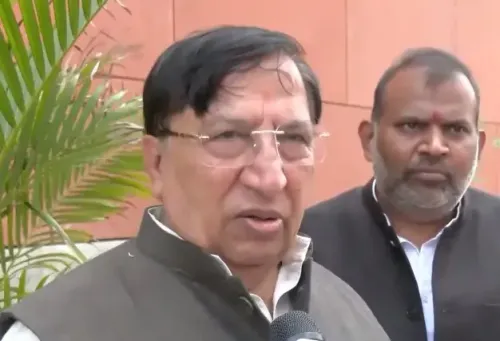
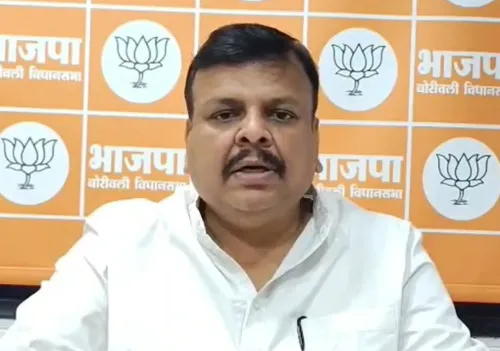
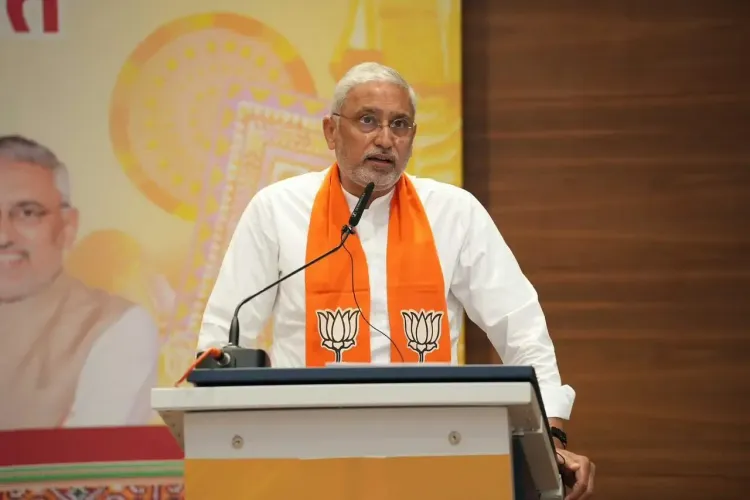
Gandhinagar, March 25 (NationPress) Gujarat has positioned itself as the second state following Uttarakhand to enact a Uniform Civil Code (UCC) Bill. On Wednesday, state BJP President Jagdish Vishwakarma highlighted that this initiative promotes a cohesive legal structure governing personal issues across various communities.
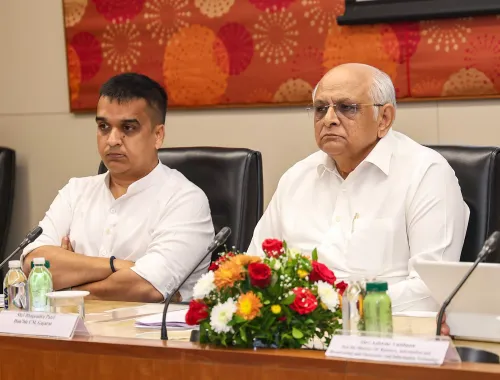
In a statement released after the Bill's approval in the Assembly on Tuesday night, Vishwakarma asserted that this legislation, spearheaded by Prime Minister Narendra Modi and Chief Minister Bhupendra Patel, marks a significant advancement towards the principle of 'One Nation, One Law.'
He emphasized that the enactment of the UCC would rectify existing legal disparities among communities concerning marriage, inheritance, succession, adoption, divorce, property rights, and guardianship.
“Currently, diverse laws prevail based on religion, caste, sect, and cultural practices regarding these aspects. The implementation of the UCC will eliminate these discrepancies,” he stated.
Vishwakarma characterized this milestone as exceptionally meaningful for women in Gujarat.
“This day holds particular significance for Gujarat, especially for its women,” he remarked.
He noted that this decision stems from a deeply rooted ideological commitment rather than a recent initiative.
“This is not an abrupt decision, but rather the culmination of persistent effort, sacrifice, and steadfast ideological dedication,” he asserted.
Citing early resolutions from the Bharatiya Jana Sangh, he recalled that in 1952, the party advocated for the repeal of Article 370, the integration of Jammu and Kashmir, the construction of a Ram temple in Ayodhya, and the establishment of a Uniform Civil Code.
“Article 370 has been repealed, a grand Ram temple has been constructed in Ayodhya, and now Gujarat has become the second state after Uttarakhand to implement the Uniform Civil Code,” he noted.
He also criticized opposition parties, claiming they resisted the UCC for political motives.
“For decades, the Opposition has opposed the UCC solely for vote-bank politics and appeasement, attempting to keep the country divided,” he accused.
He added, “Those who claimed that the Ram temple would never be built or that the removal of Article 370 would lead to rivers of blood have now been proven wrong.”
Highlighting the UCC's provisions, Vishwakarma stated, “The Uniform Civil Code guarantees equal rights for every citizen, irrespective of caste, religion, or sect. It is a landmark achievement for social justice and equality.”
He further asserted that the passage of the Bill reflects the party’s commitment to governance.
“The BJP operates with a 'Nation First' spirit and believes in 'Sabka Saath, Sabka Vikas, and Sabka Nyay.' The pledge made to the citizens has now been fulfilled,” he stated.
He pointed out that the state government acted in alignment with Article 44 of the Constitution, reinforcing the foundation for a uniform legal framework.
With the resolve of the Jana Sangh, the dedication of the BJP, and the leadership at the national level, “India is advancing towards a new trajectory,” he concluded.
Point of View
Championed by the BJP, reflects a commitment to unify personal laws across communities and enhance social justice. While it has faced opposition, the implications for women's rights and legal equality are substantial.
NationPress
22 Sept 2026
Frequently Asked Questions
What is the Uniform Civil Code?
The Uniform Civil Code is a proposed set of laws that seeks to replace personal laws based on the scriptures and customs of each major religious community in India with a common set governing every citizen.
Why is the UCC significant for women?
The UCC aims to provide equal rights and legal protection to women across all communities, addressing disparities in marriage, inheritance, and guardianship.
Who supports the UCC in India?
The UCC is primarily supported by the BJP and its affiliates, who view it as a step towards national integration and social justice.
What are the criticisms of the UCC?
Critics argue that the UCC could infringe on religious freedoms and cultural practices, and some opposition parties have raised concerns about its implementation.
What other states have implemented the UCC?
As of now, Uttarakhand and Gujarat are the only two states in India to have passed the UCC.