Amit Shah Advocates Equal Laws with Gujarat's UCC Bill Approval

Synopsis
Union Home Minister Amit Shah applauds Gujarat's passage of the Uniform Civil Code Bill 2026, reinforcing the principle of equal laws for all citizens. This pivotal legislation aims to unify civil laws across communities, addressing marriage, divorce, and inheritance. Shah emphasizes BJP's commitment to this transformative legal framework.
Key Takeaways
Gujarat passes the Uniform Civil Code (UCC) Bill 2026 .
The UCC aims to create a unified legal framework for civil matters.
It emphasizes equal laws for all citizens.
The Bill mandates registration of marriages and divorces.
It includes provisions for monogamy and equal inheritance rights.
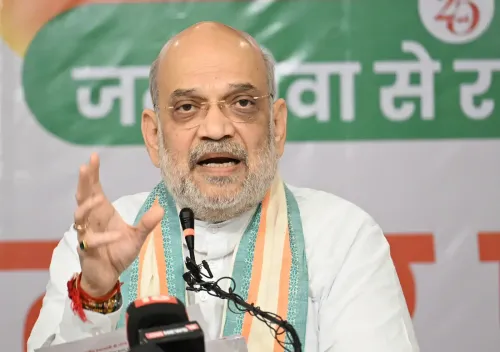
New Delhi, March 25 (NationPress) Union Home Minister Amit Shah expressed his approval on Wednesday regarding the recent enactment of the Uniform Civil Code (UCC) Bill 2026 by the Gujarat Legislative Assembly. He emphasized that the nation should operate on the principle of equal laws for all individuals.
Following Uttarakhand, Gujarat has become the second state to adopt the Uniform Civil Code (UCC) Bill, 2026, on Tuesday, which establishes a unified legal framework for civil issues including marriage, divorce, maintenance, and inheritance applicable across various communities and religions.
In a message shared on X, Shah stated, "Our conviction is evident: the nation must not be governed through appeasement but rather through the principle of equal laws for every citizen. This is our commitment and priority."
The Union Home Minister highlighted that implementing a uniform law is a fundamental commitment of the Bharatiya Janata Party (BJP).
"A uniform law for every citizen has been a foundational promise of the BJP since its beginning. Under Prime Minister Narendra Modi's leadership, state governments led by the BJP are consistently advancing in this direction," he remarked.
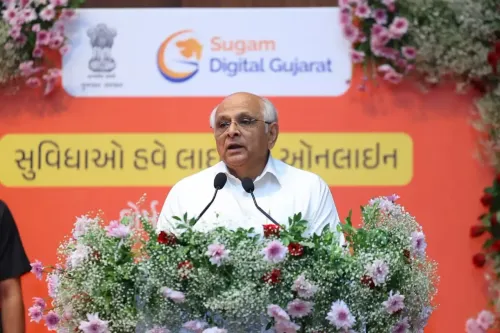
He commended Gujarat's Chief Minister Bhupendra Patel and the MLAs who supported the Bill.
Shah noted, "I am delighted that after Uttarakhand, Gujarat has successfully passed the Uniform Civil Code (UCC) Bill, showcasing its strong commitment to this principle. I congratulate Chief Minister Bhupendra Patel and all legislators who backed this Bill."
Importantly, the UCC legislation mandates the compulsory registration of marriages and divorces and establishes standardized grounds and procedures for divorce across communities.
It prohibits extrajudicial divorce methods, necessitating court-based legal processes.
The Bill also enforces monogamy and includes provisions that render marriages void in cases of concealed identity.
Additionally, it introduces penal measures for instances of fraud, coercion, or misrepresentation in marriage, outlining specific penalties for these offenses.
The law secures maintenance rights for women without restrictions tied to personal laws and guarantees equal inheritance rights for daughters and spouses.
The Bill also necessitates the registration of live-in relationships with local authorities, which the government claims aims to provide legal protection and accountability.
Point of View
Emphasizing equality across communities. Amit Shah's statements reflect a national agenda focused on fairness, steering the legislative direction under BJP leadership. This move is likely to invoke diverse reactions, given its potential impact on personal laws.
NationPress
22 Sept 2026
Frequently Asked Questions
What is the Uniform Civil Code Bill?
The Uniform Civil Code Bill aims to establish a common legal framework for civil matters such as marriage, divorce, and inheritance, applicable across all communities in India.
Why is the UCC important?
The UCC is important because it seeks to ensure that all citizens are treated equally under the same set of laws, promoting justice and fairness in civil matters.
What changes does the UCC introduce?
The UCC introduces compulsory registration of marriages and divorces, standardized divorce procedures, and equal inheritance rights, among other provisions.
Who supported the UCC Bill in Gujarat?
The UCC Bill was supported by Gujarat Chief Minister Bhupendra Patel and various MLAs in the Gujarat Legislative Assembly.
What are the penalties under the UCC?
The UCC includes penal provisions for fraud, coercion, or misrepresentation in marriages, specifying punishments for such offenses.