Gujarat Makes History with Passage of UCC Bill 2026
Synopsis
On March 24, Gujarat officially became the second state in India to pass the Uniform Civil Code (UCC) Bill 2026, a monumental step towards equal rights across communities, as stated by Chief Minister Bhupendra Patel.
Key Takeaways
Gujarat is the second state to implement the UCC after Uttarakhand.
The UCC aims to provide equal rights across religions in matters of marriage, divorce, and inheritance.
Penalties include fines and imprisonment for non-compliance with marriage registration and coercive marriages.
Public support was overwhelmingly in favor of uniform provisions.
Exemptions exist for minority community customs and tribal practices.
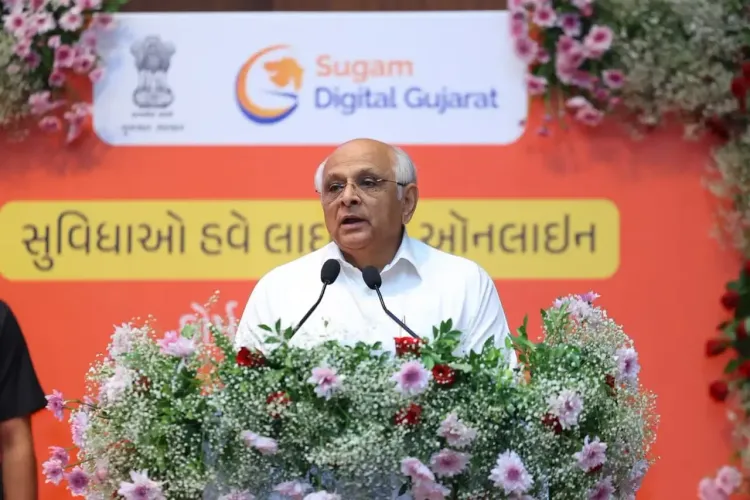
Gandhinagar, March 24 (NationPress) Gujarat's Chief Minister Bhupendra Patel described the recent approval of the Uniform Civil Code (UCC) Bill 2026 by the state Assembly as a monumental achievement for both Gujarat and the entire nation.
The legislation was passed after a rigorous debate spanning over seven and a half hours, concluding with a majority vote in favor.
“I congratulate all the elected representatives of the state and every citizen for the successful passage of the Uniform Civil Code Bill. This marks a turning point for Gujarat and for our country,” Patel expressed in the Assembly, noting that Gujarat is now the second state in India, following Uttarakhand, to enact the UCC.
He emphasized that the new law aims to create a consistent legal framework across various religions and communities concerning marriage, divorce, inheritance, and adoption.
“This will guarantee that women from all religions and communities enjoy equal rights, thus enhancing their dignity and security,” he added.
Addressing cultural concerns, Patel reassured, “This Bill is not intended to undermine any culture; the tribal culture will remain protected.”
He further mentioned that all aspects had been thoroughly examined before introducing the legislation, which incorporates provisions aimed at delivering justice for women and children.
As he presented the Bill, members from the Treasury benches vocally supported it.
“The state’s diverse geographical and cultural landscape has been considered to ensure fairness for all communities,” he remarked.
A high-level committee led by retired Supreme Court judge Ranjana Desai conducted an in-depth study and submitted its comprehensive report to the government on March 17, after extensive consultations and public outreach across various districts.
During the discussion, Deputy Chief Minister Harsh Sanghavi noted that the committee received nearly 2 million public suggestions through letters, emails, web portals, and in-person meetings.
“Out of these responses, around 49% or approximately 972,000 were received via email, while 5.5% or about 109,000 came through the web portal,” he stated.
A significant majority supported uniform provisions, with 81% favoring common marriage laws, 79% backing uniform divorce regulations, 83% advocating for equal property rights and maintenance provisions, and 86% supporting mandatory divorce registration.
The Bill mandates registering marriages within 60 days, with penalties reaching up to ₹10,000 for non-compliance.
It also introduces a penalty of up to seven years’ imprisonment for marriages conducted under coercion, intimidation, or fraud, as well as for bigamy, ensuring that accurate marital status records protect the rights of women and children while preventing fraudulent unions.
In divorce matters, only court-granted and duly registered divorces will be deemed valid, with violations resulting in penalties of up to three years’ imprisonment.
The law guarantees women an unconditional right to remarry after a legally recognized divorce, while establishing uniform grounds and procedures across communities to promote gender equality, simplify legal processes, and minimize disputes.
The proposed Code introduces standardized maintenance provisions for all religions and ensures equal inheritance rights, giving sons and daughters identical legal standing across communities, thereby enhancing women’s financial security and fostering a more equitable social framework.
Furthermore, the Bill regulates live-in relationships by making registration mandatory, with penalties of up to ₹10,000 or up to three months’ imprisonment for non-compliance.
If individuals entering such relationships are aged between 18 and 21 years, their parents will be notified.
The legislation also imposes penalties for fraud, coercion, or intimidation and applies the provisions of the Protection of Children from Sexual Offences (POCSO) Act in cases involving minors while penalizing those entering into live-in relationships despite being legally married.
Clarifying exemptions, Patel mentioned that certain customary practices among minority communities, such as marriages between specific relatives, will remain unaffected by the law, and Scheduled Tribes have been exempted from the code to safeguard their traditional customs.
Point of View
Divorce, and inheritance across various communities. This move, endorsed by significant public support, aims to bolster women's rights and ensure equitable treatment, though it raises questions about cultural preservation.
NationPress
23 Sept 2026
Frequently Asked Questions
What is the Uniform Civil Code (UCC)?
The UCC is a proposed set of laws aimed at replacing personal laws based on the scriptures and customs of each major religious community in India with a common set governing every citizen.
Why is the UCC significant?
The UCC seeks to ensure equal rights for all citizens, particularly women, across different religions in matters of marriage, divorce, inheritance, and adoption.
What penalties are included in the UCC Bill?
The UCC Bill includes penalties for non-registration of marriages, coercive marriages, and invalid divorces, with severe repercussions such as imprisonment and fines.
How does the UCC affect live-in relationships?
The UCC mandates the registration of live-in relationships and imposes penalties for non-compliance, ensuring legal recognition and protection for individuals involved.
Are there exemptions within the UCC?
Yes, certain customary practices in minority communities and tribal customs are exempt from the UCC to protect their traditions.