What Steps is Gujarat Taking for Census 2027?
Synopsis
Gujarat is gearing up for Census 2027, and the first meeting of the State-Level Census Coordination Committee has set the stage for accurate and efficient data collection. With key officials leading the charge, learn how this census will impact resource allocation and planning for the next decade.
Key Takeaways
First meeting of Gujarat SLCCC held to prepare for Census 2027.
Comprehensive review of planning and groundwork was conducted.
Key strategies for census execution were outlined.
Importance of accurate data for resource allocation and policy-making.
Collaboration with various departments is essential for success.
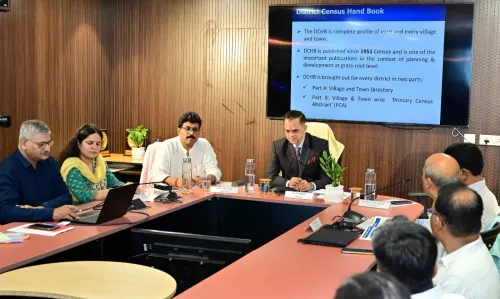
Ahmedabad, Jan 7 (NationPress) The inaugural session of the Gujarat State-Level Census Coordination Committee (SLCCC) convened in Gandhinagar, led by Chief Secretary Manoj Kumar Das, to assess the groundwork for the forthcoming Census 2027.
During this session, the Chief Secretary undertook a thorough examination of the planning framework and the essential groundwork necessary for a seamless execution of the upcoming population census.
State Census Coordinator and Revenue Secretary Rajesh Manju, along with other SLCCC members, participated in this crucial meeting.
Sujal Mayatra, Director of Census Operations for Gujarat, presented a comprehensive overview detailing the strategy to ensure Census 2027 is completed within the stipulated timelines.
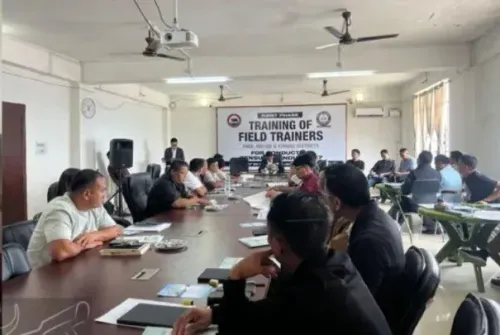
The presentation highlighted significant facets such as the formalization of administrative boundaries, insights from the preliminary testing phase, and preparations for training census enumerators.
The committee also deliberated on the deployment of officers and the necessary workforce for the census, the timeline for house-listing activities, and collaborative mechanisms with various government sectors.
Following the presentation and discussions, Chief Secretary Manoj Kumar Das commended the preparatory initiatives taken thus far and offered guidance to guarantee that all census-related operations in Gujarat are executed with precision, transparency, and effectiveness.
Census 2027 is pivotal as it delivers the most accurate depiction of India's population and its requirements. It aids governments in making informed decisions regarding fund allocation, infrastructure planning, healthcare and education expansion, and welfare program design. The data dictates the necessary number of schools, hospitals, roads, housing, and job opportunities in different regions. Additionally, it informs policies on migration, urbanization, aging populations, and socio-economic disparities.
For states like Gujarat, Census 2027 will facilitate the identification of growth trends, the updating of administrative boundaries, and enhancements in resource distribution across districts. In essence, it lays the groundwork for shaping India's development strategy for the next decade, ensuring that policies and budgets align with the genuine needs of the population.
Point of View
It is essential to recognize the significance of a well-conducted census in shaping policies that genuinely reflect the needs of the population. The meticulous planning and coordination seen in Gujarat for Census 2027 showcase a commitment to data integrity, which is pivotal for effective governance and resource allocation.
NationPress
27 Sept 2026
Frequently Asked Questions
Why is Census 2027 important?
Census 2027 is vital as it provides an accurate representation of India's population, guiding decisions on resource allocation, infrastructure, healthcare, and various welfare schemes.
Who is leading the preparations for Census 2027 in Gujarat?
The preparations for Census 2027 in Gujarat are being led by Chief Secretary Manoj Kumar Das, along with the State-Level Census Coordination Committee.
What topics were covered in the SLCCC meeting?
The SLCCC meeting addressed planning strategies, administrative boundary formalization, enumerator training, and coordination with government departments.
How will the census data impact policy-making?
The census data will inform policies regarding infrastructure, healthcare, education, and welfare programs, ensuring they meet the actual needs of the population.
What is the role of the Director of Census Operations?
The Director of Census Operations, Sujal Mayatra, is responsible for outlining the strategy and ensuring the census is completed within the designated timelines.