Has the Gujarat government approved a ₹2,630 crore project to expand the Ahmedabad–Mehsana highway?
Synopsis
The Gujarat government has approved a groundbreaking project to widen the Ahmedabad–Mehsana highway into an eight-lane corridor. This ₹2,630 crore initiative aims to significantly reduce traffic congestion and enhance connectivity, benefiting millions across northern Gujarat. Discover the impact this expansion will have on local communities and economic growth.
Key Takeaways
₹2,630 crore project approved for highway expansion.
Expansion from four lanes to eight lanes .
Expected to reduce travel time and fuel costs.
Construction includes elevated corridors and multiple flyovers.
Benefits residents of Mehsana , Patan , and Banaskantha .
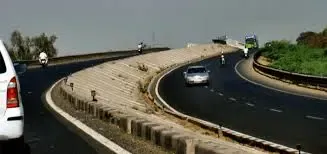
Gandhinagar, Jan 28 (NationPress) The Gujarat Cabinet has given the green light for a substantial ₹2,630 crore initiative to expand the 51-km Ahmedabad–Mehsana highway into a spacious eight-lane corridor. This development is designed to alleviate the traffic congestion on one of the most heavily trafficked roads linking Ahmedabad with northern Gujarat.
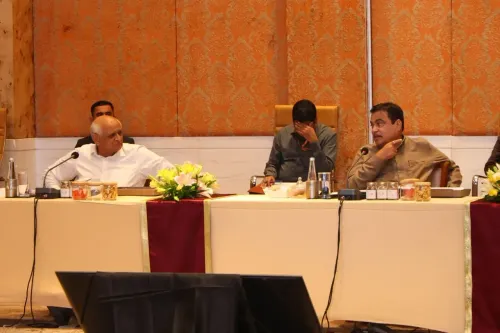
The decision was made during a Cabinet meeting led by Chief Minister Bhupendra Patel, as confirmed by state government spokesperson and Minister Jitu Vaghani on Wednesday.
Minister Vaghani stated that the project encompasses a 51.60-km stretch from Adalaj to Palavasna Circle in Mehsana and is anticipated to benefit commuters and residents from the districts of Mehsana, Patan, and Banaskantha.
"This highway serves as a crucial link between Ahmedabad and North Gujarat. By approving this project, we are addressing a long-standing demand of the region," he remarked.
Government officials noted that the highway was initially upgraded to four lanes back in 1999, with service roads constructed alongside.
However, the volume of traffic has surged significantly over the years.
A recent traffic survey indicated that over one lakh vehicles utilize this route daily, exerting considerable pressure on the current infrastructure.
In light of the escalating traffic demands, the state Cabinet approved the proposal to expand the primary carriageway to eight lanes and to build seven-metre-wide service roads on both sides along the entire stretch.
Providing insight into the project design, Minister Vaghani mentioned the construction of a 6.10-km elevated corridor through Kalol city to alleviate congestion caused by local traffic.
This elevated section will connect five existing overbridges and flyovers, facilitating highway traffic to bypass the city with minimal disruption.
"This will guarantee a smoother flow of traffic while reducing interference from urban vehicles," he added.
All existing bridges, pipe culverts, and box culverts along the route will be widened to accommodate the eight-lane format.
The plan also includes the establishment of eight flyovers, including two at Shertha and additional new flyovers at Rajpur Bhasariya, Jagudan, and Mevad.
Four-lane flyovers will be either added or expanded at Kalol and Chhatral.
Moreover, eight underpasses will be constructed at strategic locations to enhance local connectivity and safety.
These will include two near Shertha, one close to IFFCO Kalol, two within Kalol city, and one each near Chhatral, Nandasan, and Ganeshpura.
A new four-lane railway overbridge will also be built adjacent to the existing Kalol railway overbridge.
Minister Vaghani stated that tenders for the project will be issued soon, and once awarded, the construction is expected to be completed within two years.
Officials noted that the expansion of the highway is projected to decrease travel time, save fuel, and reduce the likelihood of accidents, while stimulating economic growth across Mehsana, Patan, and Banaskantha districts.
Gujarat has positioned itself as one of India's frontrunners in infrastructure development, with ongoing investments in roads, ports, industrial corridors, urban transport, and energy systems.
The state has established a comprehensive highway and expressway network to enhance regional and interstate connectivity, while projects like metro rail systems, upgraded airports, and logistics hubs are fortifying urban mobility and trade.
Gujarat's robust port infrastructure along its extensive coastline has bolstered industrial development and exports, complemented by a power surplus and large-scale renewable energy initiatives. Collectively, these efforts have significantly contributed to economic activity, attracting investment and improving the movement of people and goods throughout the state.
Point of View
The approval of the Ahmedabad–Mehsana highway expansion underscores Gujarat's commitment to advancing its infrastructure. This project is not merely an enhancement of road capacity; it reflects a larger vision of connectivity and economic development that aligns with the nation's growth ambitions. As the demand for robust infrastructure escalates, such initiatives will play a crucial role in supporting regional economies and improving the quality of life for citizens.
NationPress
23 Sept 2026
Frequently Asked Questions
What is the cost of the Ahmedabad–Mehsana highway expansion project?
The project has been approved at a cost of ₹2,630 crore.
How long is the stretch of the highway being expanded?
The highway stretch being widened is 51.60 kilometers.
What is the expected completion time for the project?
The project is planned to be completed within two years of tender approval.
Which districts will benefit from this highway expansion?
The expansion will benefit commuters and residents of Mehsana, Patan, and Banaskantha districts.
How many lanes will the highway have after the expansion?
The highway will be expanded to an eight-lane corridor.