HAM-S chief Suman defends Modi birthday Deepotsav, invokes Nehru's Children's Day
Synopsis
Bihar Minister and HAM-S chief Santosh Kumar Suman has stepped forward to defend the Deepotsav planned for PM Modi's birthday, drawing an unexpected parallel with Nehru's Children's Day and framing lamp-lighting as a cultural reclamation rather than a political stunt — a move that signals the NDA's Bihar unit is actively shaping the narrative around the event.
Key Takeaways
HAM-S President and Bihar Minister Santosh Kumar Suman defended the Deepotsav planned for PM Modi's birthday on 17 September .
Suman invoked Jawaharlal Nehru's birth anniversary, observed as Children's Day on 14 November , to argue that honouring a Prime Minister's birthday is established practice.
He described the deep (earthen lamp) as a symbol of light, auspiciousness, knowledge, and well-being in Indian tradition.
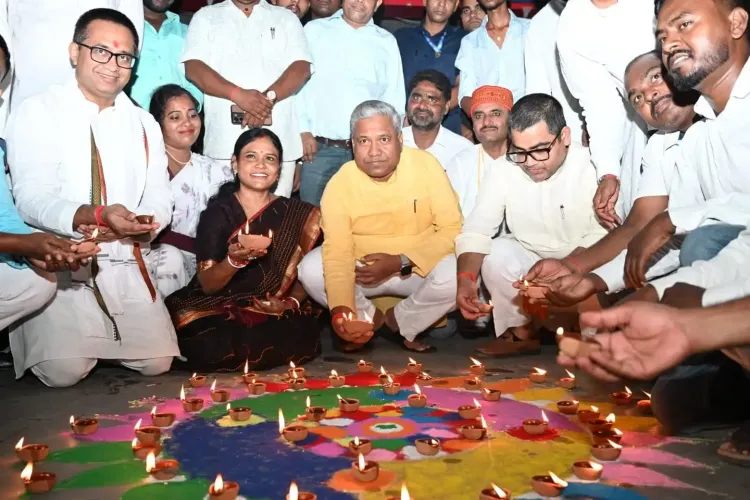
Suman said the Deepotsav is a voluntary cultural act, not a political one, and called on citizens to light lamps at homes, institutions, and public places.
He argued India should balance modernity with traditional values, saying adopting modern customs should not mean discarding indigenous ones.
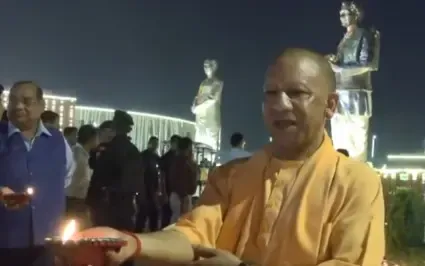
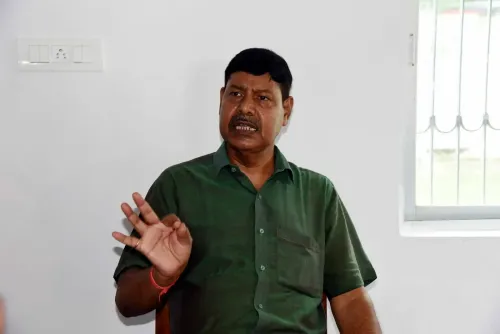
Hindustani Awam Morcha-Secular (HAM-S) President and Bihar Minister Santosh Kumar Suman on Thursday, 17 September defended a proposed Deepotsav — a lamp-lighting celebration — organised to mark Prime Minister Narendra Modi's birthday, saying there was no legitimate ground for controversy over the gesture.
Suman's Core Argument
Addressing questions over the initiative, Suman drew a direct parallel with the birth anniversary of India's first Prime Minister Jawaharlal Nehru, which has for decades been observed nationally as Children's Day on 14 November. He argued that if honouring Nehru's birthday through a designated national observance was accepted practice, marking the incumbent Prime Minister's birthday through a Deepotsav was equally unremarkable.
The HAM-S chief stressed that a birthday is a significant occasion that can be commemorated in multiple ways, and that choosing to light earthen lamps — known as diyas — was rooted in Indian cultural tradition rather than political calculation.
Cultural Symbolism Behind the Deepotsav
According to Suman, the deep (earthen lamp) occupies a central place in Indian civilisational heritage, traditionally representing light, auspiciousness, knowledge, and well-being. He contended that lighting lamps on a birthday is an expression of those values, not a partisan statement.
He acknowledged that cutting cakes and blowing out candles had become a mainstream birthday ritual over the years, adding he found no fault with such modern customs. However, he argued that embracing contemporary practices should not come at the cost of abandoning indigenous traditions. "A birthday should be a celebration of light, not darkness. Lamps should be lit, good wishes expressed, and the new generation should move forward while remaining connected to its cultural roots," he said, describing this as the animating spirit of the proposed Deepotsav.
Political Context
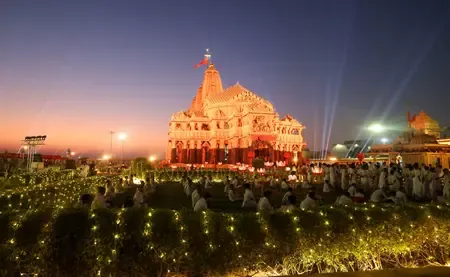
HAM-S is a constituent of the National Democratic Alliance (NDA) in Bihar, and Suman's defence of the initiative aligns the party publicly with the broader campaign around Prime Minister Modi's birthday. The Deepotsav concept — mobilising citizens to light lamps at homes, institutions, and public places — mirrors the visual language used during Diwali celebrations and other state-backed lamp-lighting events in recent years.
Notably, birthday observances for sitting Prime Ministers have historically drawn scrutiny over the use of public resources and administrative machinery, though Suman framed the Deepotsav specifically as a voluntary cultural act by citizens and institutions rather than a state-mandated programme.
What Suman Said on Tradition vs Modernity
Suman argued that India could progress by maintaining a balance between modernity and traditional values. He said that wishing Prime Minister Modi good health, longevity, and success through lamp-lighting should be regarded as a positive cultural expression rather than a matter of political controversy. The broader subtext of his remarks was a push to reclaim everyday ritual — birthdays included — as a space where Indian cultural identity can be reaffirmed.
With the Deepotsav planned for 17 September, the political optics of the event will likely be watched closely in the run-up to future electoral cycles in Bihar.
Point of View
Not organised by a party cadre. The Deepotsav, by contrast, is being driven by NDA-aligned networks, and that distinction matters when assessing whether public resources or administrative pressure will be involved. The deeper question mainstream coverage skips is whether the voluntary framing holds in practice: in Bihar's political culture, 'voluntary' mobilisation by ruling-party leaders rarely operates without pressure on local officials and institutions. The cultural argument is sincere on its own terms, but it also functions as a pre-emptive shield against accountability questions.
NationPress
17 Sept 2026
Frequently Asked Questions
What is the Deepotsav planned for PM Modi's birthday?
The Deepotsav is a lamp-lighting celebration proposed to mark Prime Minister Narendra Modi's birthday on 17 September. Supporters, including Bihar Minister Santosh Kumar Suman, have called on citizens to light earthen lamps at homes, institutions, and public places as a gesture of goodwill and cultural expression.
Why did Santosh Kumar Suman compare the Deepotsav to Children's Day?
Suman argued that just as the birth anniversary of India's first Prime Minister Jawaharlal Nehru has long been observed as Children's Day on 14 November, marking PM Modi's birthday through a Deepotsav is equally consistent with the tradition of honouring Prime Ministers. He used the comparison to counter criticism that the celebration was politically motivated.
Is the Deepotsav a government programme or a party initiative?
Suman described it as a voluntary cultural act by citizens and institutions rather than a state-mandated programme. However, the event is being promoted by NDA-aligned leaders, and its organisational character has drawn scrutiny over the potential use of official platforms.
What is Santosh Kumar Suman's position?
Santosh Kumar Suman is the President of Hindustani Awam Morcha-Secular (HAM-S) and a minister in the Bihar government. HAM-S is a constituent of the National Democratic Alliance (NDA) in Bihar.
Why is the Deepotsav considered controversial by some?
Critics have questioned whether organising a state-adjacent celebration for a sitting Prime Minister's birthday is appropriate use of public goodwill or administrative networks. Suman directly addressed this controversy, arguing that lamp-lighting is a cultural tradition, not a political act.