Harry Boxer extradition to India may take months, says CBI

Synopsis
Harry Boxer, a reportedly key shooter of the Lawrence Bishnoi gang, has been detained by US ICE in California — but bringing him back to India could take months. Multi-state criminal cases, a mandatory immigration court process, and the accused's right to challenge extradition in US courts all stand between his detention and his return.
Key Takeaways
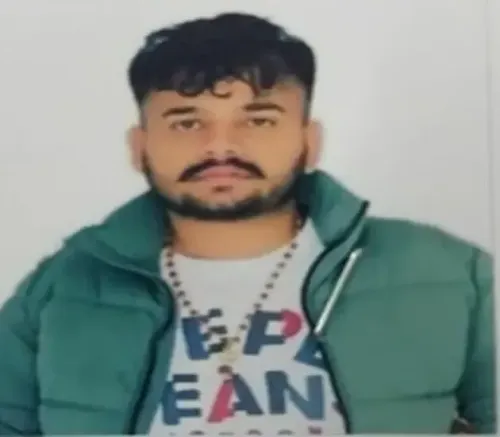
Harry Boxer (Hari Chand Jaat), an alleged shooter of the Lawrence Bishnoi gang , is currently detained by US ICE in California .
He was detained on immigration violations , not directly on criminal charges registered against him in India.
India must submit a formal extradition dossier under the India-US Extradition Treaty , covering cases in Rajasthan, Punjab, Delhi, and Mumbai .
The dossier will include forensic evidence, FIRs, charge sheets, and voice recordings from multiple state police agencies.
US extradition law allows the accused multiple opportunities to challenge proceedings; a potential asylum claim could delay the process further.
Boxer has been absconding since 2022 and was tracked by Indian agencies following a firing incident near filmmaker Rohit Shetty's Mumbai residence.
Harry Boxer, also known as Hari Chand Jaat, a reportedly notorious shooter linked to the Lawrence Bishnoi gang, faces a lengthy extradition process from the United States to India, with legal hurdles and procedural delays likely to stretch the timeline by several months, according to CBI sources. Boxer is currently in the custody of the US Immigration and Customs Enforcement (ICE) in California, detained on immigration violations rather than on the criminal charges registered against him in India.
Why Boxer Was Detained
According to CBI sources, Boxer's current detention is strictly for immigration violations and is not directly linked to the criminal cases pending against him in India. This distinction matters significantly: before any extradition proceedings can begin, Boxer must first appear before a US immigration court and undergo a formal hearing. Only after those proceedings conclude can India formally initiate the extradition process.
Indian security and intelligence agencies had been closely tracking his movements, particularly following a firing incident outside Bollywood filmmaker Rohit Shetty's residence in Mumbai. His detention is reportedly the result of sustained inputs and coordinated efforts by Indian law enforcement agencies.
The Extradition Process: Multiple Steps and Legal Challenges
Under the India-US bilateral Extradition Treaty, India will be required to formally submit a comprehensive extradition dossier once immigration proceedings conclude. This dossier, according to CBI sources, will include forensic evidence, details of First Information Reports (FIRs), charge sheets, and voice recordings connected to cases registered against Boxer in Rajasthan, Punjab, Delhi, and Mumbai.
A further complication is that most cases against Boxer are being investigated by state police agencies rather than a central body. Documents from multiple state jurisdictions must be consolidated into a single dossier and routed to the Ministry of External Affairs through the CBI. The Delhi Police Special Cell and the Mumbai Crime Branch have already begun submitting relevant case documents to central agencies.
Notably, US extradition law provides the accused with ample opportunities to challenge proceedings at multiple court levels. In some cases, individuals also apply for political asylum, which can further delay matters by months or even years. Officials confirmed that extradition to India will not be possible until a US court grants the necessary approval.
Who Is Harry Boxer
Boxer is a native of Narayanpur village in Rajasthan. His nickname reportedly stems from an earlier career as a boxing coach in Jaipur before he drifted away from sport and agriculture into the criminal underworld. He has been absconding since 2022, eventually fleeing India to the United States, where Indian agencies continued to monitor his activities. He is alleged to be a key operative of the Lawrence Bishnoi gang, which has been linked to a string of high-profile crimes across multiple states.
What Happens Next
The immediate next step is the conclusion of immigration court proceedings in the US, after which India must formally lodge its extradition request. Given the multi-state nature of the cases, the consolidation of evidence alone could take considerable time. Any legal challenge by Boxer or a potential asylum claim could add further delays. All eyes are now on how swiftly the CBI and the Ministry of External Affairs can assemble and transmit the dossier once the immigration process runs its course.
Point of View
The burden of assembling a coherent legal dossier falls on a CBI that must act as a clearinghouse for state police evidence — a process that is slow by design. The India-US Extradition Treaty exists, but treaty existence and treaty speed are very different things. The US system's layered legal protections, combined with the possibility of an asylum plea, mean that even a detained fugitive can remain beyond India's reach for years. This gap between high-profile arrests and actual repatriation continues to be exploited, and without streamlined inter-agency evidence protocols, each extradition case will restart the same procedural clock.
NationPress
7 Nov 2026
Frequently Asked Questions
Who is Harry Boxer and why is he wanted in India?
Harry Boxer, also known as Hari Chand Jaat, is an alleged shooter linked to the Lawrence Bishnoi gang and is wanted in connection with criminal cases registered across Rajasthan, Punjab, Delhi, and Mumbai. He has been absconding since 2022 and fled to the United States, where he was tracked by Indian security agencies.
Why was Harry Boxer detained in the US?
Harry Boxer was detained by the US Immigration and Customs Enforcement (ICE) in California on immigration violations, not directly on the criminal charges pending against him in India. His detention followed sustained inputs and efforts by Indian law enforcement and intelligence agencies.
How long will the extradition of Harry Boxer take?
According to CBI sources, the extradition could take several months due to multiple legal hurdles. Boxer must first complete immigration court proceedings in the US, after which India will formally submit an extradition dossier; the accused can challenge proceedings at multiple court levels, and any asylum application could delay the process further.
What does India need to do to extradite Harry Boxer?
India must submit a formal extradition dossier under the India-US bilateral Extradition Treaty, containing forensic evidence, FIR details, charge sheets, and voice recordings from cases across multiple states. The dossier must be consolidated by the CBI from various state police agencies and forwarded through the Ministry of External Affairs.
Which agencies are involved in the extradition process?
The Central Bureau of Investigation (CBI), the Delhi Police Special Cell, the Mumbai Crime Branch, and the Ministry of External Affairs are all involved. State police agencies from Rajasthan, Punjab, Delhi, and Maharashtra are supplying case documents, which the CBI is consolidating for the formal extradition request.