Harvard community rejects alumni statement on Delhi protests, cites threat to democratic institutions
Synopsis
While roughly 100 Harvard alumni condemned the crackdown on Delhi protests, a broader Harvard-linked group fired back — accusing the original signatories of attempting to weaponise a prestigious university name to delegitimise India's Election Commission, Supreme Court, and Parliament. The Harvard Club of India has already clarified it issued no such statement, stripping the letter of any formal institutional backing.
Key Takeaways
A cross-section of the Harvard community on 14 October 2026 called out a 'concerted campaign' against India's constitutional institutions .
The counter-statement targets language in an alumni letter that described India as under 'siege' and labelled constitutional authorities as 'thieves' or 'compromised'.
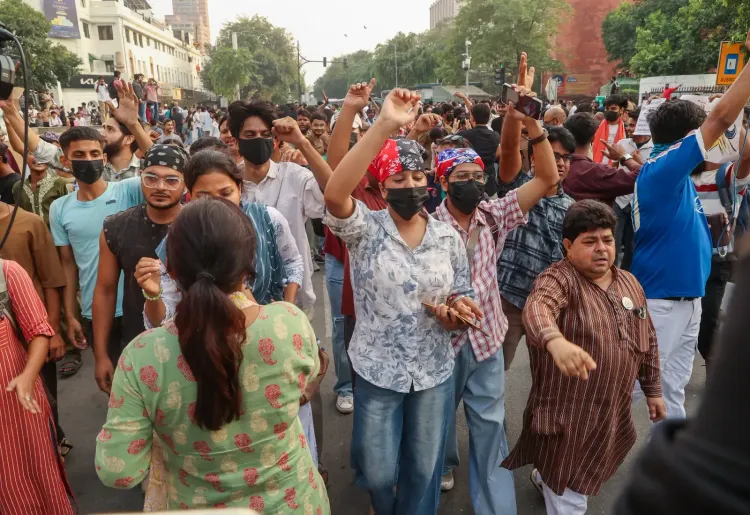
Approximately 100 Harvard alumni had, a day earlier, condemned a crackdown on CJP-led protests in New Delhi on 10 October , alleging police brutality.
The Harvard Club of India clarified it did not endorse or issue any statement on the protests, distancing the organisation from the alumni letter.
The counter-statement calls for commitment to 'the Constitution, not convenience; to justice, not selective outrage.'
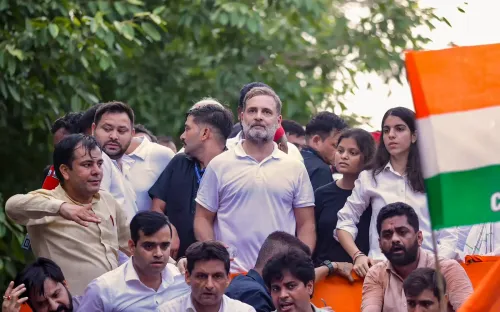
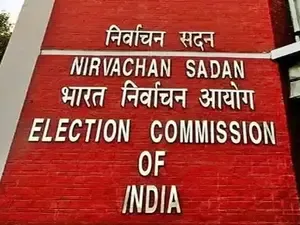
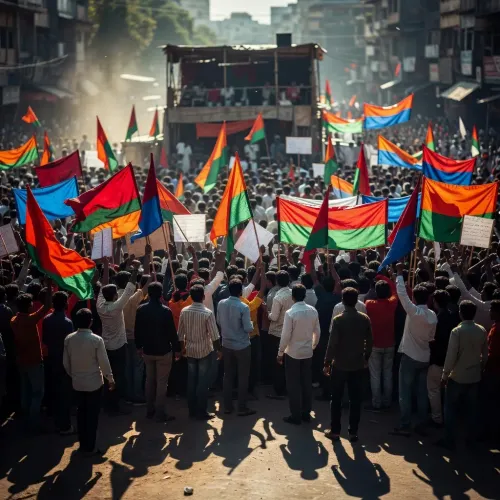
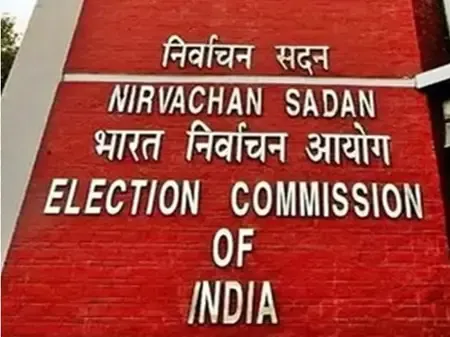
A broad cross-section of the Harvard community — encompassing lawyers, policymakers, civil servants, scientists, and academics — on Wednesday, 14 October 2026, raised sharp objections to what it described as a 'negative public discourse' and a 'concerted campaign' against India's constitutional institutions. The group dubbed assertions made by certain university alumni as 'alarming and troubling', amid ongoing protests in New Delhi against the Election Commission of India (ECI) and allegations of 'vote chori' (vote theft).
What the Harvard Community Statement Said
The signatories — Indian citizens associated with Harvard and other leading universities — expressed deep concern over attempts to malign institutions including the Election Commission of India, the Supreme Court, the Chief Justice of India, and Parliament. They took strong exception to language that characterised India as being under 'siege' and described constitutional authorities as 'thieves' or 'compromised'.
'This raises serious concerns about the intent to undermine public trust in democratic institutions,' the statement noted. It further asserted that while law enforcement agencies must face fair scrutiny, 'sweeping accusations and abusive rhetoric cannot be a substitute for evidence.'
'Our commitment must remain to the Constitution, not convenience; to justice, not selective outrage; and to democratic institutions, not the politics of accusation,' the statement read. It also called for respecting the Constitution, the rule of law, and civil liberties 'at all times, not just when it suits one's interests.'
Background: The Alumni Statement That Triggered the Pushback
The Harvard community's counter-statement comes a day after approximately 100 Harvard University alumni — comprising students, faculty, and staff — condemned what they described as a crackdown on CJP-led protests in the national capital on 10 October. That group alleged police brutality and violations of constitutional rights during the demonstrations.
This is the latest episode in a broader pattern of overseas diaspora groups and international institutional affiliates weighing in on Indian domestic politics, a practice that has itself drawn recurring debate about the appropriate limits of such interventions.
Harvard Club of India Distances Itself
Notably, the Harvard Club of India had already issued a clarification a day prior, stating it did not endorse or issue any statement on behalf of the university regarding the Delhi protests. The club distanced itself from the reported alumni letter, describing the document as the signatories' personal opinions rather than any official institutional position.
This clarification is significant: it severs any formal institutional link between Harvard University as an organisation and the political assertions contained in the alumni letter, leaving the statement as an expression of individual views.
Why This Matters
The episode surfaces a recurring tension in Indian public life — the weight lent to statements that invoke prestigious international institutions, and the accountability deficit when such names are used without formal authorisation. Critics of the original alumni letter argue that attaching the Harvard brand to a political campaign without explicit institutional backing is misleading, while supporters contend that alumni retain the right to speak collectively on matters of democratic concern.
'In moments such as these, silence cannot be an excuse for indifference,' the counter-statement's signatories said, framing their response as a civic obligation rather than a political one.
With the Delhi protests still ongoing and the ECI at the centre of the controversy, the competing statements are unlikely to settle the underlying political debate — but they do mark a rare moment of public pushback from within elite academic networks.
Point of View
The original alumni letter is legally and reputationally just a group of individuals, yet it was widely circulated with Harvard's implicit brand attached. That asymmetry — between the weight a name carries and the authority it actually confers — is the real story here. The counter-statement, while substantively sharper, risks looking like a coordinated rebuttal rather than an organic response, which means both sides are now fighting over optics as much as substance. The underlying question — whether the Delhi protests represent legitimate democratic dissent or an organised campaign to delegitimise constitutional bodies — remains unresolved and will not be settled by competing open letters.
NationPress
14 Oct 2026
Frequently Asked Questions
What did the Harvard community statement say about the Delhi protests?
The Harvard community statement, signed by lawyers, academics, civil servants, and policymakers associated with Harvard and other universities, expressed concern over attempts to malign India's constitutional institutions — including the Election Commission, the Supreme Court, and Parliament. It called the original alumni letter's language 'alarming and troubling' and warned it could undermine public trust in democratic institutions.
What did the earlier Harvard alumni statement say?
Approximately 100 Harvard University alumni, including students, faculty, and staff, condemned what they described as a crackdown on CJP-led protests in New Delhi on 10 October 2026. They alleged police brutality and violations of constitutional rights during the demonstrations against the Election Commission over claims of 'vote chori.'
Did Harvard University officially endorse either statement?
No. The Harvard Club of India issued a clarification stating it did not endorse or issue any statement regarding the Delhi protests. The club said the alumni letter represented the personal opinions of its signatories, not the organisation's official position, effectively severing any formal institutional link to the university.
Why is the use of Harvard's name controversial in this context?
The Harvard community counter-statement raised concerns about using Harvard University's name to lend credibility to a political campaign without appropriate authorisation. Critics argue that invoking a prestigious institutional brand without formal backing is misleading and can amplify political messaging in ways that misrepresent the institution's actual stance.
What is 'vote chori' and why is it at the centre of the Delhi protests?
'Vote chori,' literally meaning 'vote theft,' is a phrase used by protesters in New Delhi to allege electoral malpractice or manipulation by authorities. The protests have specifically targeted the Election Commission of India, with demonstrators questioning the integrity of recent electoral processes. The Election Commission has not been formally charged with any wrongdoing in connection with these allegations.