Haryana ATS busts international narco-terror network, 7 arrested in Panchkula firing case
Synopsis
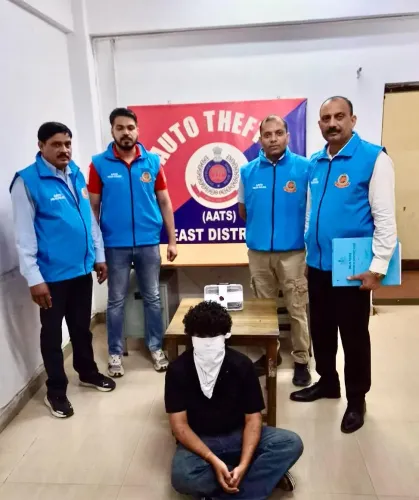
A firing at a Panchkula club on September 13 has unravelled what Haryana ATS describes as an international narco-terror network with handlers based in the US. Seven arrests across three cities, 529 grams of synthetic drug 'chitta', two pistols, and evidence of drone-delivered cross-border consignments — this is the first case cracked by the newly active Haryana ATS, and it points to a sophisticated transnational supply chain.
Key Takeaways
The Haryana ATS arrested 7 accused linked to an international narco-terror network following a 13 September 2026 firing at Alif Laila Club, Panchkula .
Recovered items include one US-made pistol , one 30-bore pistol , 12 rounds of ammunition , 529 grams of 'chitta' , and 3 cash counting machines .
Arrests were made in Panchkula , Mohali , and Ludhiana between 13 September and 19 September 2026 .
Handlers based abroad — particularly in the United States — allegedly provided accommodation, vehicles, and funds to local operatives.
The network allegedly used drones to deliver weapons and narcotics across the border to designated locations.
This is the first case successfully solved by the Haryana ATS , according to SP Varun Singla .
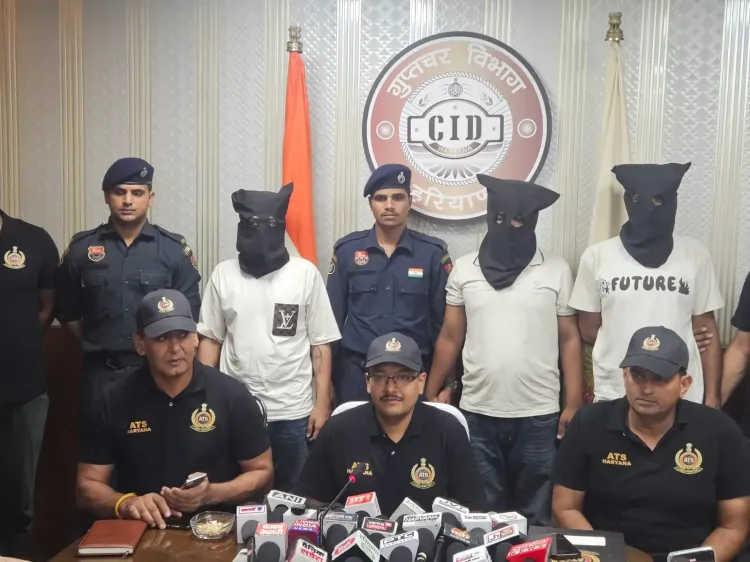
The Haryana Anti-Terrorist Squad (ATS) has dismantled a key node of an international narco-terrorism network, arresting seven accused following a September 13 firing incident at the Alif Laila Club in Panchkula. The breakthrough — described as the first case successfully cracked by the Haryana ATS — has exposed a cross-border supply chain allegedly using drones to deliver weapons and narcotics into the state.
The Panchkula Firing That Triggered the Probe
In the early hours of 13 September 2026, police received reports of a shooting at the Alif Laila Club in Panchkula. Investigators established that five youths had arrived at the venue in two vehicles. A dispute erupted while they were inside; one of the accused retrieved a pistol from their vehicle and discharged two rounds, injuring a young woman who was subsequently hospitalised and treated. Three accused were apprehended at the scene, with a cash counting machine recovered during the initial arrests.
Arrests Span Three Cities, Network Links Surface
The investigation rapidly expanded beyond Haryana's borders. One accused was arrested from Mohali in Punjab, while three others were picked up from Ludhiana. On 15 September, a suspect directly connected to the firing was detained, and on 19 September, an alleged intermediary in the narco-terror network was apprehended from Ludhiana. During police remand of the intermediary, 529 grams of 'chitta' (a synthetic drug) were seized, prompting the ATS to register a separate case for the narcotic recovery.
What Investigators Recovered
The haul from the seven accused includes one US-made pistol, one 30-bore pistol, 12 rounds of ammunition, three cash counting machines, five mobile phones, and 529 grams of 'chitta'. Raids in Ludhiana further yielded a vehicle, an additional cash counting machine, and what officials described as 'other important evidence.' The mobile phones of all accused have been seized and are undergoing technical forensic analysis.
The International Dimension: Handlers Based in the US
According to Superintendent of Police Varun Singla, interrogation and technical investigation revealed that handlers of the network are based abroad — particularly in the United States. These overseas handlers allegedly provided local operatives with accommodation, vehicles, and funds to transport weapons, narcotics, and drug money to locations specified by the handlers. The network is alleged to have used drones to deliver consignments of weapons and narcotic substances across the border to designated drop points, with local associates then moving the material forward.
ATS Investigation: What Comes Next
SP Singla stated that the ATS is conducting a comprehensive probe into the network's full supply chain, including its financial trail, sources of weapons and narcotics, and all contacts with foreign handlers. This is the first case to be successfully investigated and resolved by the newly active Haryana ATS, signalling a stepped-up counter-narcotics and counter-terror posture by the state. The use of drones for cross-border contraband delivery is a pattern that security agencies across Punjab and Haryana have flagged with growing concern in recent years, and this case adds fresh urgency to those warnings.
Point of View
With drone-based cross-border drops replacing the older mule-based smuggling model. The presence of US-based handlers and US-manufactured weaponry raises questions that go beyond state police jurisdiction and will likely draw central intelligence agencies into the probe. What is notable is that the trigger was a routine club altercation — had the shot not been fired, the network might have remained invisible. The Haryana ATS, in its debut operational success, will now face the harder test: tracing the financial trail and securing convictions, not just arrests.
NationPress
22 Sept 2026
Frequently Asked Questions
What is the Haryana ATS narco-terror case?
The Haryana ATS uncovered an international narco-terrorism network after investigating a September 13 firing at Alif Laila Club in Panchkula, leading to seven arrests across Panchkula, Mohali, and Ludhiana. The network allegedly used drones to deliver weapons and narcotics across the border, with handlers reportedly based in the United States.
Who were arrested and from where?
Seven accused were arrested in total — three from the club premises in Panchkula on the night of the incident, one from Mohali in Punjab, and three from Ludhiana. The arrests took place between September 13 and September 19, 2026.
What was recovered from the accused?
Police recovered one US-made pistol, one 30-bore pistol, 12 rounds of ammunition, three cash counting machines, five mobile phones, and 529 grams of 'chitta' — a synthetic drug. A vehicle and additional evidence were also seized during raids in Ludhiana.
How were weapons and drugs allegedly being smuggled?
According to SP Varun Singla, the network allegedly used drones to deliver consignments of weapons and narcotics across the border to designated drop points inside India. Local operatives were then provided vehicles and funds by foreign handlers to transport the material further.
What is the significance of this being the ATS's first case?
Superintendent of Police Varun Singla confirmed this is the first case successfully investigated and resolved by the Haryana ATS. The outcome signals an upgraded counter-terror and anti-narcotics capacity for Haryana at a time when drone-based cross-border smuggling has become an acute security concern across the border states.