Should all government buildings in Haryana install rooftop solar plants?
Synopsis
In a transformative move towards green energy, Haryana's Chief Minister has mandated the installation of rooftop solar systems on all government buildings, including schools and hospitals. This initiative aims to expedite the state's shift to clean energy, ensuring a sustainable future.
Key Takeaways
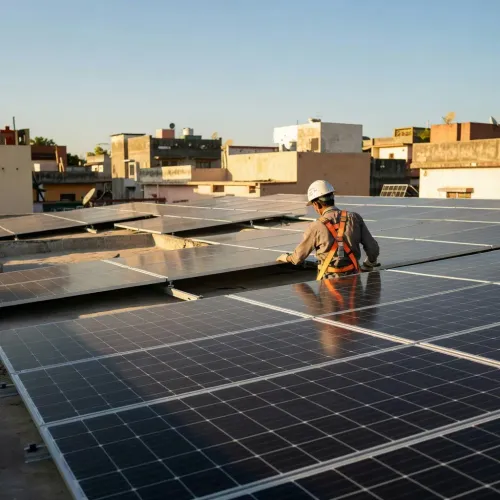
All government buildings in Haryana will have rooftop solar systems installed.
The initiative aims for 222,000 installations by March 31, 2027.
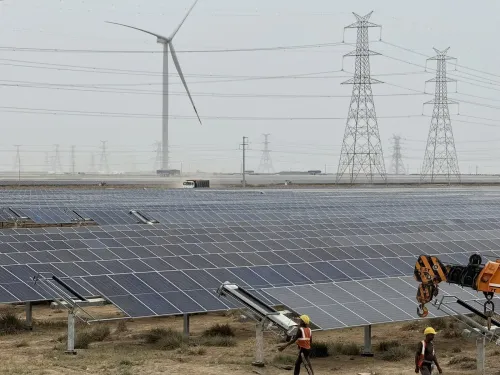
Solar parks will be developed to harness renewable energy potential.
Energy security is prioritized for economic growth.
Haryana aims to achieve 24,000 MW power generation capacity in seven years.
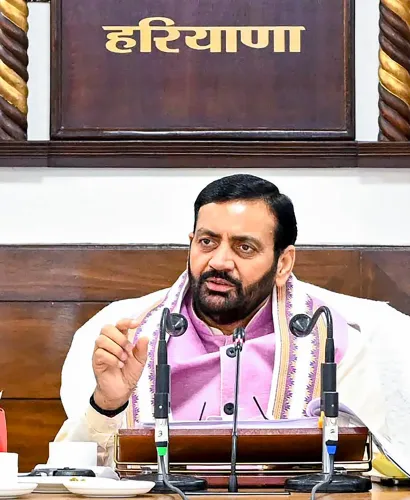
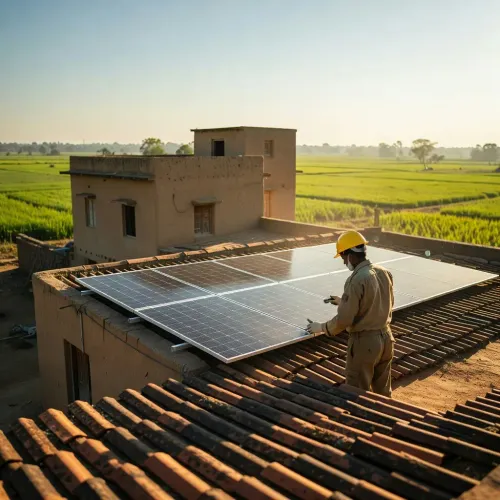
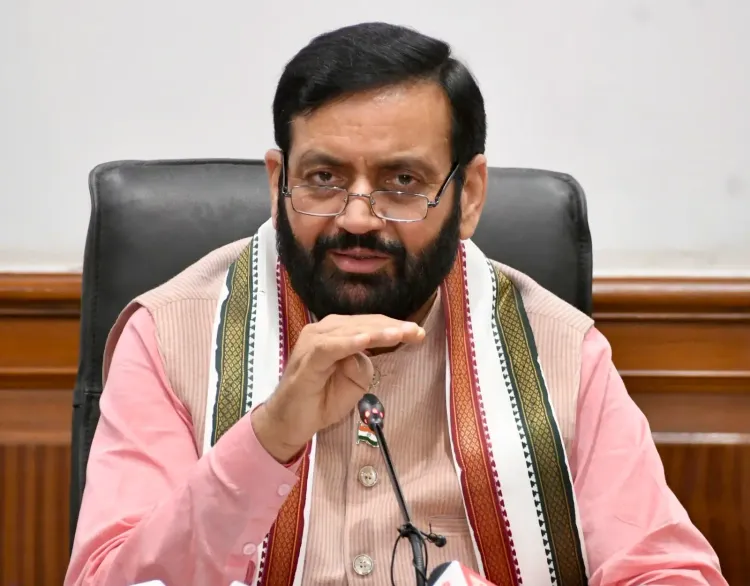
Chandigarh, Dec 6 (NationPress) The Chief Minister of Haryana, Nayab Singh Saini, has given directives for all government facilities, including schools, colleges, hospitals, and offices, to be outfitted with rooftop solar energy systems. This initiative aims to hasten the state’s shift towards clean and green energy.
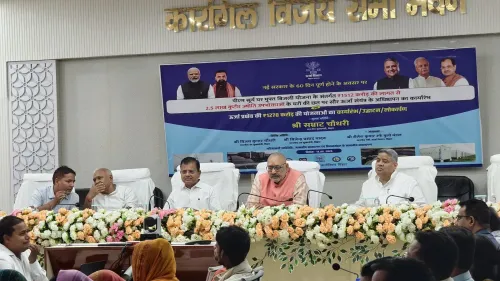
The Chief Minister held a high-level review meeting regarding the budgetary announcements concerning the Power (Energy) sector at the Civil Secretariat. During this meeting, he assessed the progress of the PM Suryaghar: Muft Bijli Yojana and urged officials to accelerate the installation of rooftop solar systems in residential areas throughout the state.
He also scrutinized the monthly achievements under the scheme and stressed the need for rigorous monitoring and accountability.
Moreover, the Chief Minister instructed the development of solar parks to effectively harness the state’s renewable energy potential on a large scale. He mandated the removal of old and non-functional electricity poles from key state roads and highways to enhance public safety and improve the aesthetics of the area.
Shyamal Misra, the Chairman of Haryana Power Generation Corp Ltd (HPGCL), reported that as of November 20, the state has successfully completed 42,486 rooftop solar installations. A target has been established to achieve 222,000 rooftop solar systems by March 31, 2027.
He added that the DISCOMs have designed a new initiative, the Saur Urja Protsahan Yojana, primarily targeting government employees and regular consumers who pay their electricity bills consistently. This proposal has been submitted for state government approval and is currently under review.
Once enacted, this initiative is anticipated to significantly boost rooftop solar adoption and assist the state in meeting and potentially exceeding its assigned RTS targets.
The Chief Minister asserted that all energy sector objectives must be accomplished within specified timelines to guarantee uninterrupted electricity supply to every household.
“Energy security is vital for economic development. Every pending project must progress without delay,” he stated.
The department also discussed its long-term energy strategy, which is centered on establishing a strong and self-reliant energy ecosystem.
Haryana aims to achieve a power generation capacity of 24,000 MW over the next seven years to ensure that every consumer receives 100 percent power supply.
Point of View
I believe this proactive approach by Haryana reflects a commendable commitment to sustainable energy practices. The push for rooftop solar installations is not just a step towards renewable energy but a significant stride towards energy security and economic growth in the region.
NationPress
16 Sept 2026
Frequently Asked Questions
What is the goal of the rooftop solar initiative in Haryana?
The initiative aims to install rooftop solar systems on all government buildings to accelerate the transition to clean and green energy, with a target of 222,000 installations by March 31, 2027.
Who is responsible for overseeing the rooftop solar installations?
The Chief Minister of Haryana, Nayab Singh Saini, along with the Haryana Power Generation Corp Ltd (HPGCL), is overseeing the implementation and progress of the rooftop solar installations.
What other measures are being taken to promote solar energy in Haryana?
In addition to rooftop installations, the state is creating solar parks and has introduced the 'Saur Urja Protsahan Yojana' to encourage solar adoption among government employees and regular consumers.
How many rooftop solar installations have been completed so far?
As of November 20, 42,486 rooftop solar installations have been completed in Haryana.
What is the significance of energy security for Haryana?
Energy security is crucial for economic growth, ensuring that every household receives uninterrupted electricity and supporting the overall development of the state.