Is 'Ikkis' a Heartfelt War Drama Starring Dharmendra and Jaideep Ahlawat?

Synopsis
Discover the emotional depth of 'Ikkis', a biographical war drama directed by Sriram Raghavan. Starring Agastya Nanda, Dharmendra, and Jaideep Ahlawat, this film reflects on the life of Second Lieutenant Arun Khetrapal, exploring themes of courage, loss, and the human experience after war, all while steering clear of jingoistic tropes.
Key Takeaways
Ikkis explores the emotional aftermath of war.
It focuses on human experiences rather than jingoism.
Agastya Nanda's portrayal of Arun Khetrapal is deeply affecting.
Dharmendra and Jaideep Ahlawat's performances add depth to the narrative.
The film handles its historical context with sensitivity.
Mumbai, Jan 1 (NationPress) Director - Sriram Raghavan
Cast - Agastya Nanda, Dharmendra, Jaideep Ahlawat, Simar Bhatia
Duration - 143 Minutes
Rating - 4.5 stars
Writer - Sriram Raghavan, Arijit Biswas, Pooja Ladha Surti
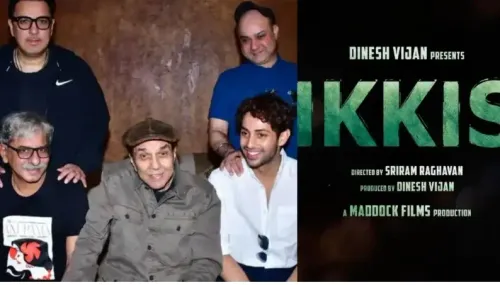
Directed by Sriram Raghavan, Ikkis unfolds as a poignant biographical war drama that embraces introspection over overt nationalism. The narrative centers on the life of Second Lieutenant Arun Khetrapal, the youngest recipient of the Param Vir Chakra in India. It portrays a deeply human story filled with themes of courage, loss, and the complex emotions residents face after war, handled with remarkable dignity and thoughtfulness.
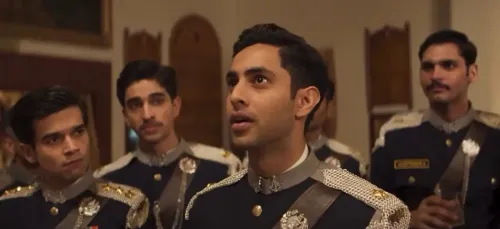
The film is structured across two different timeframes, one of its strongest storytelling techniques. The initial timeline is set during the Battle of Basantar in December 1971, where 21-year-old Arun Khetarpal leads his tank regiment through treacherous, mined landscapes against daunting challenges. These sequences are tense and grounded, focusing on the mental struggle of a young officer who unexpectedly shoulders the heavy responsibility of defending his nation in a chaotic war.
Agastya Nanda delivers a stellar performance as Arun Khetarpal, embodying the character of a handsome, honest, and driven officer filled with bravery. His portrayal avoids forced heroism, feeling instead earnest and genuine, illustrating a young man who has found his calling, albeit a bit too zealous at times, a trait that feels intentional and adds depth.
His bravery shines through his actions and decisions. For instance, his determination to stay in his burning tank, despite being ordered to retreat, feels less like a cinematic flourish and more like an authentic reflection of his character. Nanda's performance resonates, bringing a rawness that renders Arun’s sacrifice achingly real.
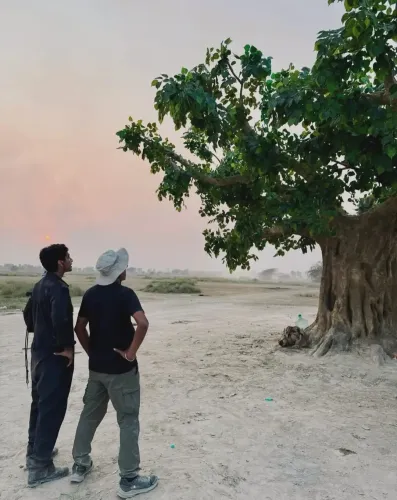
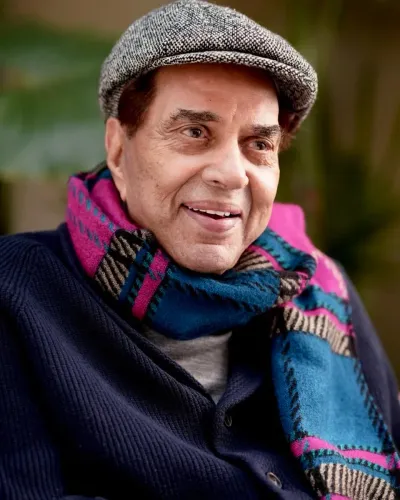
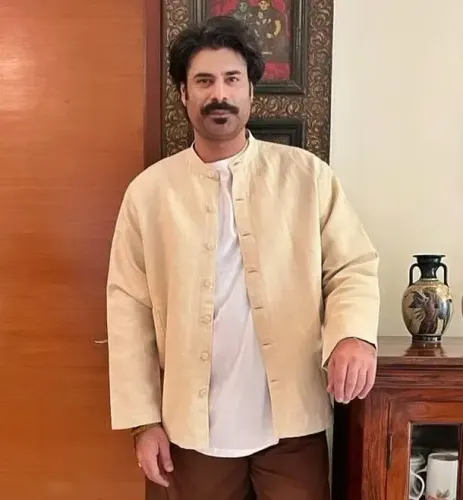
The second timeline, set in 2001, serves as the emotional heart of the film. Dharmendra portrays Brigadier M. L. Khetarpal, Arun’s father, who, years after the war, still bears its weight. His encounter with Brigadier Khwaja Mohammad Nasir, played with quiet authority by Jaideep Ahlawat, leads the film into unexpected territory. This section of Ikkis shifts away from the politics of war and instead focuses on two soldiers, shaped by shared experiences, reflecting on life after enduring chaos.
Jaideep Ahlawat gives one of the film’s most powerful performances, portraying a character who is dignified and deeply aware of the war's toll. The nuanced exchanges between him and Dharmendra are executed with exceptional sensitivity. Their shared moments—strolling through familiar neighborhoods, visiting memory-laden sites, and ultimately standing at the site of the Battle of Basantar—culminate in the film's emotional zenith.
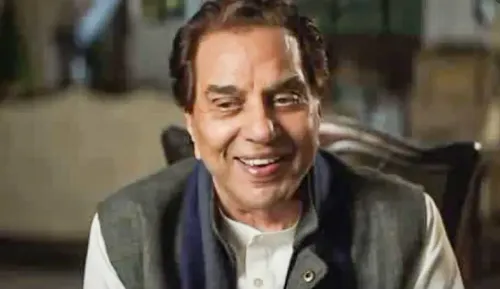
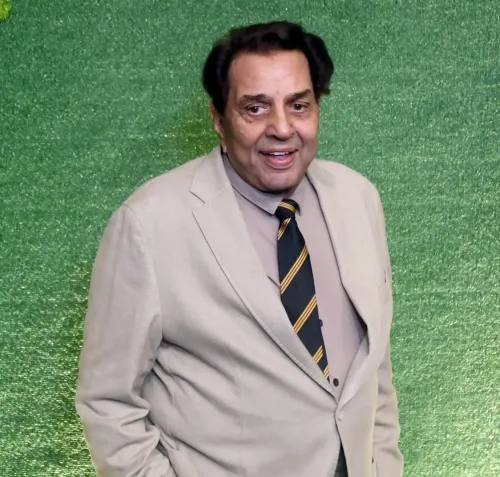
Dharmendra’s performance merits special mention. His mere presence infuses the film with a gravity that feels genuine. He conveys layers of grief, pride, nostalgia, and unresolved sorrow through subtle gestures and silences, making his final film role even more poignant. His scenes with Ahlawat showcase some of the most moving depictions of post-war reconciliation in Indian cinema, precisely because they avoid melodrama.
The visual effects in Ikkis are utilized judiciously, adding to the realism without drawing undue attention. The tank warfare sequences are immersive and grounded, capturing the weight and danger of armored combat while focusing on the soldiers inside the machines.
The background score plays a vital role in shaping the film’s emotional tone. The music remains subtly present, enhancing moments of tension and introspection. During combat sequences, the score is kept minimal, allowing the sounds of tanks and explosions to come to the forefront. In quieter moments, particularly within the 2001 timeline, the music becomes sparse, echoing the film’s reflective nature.
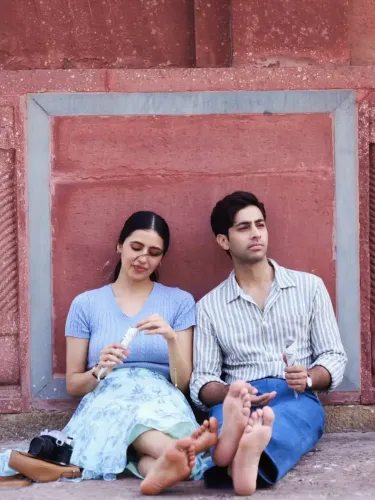
Sriram Raghavan’s direction is marked by confidence and restraint, trusting both the material and his audience. The screenplay, co-written by Raghavan, Arijit Biswas, and Pooja Ladha Surti, is meticulously crafted, skillfully juggling two timelines without sacrificing emotional continuity. Each scene feels purposeful, contributing either to the narrative advancement or character development. Performances throughout are consistently strong, with special note for debutante Simar Bhatia as Kiran, Arun Khetarpal’s love interest. Although her screen time is limited, her role offers a glimpse into the life Arun could have lived, infused with warmth and sincerity.
From a production perspective, Ikkis reflects Maddock Films’ commitment to supporting meaningful, content-driven cinema. The studio, known for its genre experimentation, takes a bold step by prioritizing emotional truth over commercial gains. Their attention to detail and respect for historical context, paired with a desire to tell a nuanced story, indicates a production house that understands the weight of such subject matter. Ikkis is a film made with care, not calculation.
In essence, Ikkis is a narrative about humanity navigating through conflict, addressing themes of love, grief, duty, and belonging—emotions that transcend borders and uniforms. By prioritizing empathy and memory over mere messaging, the film accomplishes something rare within the genre. It pays tribute to sacrifice without glorifying violence and respects history without manipulating it.
Point of View
I believe that 'Ikkis' exemplifies the power of cinema to address profound themes of courage and sacrifice without resorting to jingoism. The film's balanced portrayal and emotional depth serve as a reminder of the human cost of conflict, making it a significant addition to the canon of Indian war films.
NationPress
2 Oct 2026
Frequently Asked Questions
What is the main theme of 'Ikkis'?
The primary theme of 'Ikkis' revolves around courage, loss, and the emotional complexity faced by individuals after war, focusing on the human experience rather than glorifying conflict.
Who directed 'Ikkis'?
'Ikkis' is directed by Sriram Raghavan, known for his ability to weave complex narratives with emotional depth.
Who are the main actors in 'Ikkis'?
The film features notable performances by Agastya Nanda, Dharmendra, and Jaideep Ahlawat.
What is the historical context of 'Ikkis'?
'Ikkis' is based on the life of Second Lieutenant Arun Khetrapal, who was recognized as India's youngest Param Vir Chakra recipient during the Battle of Basantar in 1971.
How long is 'Ikkis'?
'Ikkis' has a runtime of 143 minutes, allowing for a comprehensive exploration of its themes and characters.