Did Hegseth's Arrival in South Korea Signal a Shift in Defense Strategy?

Synopsis
US Defence Secretary Pete Hegseth's visit to South Korea marks a crucial moment for the alliance between the two nations. As he meets Defence Minister Ahn Gyu-back, discussions are set to revolve around significant defense strategies and the ongoing tensions with North Korea. This pivotal dialogue could reshape the future of their military collaboration.
Key Takeaways
US Defence Secretary Hegseth's visit marks a pivotal moment in US-South Korea relations.
The meeting will address critical alliance issues, including North Korea's threat.
South Korea aims to regain wartime operational control from the US.
The acquisition of a nuclear-powered submarine may be on the agenda.
Both leaders emphasize the importance of a strong and collaborative alliance.
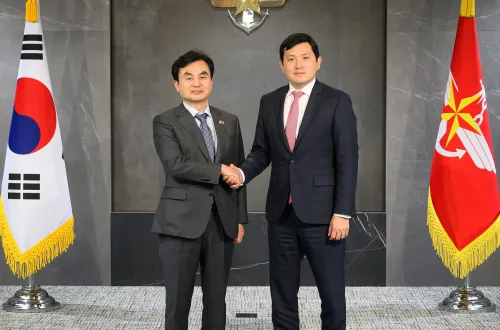
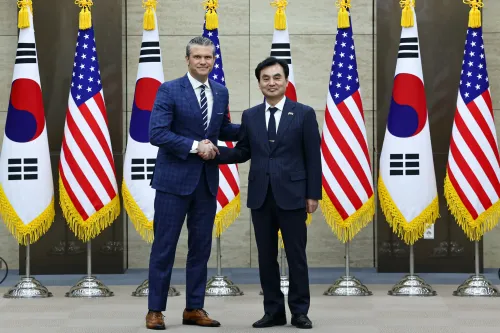
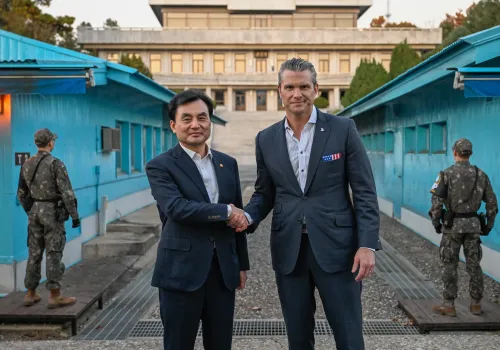
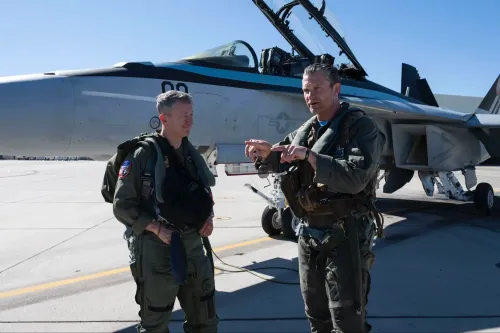
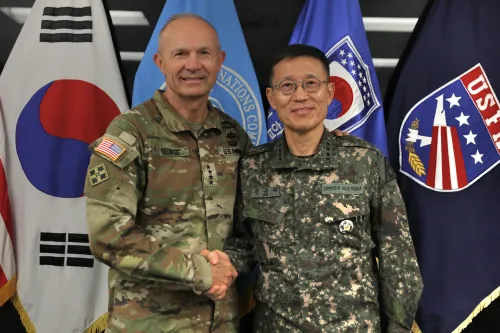
Osan Air Base/Seoul, Nov 3 (NationPress) US Defence Secretary Pete Hegseth has arrived at Osan Air Base in South Korea for discussions with Defence Minister Ahn Gyu-back regarding potential adjustments to the alliance between the two nations. The defense chiefs are also scheduled to visit the tense border with North Korea.
This anticipated joint visit to the Joint Security Area (JSA) within the Demilitarized Zone (DMZ)—the dividing line between the two Koreas—will be the first of its kind by the allies' defense leaders since October 2017.
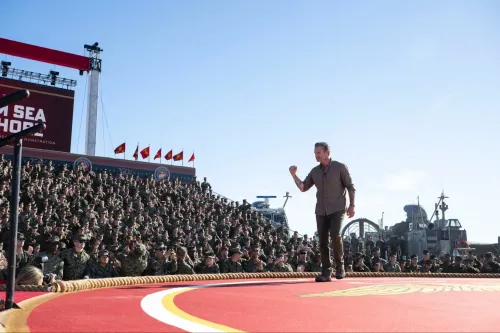
During his two-day stay in South Korea, Hegseth is expected to meet with both Korean and American troops stationed at the DMZ, and visit Camp Humphreys, a large US military installation located approximately 65 kilometers south of Seoul, to express gratitude to the service members and their families, as reported by Yonhap News Agency.
Ahn and Hegseth are set to conduct their annual defense dialogue, known as the Security Consultative Meeting, on Tuesday. They will cover various alliance matters, including their strategies regarding North Korea and their combined defensive stance.
The DMZ stretches 250 kilometers and serves as a buffer zone between Seoul and Pyongyang, which still technically remain at war due to the 1950-53 Korean War ending in an armistice rather than a peace treaty.
This year’s dialogue may encompass vital alliance issues, including the strategic flexibility of U.S. forces in South Korea and Seoul's efforts to regain wartime operational control (OPCON) from Washington.
Both parties are anticipated to discuss South Korea's ambitions to acquire a nuclear-powered submarine, following relevant talks between President Lee Jae Myung and U.S. President Donald Trump during their recent summit.
South Korea aims to reclaim OPCON from Washington before President Lee Jae Myung's term concludes in 2030.
Hegseth has praised Seoul's push for OPCON transfer as great and acknowledged South Korea as a combat credible partner, while emphasizing the necessity for allies to assume greater security responsibilities.
Ahn has committed to making the utmost efforts to ensure the return of OPCON from Washington while maintaining a robust and enduring alliance.
Point of View
It is essential to recognize the complexity of their alliance. The forthcoming discussions led by Hegseth and Ahn demonstrate a proactive approach to addressing shared security concerns. Our commitment to supporting South Korea in its defense initiatives aligns with our national interests, ensuring stability in the region and fostering a collaborative effort against potential threats.
NationPress
10 Oct 2026
Frequently Asked Questions
What is the purpose of Hegseth's visit to South Korea?
The purpose of Hegseth's visit is to discuss potential adjustments to the US-South Korea military alliance and to address ongoing security challenges posed by North Korea.
When was the last joint visit by the defense chiefs of the US and South Korea?
The last joint visit by the defense chiefs of the US and South Korea occurred in October 2017.
What significant topics will be discussed during the Security Consultative Meeting?
Key topics include North Korea policy coordination, operational control transfer, and discussions about South Korea's acquisition of a nuclear-powered submarine.