Is Himachal Cultivating Industrial Hemp?
Synopsis
Discover how Himachal Pradesh is transitioning from the illicit cannabis trade to becoming a leader in the bio-economy through the 'Green to Gold' initiative. This groundbreaking move aims to reshape agricultural practices and foster economic growth by embracing industrial hemp cultivation.
Key Takeaways
Himachal Pradesh is moving towards legalized industrial hemp cultivation.
The 'Green to Gold' initiative aims for economic self-reliance by 2027.
Regulated cultivation could generate significant revenue for the state.
Industrial hemp offers environmental benefits, requiring less water.
Research institutions are developing suitable seed varieties.
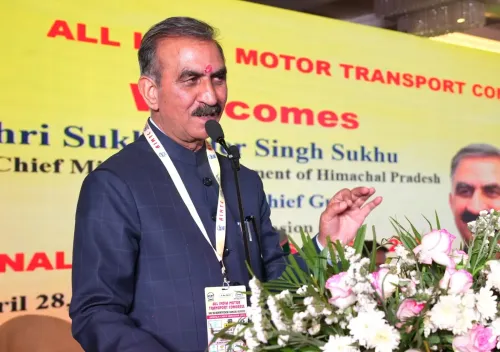
Shimla, Dec 27 (NationPress) In an effort to reshape the state's economic framework and realize the goal of a self-sufficient Himachal Pradesh by 2027, Chief Minister Sukhvinder Sukhu has launched the 'Green to Gold' initiative. This program intends to shift the narrative from illicit activities to establishing global leadership in the bio-economy by legalizing and regulating the cultivation of industrial hemp.
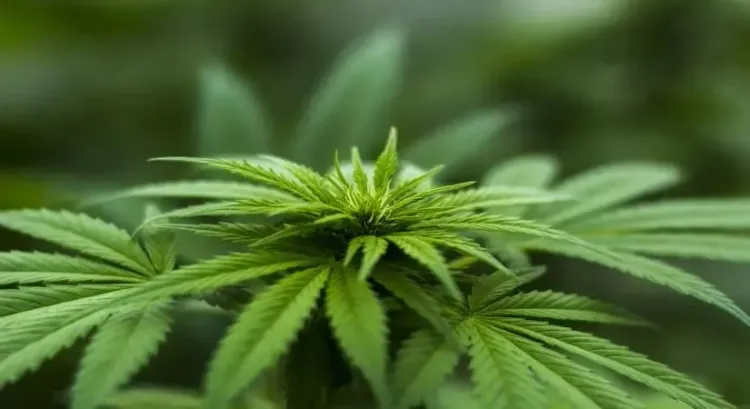
CM Sukhu pointed out that for many years, cannabis has thrived in the valleys of Kullu, Mandi, and Chamba, often overshadowed by its connections to illegal drug trades. However, moving forward, it will be recognized for its medicinal benefits in pain relief and inflammation, as well as its applications in the textile and apparel sector, paper and packaging industry, cosmetics and personal care, biofuel, and energy sectors, among others.
The state government has recognized this natural resource as a multi-faceted industrial asset capable of yielding high-value products, ranging from eco-friendly textiles to advanced bio-plastics.
"With appropriate regulation and awareness, hemp can emerge as a vital catalyst for environmentally sustainable industrial growth, particularly in the mountainous and rural economies of Himachal Pradesh," remarked Sukhu in an official statement.
He emphasized that a key component of this policy is the stringent requirement ensuring all industrial hemp grown in Himachal Pradesh has a tetrahydrocannabinol (THC) concentration below 0.3 percent. This scientific benchmark makes the plant non-intoxicating and unsuitable for drug misuse while retaining its valuable characteristics for generating high-quality fiber and seeds.
Sukhu stated that following the Cabinet's decision on January 24 to approve a pilot project for controlled cultivation is in the works. He mentioned that farmers are increasingly turning away from traditional crops due to wildlife disturbances, particularly monkeys damaging their fields, which has significantly reduced their earnings.
This strategic pivot seeks to transform the plant's “narcotic” perception into a “resource” identity.
Projections suggest that regulated cultivation could yield additional revenues of Rs 1,000 crore to over Rs 2,000 crore annually when fully operational. By establishing a robust legal and scientific framework, the state aims to seize a market currently dominated by illegal operations and international imports, especially within the rapidly expanding pharmaceutical and wellness sectors.
Besides financial benefits, the ‘Green to Gold’ initiative provides a sustainable solution for the agrarian community of Himachal.
The Chief Minister highlighted that industrial hemp is a climate-resilient crop requiring 50 percent less water than traditional fiber crops like cotton and flourishes even in marginal soils where other crops struggle.
To facilitate this transition, leading institutions such as CSK HPKV in Palampur and Dr. Y.S. Parmar University of Horticulture and Forestry in Nauni are conducting pilot studies to develop high-yield, low-THC seed varieties suited to the Himalayan climate.
Revenue Minister Jagat Singh Negi, chairing a state-level committee that includes MLAs, visited Doiwala in Uttarakhand and Madhya Pradesh to assess the legal, regulatory, and practical aspects of controlled cannabis cultivation.
The committee's report, which was later presented and accepted in the Assembly, recommended regulated cultivation for industrial, scientific, and medicinal uses.
"The Hemp-hub vision aims to establish Himachal Pradesh as a manufacturing center for 'Hempcrete'—an innovative, carbon-negative construction material—as well as specialized textiles and Ayurvedic medicines. By nurturing this new sector, the government is not only working to make Himachal the most prosperous state by 2032 but is also fostering a new ecosystem for startups and youth employment," CM Sukhu concluded.
Point of View
It's crucial to recognize the significance of Himachal Pradesh's move towards industrial hemp cultivation. This initiative is not only a step towards economic self-reliance but also a vital shift in public perception of cannabis from a narcotic to a valuable resource. It presents an opportunity for sustainable growth in the region, aligning with global trends towards eco-friendly practices.
NationPress
6 Oct 2026
Frequently Asked Questions
What is the 'Green to Gold' initiative?
The 'Green to Gold' initiative is a program launched by Himachal Pradesh's Chief Minister Sukhvinder Sukhu aiming to legalize and regulate the cultivation of industrial hemp to foster economic growth and promote sustainable practices.
How does industrial hemp benefit the economy?
Industrial hemp can generate high-value products, create job opportunities, and provide additional revenue to the state, with estimates suggesting an annual income of Rs 1,000 crore to Rs 2,000 crore.
What are the environmental benefits of hemp cultivation?
Hemp is a climate-resilient crop that requires 50 percent less water than traditional crops like cotton and can thrive in marginal soils, making it an environmentally sustainable choice.
What is the THC limit for hemp cultivation in Himachal Pradesh?
The policy mandates that all industrial hemp cultivated in Himachal Pradesh must have a THC content below 0.3 percent to ensure it is non-intoxicating.
Which institutions are involved in hemp research?
Leading institutions such as CSK HPKV in Palampur and Dr. Y.S. Parmar University of Horticulture and Forestry in Nauni are conducting studies to develop high-yield, low-THC seed varieties suitable for the Himalayan climate.