Wisconsin primary: Democrats' left flank stumbles as Hong loses to moderate Crowley
Synopsis
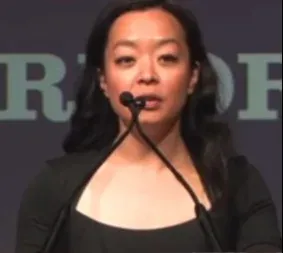
Polls gave her a 20-point lead, but Francesca Hong lost Wisconsin's Democratic gubernatorial primary by under half a percentage point — a result that the party establishment is quietly relieved about. With radical positions on immigration, police, and even Thanksgiving, Hong's defeat signals that progressive energy alone does not translate into primary victories in purple states that decide national elections.
Key Takeaways
Francesca Hong , Democratic Socialist candidate for Wisconsin Governor , lost the Democratic primary to moderate David Crowley by less than 0.5 per cent , despite polls showing her more than 20 per cent ahead.
Mike Lindell , backed by President Donald Trump , lost the Republican gubernatorial primary in Minnesota to State House Speaker Lisa Demuth by about 11 per cent .
Trump-backed Darline Graham failed to secure a majority in South Carolina 's Republican primary and will face a runoff against Ralph Norman .
Progressive Peggy Flanagan won the Democratic Senate nomination in Minnesota ; if elected, she would be the first Native American woman in the US Senate.
The Democratic Party holds a 7.1 per cent lead over Republicans in generic Congressional polls, according to RealClear Politics aggregations.
Neither Senator Bernie Sanders nor Representative Alexandria Ocasio-Cortez endorsed Hong ahead of the Wisconsin primary.
Francesca Hong, the Democratic Socialist candidate for Wisconsin Governor, was defeated by moderate rival David Crowley in the state's Democratic primary on Tuesday, delivering a significant setback to the party's left flank in a battleground state widely regarded as a national political bellwether. Hong lost by less than half a percentage point — a stunning reversal from polls that had projected her lead at more than 20 per cent.
Key Developments Across Tuesday Primaries
Tuesday's primaries produced a mixed bag of results across multiple states. In Minnesota, Mike Lindell — the pillow-company executive backed by President Donald Trump — lost the Republican gubernatorial nomination to State House Speaker Lisa Demuth by approximately 11 per cent. Lindell, who has repeatedly claimed that Trump defeated former President Joe Biden in 2016, characteristically alleged the primary was rigged after his loss.
Trump's preferred candidate for the Republican gubernatorial nomination in Minnesota also failed to secure the party's backing. Separately, in South Carolina, Darline Graham — sister of the late Senator Lindsey Graham and a Trump-backed contender — fell short of a majority in the Republican primary, forcing a runoff against party hardliner Ralph Norman, who finished second with eight per cent fewer votes in a crowded field.
Why Hong's Defeat Matters for the Democratic Party
Hong's loss offered a measure of reassurance to the Democratic establishment, which has grown increasingly anxious that candidates with radical positions could alienate moderate and independent voters ahead of the November elections. Notably, even prominent progressive figures — Senator Bernie Sanders of Vermont and Representative Alexandria Ocasio-Cortez — declined to endorse her.
Hong had staked out positions that critics argued were far outside the mainstream: she opposed Thanksgiving Day celebrations, criticised Valentine's Day, advocated open borders through the abolition of immigration enforcement agencies, and called for defunding the police. Her defeat follows a similarly narrow outcome in Michigan last week, where progressive candidate Abdul El-Sayed won the Democratic Senate nomination by less than one per cent — despite polls showing a commanding lead.
Wisconsin: The Purple State Dimension
Wisconsin is a classic 'purple state' — one that has swung narrowly between parties in recent presidential elections and currently has a Democratic governor alongside one Democratic and one Republican senator. Its primary results are closely watched as early indicators of national electoral sentiment.
Crowley, an African-American candidate, will face Republican Tom Tiffany — a member of the hardline Freedom Caucus in Congress — in the general election in November. According to a RealClear Politics aggregation of opinion surveys, the Democratic Party holds a 7.1 per cent lead over Republicans in generic Congressional polls, a margin that analysts say could translate into a Democratic majority in Congress.
The Broader Progressive Scorecard
The influence of the progressive wing is, according to analysts, sometimes overstated. In New York City, for instance, only three of the seven House of Representatives constituencies saw victories by candidates backed by New York Mayor Zohran Mamdani. Some of those candidates have advocated positions — including the abolition of prisons and opposition to inter-racial relations — that Republicans have seized on to paint all Democrats with a radical brush.
In Minnesota, however, progressive Peggy Flanagan — the state's outgoing Lieutenant Governor — secured the Democratic Senate nomination to succeed Amy Klobuchar, who won the party's gubernatorial nomination. Flanagan, who concentrated on broadly popular issues such as universal government health insurance and a higher minimum wage while avoiding divisive social positions, held a 20 per cent lead. If elected in November, she would become the first Native American woman in the United States Senate.
As November approaches, the Democratic Party faces a strategic tightrope: whether the energy of its progressive base can be harnessed without ceding the moderate centre to Republicans who are actively working to conflate mainstream Democrats with their party's socialist wing.
Point of View
Especially in states where general-election competitiveness demands coalition-building. The Democratic establishment's relief is understandable, but the underlying tension is unresolved: the party's activist base is pulling leftward while the electoral map demands the centre. Republicans are already doing the work of tying every Democrat to the most radical positions in the field, and Tuesday's results show that some of those positions — abolishing immigration enforcement, defunding police — are liabilities even in Democratic primaries. The Flanagan model in Minnesota — progressive on economics, disciplined on culture-war flashpoints — may be the template the party needs, but it requires candidates to resist the loudest voices in the room.
NationPress
27 Sept 2026
Frequently Asked Questions
Who is Francesca Hong and why did her Wisconsin primary loss make headlines?
Francesca Hong is a Democratic Socialist politician who ran for the Democratic gubernatorial nomination in Wisconsin. Her loss to moderate David Crowley by less than half a percentage point was widely noted because polls had given her a lead of more than 20 per cent, and Wisconsin is considered a key bellwether state for national political trends.
Who will contest the Wisconsin Governor's race in November?
Democrat David Crowley, who won the primary, will face Republican Tom Tiffany — a member of the hardline Freedom Caucus in Congress — in the November general election.
What happened in the Minnesota Republican gubernatorial primary?
Mike Lindell, the pillow-company executive backed by President Donald Trump, lost the Republican gubernatorial nomination in Minnesota to State House Speaker Lisa Demuth by approximately 11 per cent. Lindell subsequently alleged the primary was rigged.
Who is Peggy Flanagan and what is significant about her Senate nomination?
Peggy Flanagan is a progressive politician and Minnesota's outgoing Lieutenant Governor who secured the Democratic Senate nomination in the state. If she wins the general election in November, she would become the first Native American woman ever elected to the United States Senate.
What do these primary results mean for the Democratic Party ahead of November?
The results suggest that candidates with strongly radical positions face headwinds even within Democratic primaries, offering some reassurance to the party establishment. The Democratic Party holds a 7.1 per cent lead over Republicans in generic Congressional polls according to RealClear Politics, but strategists warn that extreme social positions could erode that advantage among moderate and independent voters in November.