IAF wraps up Exercise Pitch Black 2026 and Udara Shakti 2026 in dual Indo-Pacific deployment
Synopsis
The IAF's back-to-back deployment — Rafales in Australia's 20-nation Pitch Black, then high-intensity combat sorties alongside Malaysian Su-30MKMs and F/A-18s — is more than a training exercise. It is a signal of India's growing expeditionary air capability and its deliberate strategy of embedding itself into the Indo-Pacific's emerging security architecture.
Key Takeaways
The Indian Air Force concluded participation in Exercise Pitch Black 2026 (Australia) and Exercise Udara Shakti 2026 (Malaysia) in a single back-to-back deployment in August 2026 .
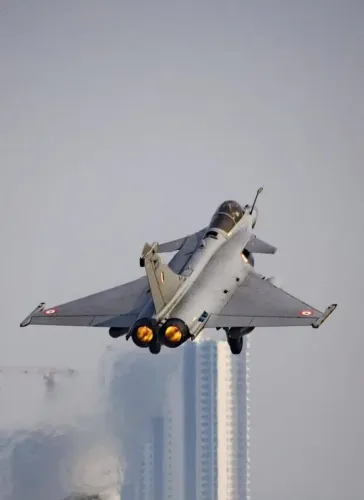
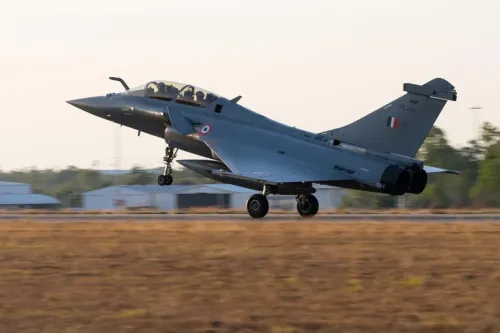
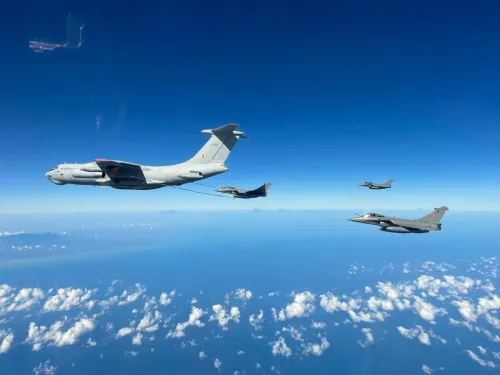
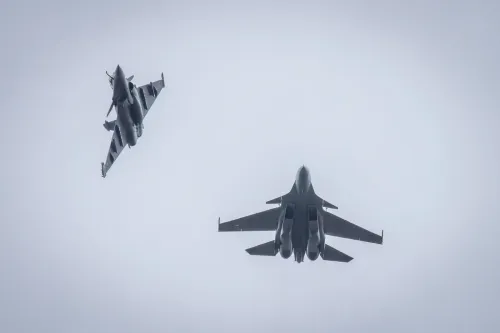
IAF deployed Rafale fighter jets at Pitch Black, flying alongside air forces from more than 20 countries in complex Large Force Employment (LFE) missions.
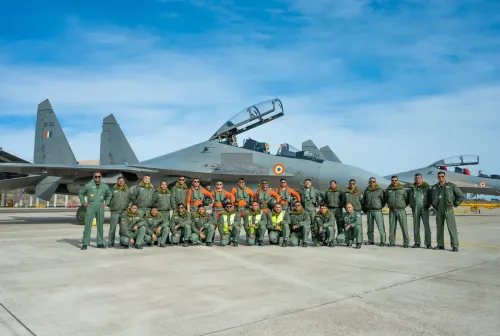
At Udara Shakti, IAF aircrew conducted high-intensity combat sorties alongside Royal Malaysian Air Force jets including Su-30MKM and F/A-18 Hornet .
Cooperation extended beyond flying to cover maintenance practices , mission planning, and personnel exchanges at both exercises.
The deployment reinforces India's expanding strategic defence footprint across the Indo-Pacific region.
The Indian Air Force (IAF) has successfully completed a back-to-back dual-nation deployment, concluding participation in Exercise Pitch Black 2026 in Australia and Exercise Udara Shakti 2026 in Malaysia — two of the most significant multilateral and bilateral air exercises in the Indo-Pacific calendar. The deployments, which wrapped up in August 2026, underscored India's expanding strategic air presence and its commitment to deepening defence partnerships across the region.
Exercise Pitch Black 2026: Rafales in a 20-Nation Arena
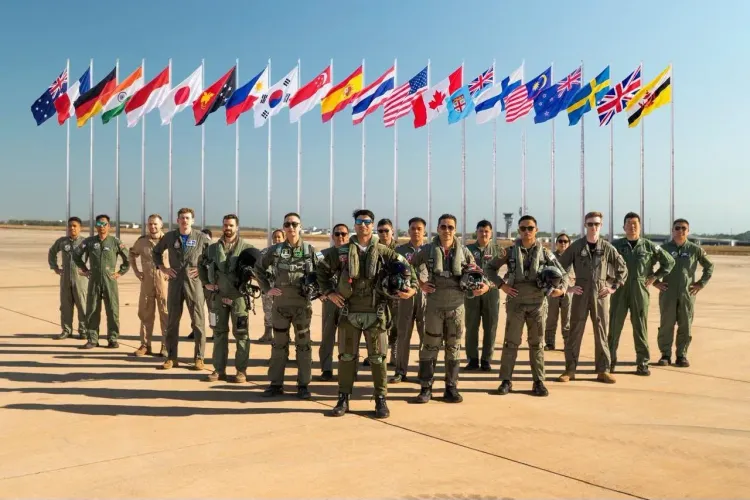
Hosted by the Royal Australian Air Force (RAAF), Exercise Pitch Black 2026 brought together air forces from more than 20 countries in a high-threat, multi-domain operational environment. The IAF deployed its frontline Rafale fighter aircraft for the exercise, participating in complex Large Force Employment (LFE) missions that demanded seamless tactical integration across coalition partners.
According to the Ministry of Defence, the exercise enabled participating air forces to share operational experience and enhance interoperability — skills that are increasingly critical as regional security architectures grow more complex. For the IAF, flying the Rafale alongside allied air forces in such a demanding setting offered a real-world stress test of its fourth-generation capabilities in a coalition context.
Exercise Udara Shakti 2026: High-Intensity Combat Sorties with Malaysia
Immediately following the Australian leg, the IAF contingent moved directly to Subang, Malaysia, for Exercise Udara Shakti 2026 with the Royal Malaysian Air Force (RMAF). The bilateral exercise featured high-intensity combat sorties and joint tactical manoeuvres alongside Malaysian aircraft, including Su-30MKM and F/A-18 Hornet fighter jets.
The engagement focused on sharpening air combat tactics, facilitating subject matter expert exchanges, and improving combined operational flexibility between the two air forces. Notably, the direct transition from a multilateral exercise to a bilateral one in a single deployment reflects a level of operational endurance and logistical planning that signals the IAF's growing expeditionary capacity.
Beyond the Cockpit: Maintenance, Planning and Cultural Exchange
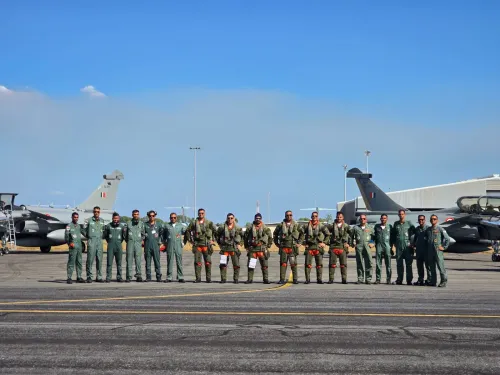
The Ministry of Defence emphasised that cooperation during both exercises extended well beyond flying operations. Joint activities covered maintenance practices, mission planning exchanges, and cultural interactions between personnel. These ground-level engagements are increasingly recognised as force multipliers — building institutional familiarity that pays dividends in real contingencies.
'Throughout both deployments, joint operations extended beyond the cockpit to include maintenance practices, mission planning exchanges, and cultural interactions,' the Ministry said, highlighting the broader scope of the engagements.
Strategic Significance for India's Indo-Pacific Posture
The dual deployment comes against the backdrop of India's accelerating defence engagement across the Indo-Pacific. Participation in multinational exercises such as Pitch Black allows the IAF to develop common procedures, test operational readiness, and build interoperability with a wide coalition — assets that align with India's broader strategic interests in a region where maritime and air domains are increasingly contested.
The Press Information Bureau noted that the dual-nation deployment 'underscored the IAF's operational reach, advanced tactical coordination, and commitment to strengthening strategic defence partnerships across the Indo-Pacific region.' This is consistent with a pattern of rising IAF participation in international exercises, which has expanded significantly over the past decade. As India deepens ties with partners such as Australia, Malaysia, France, and the United States, joint air exercises are emerging as a cornerstone of its defence diplomacy toolkit.
Point of View
Not a scheduling coincidence. By moving directly from a 20-nation multilateral in Australia to a bilateral with Malaysia, the IAF demonstrated both expeditionary endurance and the breadth of India's Indo-Pacific alignments in a single operational arc. What mainstream coverage often underplays is the ground-level dimension — maintenance exchanges and mission planning integration are how interoperability actually gets built, and they matter as much as the sorties. As India's strategic competition with China intensifies in the region, the frequency and ambition of these deployments will be a reliable indicator of where India's defence posture is actually heading.
NationPress
7 Oct 2026
Frequently Asked Questions
What is Exercise Pitch Black 2026?
Exercise Pitch Black 2026 is a major multilateral air exercise hosted by the Royal Australian Air Force (RAAF), involving air forces from more than 20 countries. The IAF participated with its Rafale fighter jets, flying complex Large Force Employment missions in a high-threat, multi-domain environment.
What is Exercise Udara Shakti 2026?
Exercise Udara Shakti 2026 is a bilateral air exercise between the Indian Air Force and the Royal Malaysian Air Force (RMAF), held at Subang, Malaysia. IAF aircrew conducted high-intensity combat sorties alongside Malaysian Su-30MKM and F/A-18 Hornet jets, focusing on joint air combat tactics and operational flexibility.
Why did the IAF participate in both exercises back to back?
The dual-nation deployment was designed to maximise operational efficiency while demonstrating the IAF's expeditionary reach across the Indo-Pacific. Moving directly from Australia to Malaysia in a single deployment also allowed personnel to build on multilateral coordination skills before applying them in a bilateral setting.
Which IAF aircraft were deployed in these exercises?
The IAF deployed its frontline Rafale fighter aircraft for Exercise Pitch Black 2026 in Australia. Details on specific aircraft for Exercise Udara Shakti 2026 were not separately specified, but IAF aircrew flew joint sorties alongside Malaysian Su-30MKM and F/A-18 Hornet jets.
How do these exercises fit into India's broader Indo-Pacific strategy?
The exercises are part of India's expanding defence engagement across the Indo-Pacific, aimed at building interoperability, testing operational readiness, and deepening strategic partnerships with partner air forces. They align with India's broader security interests in a region where air and maritime domains are increasingly contested.