ICT Mumbai student dies by suicide at Matunga hostel; mental health in focus

Synopsis
A 19-year-old ICT Mumbai student, Siddhesh Patil, died by suicide at his Matunga hostel on 21 October after reportedly messaging his doctor in distress the same evening. The death follows a series of student suicides at Mumbai's top technical institutions, including three at IIT-Bombay in six months, intensifying scrutiny of mental health support systems at higher-education campuses.
Key Takeaways
Siddhesh Patil , 19, a second-year Chemical Engineering student at ICT Mumbai , died by suicide at his Matunga hostel on 21 October at approximately 10:30 pm .
Patil was a native of Nashik and had reportedly been receiving treatment for mental health difficulties in the days before his death.
He reportedly messaged his doctor expressing distress on the day of the incident; the doctor alerted his family, but friends arrived after the incident had occurred.
Matunga Police have registered an Accidental Death report and are investigating the full sequence of events.
The death follows the reported suicide of IIT-Bombay student Sahil Wakode in September 2026 , described as the third such incident at the Powai campus in six months.
Mental health advocates are calling for stronger, proactive counselling infrastructure at technical institutions.
A 19-year-old second-year Chemical Engineering student at the Institute of Chemical Technology (ICT), Mumbai, died by suicide in his hostel room in Matunga on the night of 21 October, according to police. The student, identified as Siddhesh Patil, a native of Nashik, was found in his room at approximately 10:30 pm, having reportedly hanged himself from a ceiling fan.
Sequence of Events
According to preliminary information, Patil had reportedly been experiencing mental health difficulties over the preceding few days and was receiving professional treatment. On the day of the incident, he reportedly sent a message to his doctor expressing emotional distress. The doctor, upon receiving the message, promptly alerted Patil's family.
The family then contacted Patil's friends at the hostel, asking them to immediately check on him. However, according to reports, the friends arrived after the incident had already occurred. Matunga Police have registered an Accidental Death (AD) report and are currently investigating the full sequence of events. Further details are awaited as the inquiry continues.
Broader Concern: Student Mental Health at Higher-Education Institutions
The incident has renewed attention on the mental well-being of students at technical institutions, particularly those living away from their families. This comes amid a troubling series of similar tragedies at premier institutions across Mumbai.
In September 2026, a second-year student at the Indian Institute of Technology (IIT) Bombay, identified as Sahil Wakode of the Department of Energy Science and Engineering, died by suicide after he was found using a mobile phone during an examination — reportedly having uploaded a question paper to ChatGPT. The institute stated that no formal disciplinary proceedings had been initiated, and that Wakode had been counselled by the examination instructor and Head of Department, who assured him the incident would not adversely affect his academic standing.
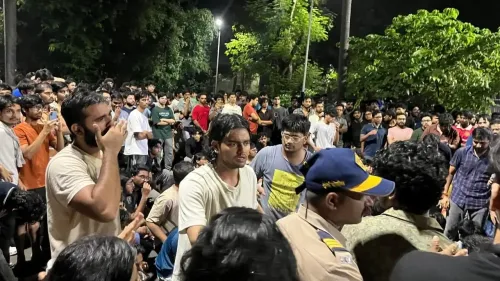
That September incident was reported as the third suicide at IIT-Bombay's Powai campus in a span of six months, triggering student protests at the institute. The latest death at ICT underscores what mental health advocates have repeatedly called a systemic gap in timely, accessible psychological support for students under academic pressure.
What Investigators Are Examining
The Matunga Police are gathering information from Patil's friends, hostel staff, and available digital communications to establish the circumstances surrounding the incident. The AD report — a standard procedural step in cases where the cause of death is not immediately established as criminal — keeps multiple lines of inquiry open. Authorities have not indicated any other persons are involved.
The Case for Institutional Response
Mental health professionals and student welfare advocates argue that incidents like these point to a structural need: embedded counselling services that are proactive rather than reactive, and a campus culture where students in distress feel safe reaching out before a crisis point. The fact that Patil did contact his doctor on the day of the incident — and that the doctor responded swiftly — illustrates both the value of early professional engagement and the narrow window institutions have to intervene effectively.
As the investigation continues, the incident is expected to prompt renewed calls for a review of mental health infrastructure at Mumbai's technical colleges.
If you or someone you know is struggling, please contact the iCall helpline at 9152987821 or Vandrevala Foundation at 1860-2662-345 (available 24/7).
Point of View
Following at least three at IIT-Bombay in six months. What is striking here is that the system did partially work: a student in crisis reached out to his doctor, the doctor acted immediately, and family mobilised friends. Yet the outcome was still fatal, pointing to an intervention window that is dangerously narrow once a student reaches acute distress. The real accountability question for institutions is not whether crisis lines exist on paper, but whether embedded, stigma-free, walk-in mental health services are present on campus and visible enough that students engage with them before reaching a crisis point — not after.
NationPress
21 Oct 2026
Frequently Asked Questions
Who was Siddhesh Patil and what happened?
Siddhesh Patil was a 19-year-old second-year Chemical Engineering student at the Institute of Chemical Technology (ICT) in Mumbai. He died by suicide in his hostel room in Matunga on the night of 21 October at around 10:30 pm, according to police. He was a native of Nashik.
What were the circumstances leading up to the incident?
According to preliminary reports, Patil had been experiencing mental health difficulties for several days and was under professional care. On the evening of 21 October, he reportedly messaged his doctor expressing emotional distress; the doctor immediately informed his family, who then asked hostel friends to check on him. The friends reportedly arrived after the incident had taken place.
What action have the police taken?
Matunga Police have registered an Accidental Death (AD) report, a standard procedural step in such cases. They are actively investigating the sequence of events, gathering information from friends, hostel staff, and communications, with further details awaited.
How does this relate to other student suicide cases in Mumbai?
In September 2026, IIT-Bombay student Sahil Wakode died by suicide — reported as the third such death at the Powai campus in six months — after being found using a mobile phone during an examination. That incident triggered student protests. The ICT death is the latest in a series that has focused national attention on student mental health at technical institutions.
Where can students seek mental health help?
Students or anyone in distress can contact the iCall helpline at 9152987821 or the Vandrevala Foundation at 1860-2662-345, which operates 24 hours a day, seven days a week. Many universities also have on-campus counselling centres accessible to enrolled students.