Is the India–Africa Forum Summit a Strategic Inflection Point?
Synopsis
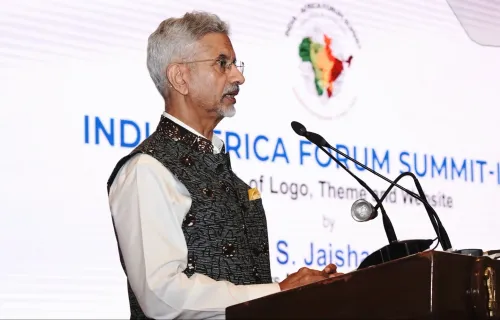
The upcoming India–Africa Forum Summit 2026 is set to be a pivotal moment, aligning ambitious visions for development and cooperation between India and Africa. Explore how this summit could redefine partnerships and impact global roles.
Key Takeaways
IAFS 2026 is a crucial moment for India–Africa relations.
Focus on strategic autonomy and collaboration is essential.
The summit can transition partnerships from project-based to ecosystem-level co-development.
India's development experience aligns with African policy priorities.
Establishing early credibility is critical for long-term success.
New Delhi, Feb 5 (NationPress) As the relationship between India and Africa continues to progress, there’s a pressing need for ambitions to align with strategic clarity and disciplined execution. The intersection of Africa’s continental development goals and India’s long-term vision for enhanced economic, technological, and institutional capacity presents a historically significant opportunity, a report emphasized on Thursday.
In an analysis for 'India Narrative', former diplomat Sanjay Kumar Verma noted that an effective policy approach for India must be rooted in strategic autonomy, while being cognizant of the various external actors operating within Africa.
He highlighted that India’s strategy should focus on pinpointing unique value propositions, steering clear of zero-sum competition in areas of structural disadvantage, and fostering collaboration where partner strengths can enhance outcomes.
“The upcoming India–Africa Forum Summit (IAFS) 2026, anticipated to occur mid-year, will transcend typical diplomatic interactions; it will signify a strategic inflection point in merging two transformative visions—Africa’s Agenda 2063 and India’s Viksit Bharat 2047. Both frameworks focus on structural transitions: moving from input-driven growth models to higher value production and industrial upgrading, shifting from resource reliance to technology-enhanced productivity, and evolving from peripheral involvement in global systems to agenda-setting influence,” Verma explained.
“Thus, IAFS 2026 comes at a crucial juncture as India and Africa redefine their development trajectories and global positions. The summit offers a chance to transform the partnership narrative from project-based cooperation to ecosystem-level co-development, advocating for industrial capacity, digital transformation, human capital development, and institutional fortification to occur simultaneously. If structured effectively, IAFS 2026 could serve as the bridge that turns shared long-term aspirations into actionable medium-term partnerships anchored in tangible outcomes,” the experienced diplomat added.
According to Verma, Africa’s political landscape is increasingly attuned to the importance of equitable partnerships and local value creation, while India’s development journey—particularly its emphasis on inclusive growth, affordable technology, and human capital development—aligns seamlessly with African policy priorities.
“The primary reputational risk lies not in competition from other external entities but in the potential for over-promising and under-delivering. India’s narrative should spotlight partnership co-creation, local job generation, technology transfer, and institutional fortification. Development partnerships are assessed over decades, and establishing early implementation credibility will significantly influence long-term perceptions,” Verma remarked.
The report underscored that with effective execution, India can position itself not merely as another development partner but as a ‘system-level transformation partner’ aligned with Africa’s long-term developmental aspirations.
“The next phase of India–Africa engagement will ultimately hinge on operational credibility. A blend of strategic autonomy and partnership intelligence provides India with its most robust pathway towards sustained influence and collective development success. The metric for the India–Africa partnership will no longer be intent or alignment, but the capability to co-create systems that endure beyond political cycles and market fluctuations,” it concluded.
Point of View
It is evident that both regions are on the brink of a transformative partnership. This summit will not only redefine their cooperative frameworks but also set a precedent for equitable development. NationPress stands firmly in support of fostering collaborations that prioritize mutual growth and sustainable outcomes.
NationPress
10 Oct 2026
Frequently Asked Questions
What is the significance of the India–Africa Forum Summit 2026?
The summit is poised to align the developmental goals of both regions, marking a strategic inflection point in their partnership.
How can India contribute to Africa's development?
India can provide technological support, focus on inclusive growth, and foster local job creation through strategic partnerships.