India and Canada Forge $2.6 Billion Uranium Agreement, Target 2026 Trade Pact Completion
Synopsis
In a groundbreaking move, India and Canada have sealed a $2.6 billion uranium supply deal, enhancing their energy collaboration and aiming for a comprehensive trade pact by 2026. This agreement signifies a robust step in bilateral relations, promising growth in job opportunities and investments.
Key Takeaways
$2.6 billion uranium supply agreement signed.
Focus on clean and reliable energy .
Collaboration on small modular and advanced nuclear reactors .
Target to finalize CEPA by end of 2026.
Ambition to reach $50 billion in bilateral trade by 2030.
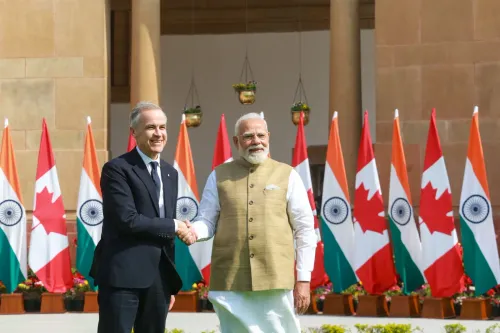
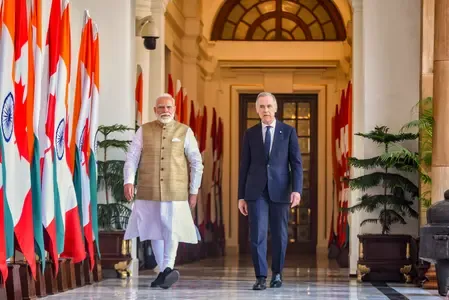
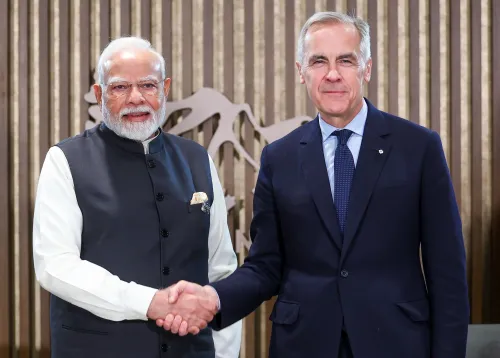
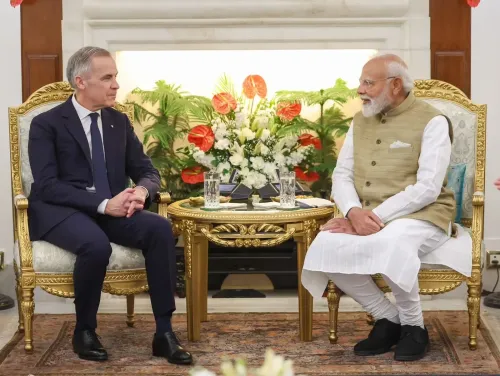
New Delhi, March 2 (NationPress) In a significant advancement in bilateral relations, India and Canada have finalized a pivotal uranium supply agreement valued at $2.6 billion. The agreement was formalized during discussions between Prime Minister Narendra Modi and Canadian Prime Minister Mark Carney at Hyderabad House in New Delhi.
This uranium pact is set to ensure a stable long-term fuel supply for India's civil nuclear energy initiatives.
Both leaders emphasized that the agreement will enhance collaboration in clean and reliable energy sectors.
They also committed to collaborating on innovative technologies, including small modular reactors and advanced nuclear reactors.
In addition to the uranium deal, both nations agreed to expedite negotiations for a Comprehensive Economic Partnership Agreement (CEPA).
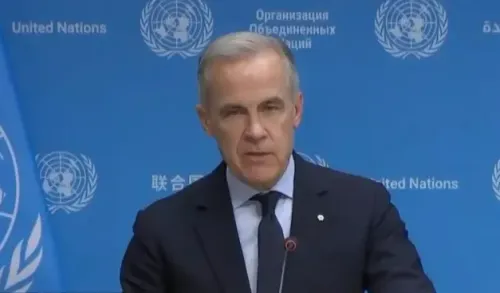
Carney expressed optimism, stating that both countries aim to finalize this trade agreement by the close of 2026. Prime Minister Modi highlighted the ambition to elevate bilateral trade to $50 billion by 2030, thereby fostering greater investment and job creation in both countries.
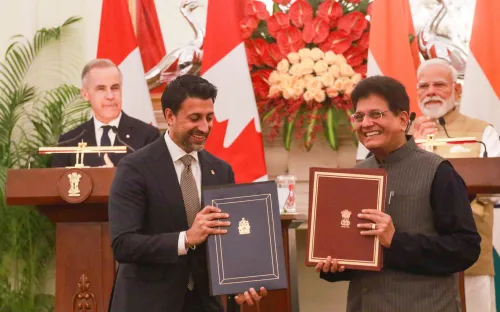
During this visit, several Memorandums of Understanding were also exchanged. These agreements focused on cooperation in critical minerals, renewable energy promotion, and cultural exchanges.
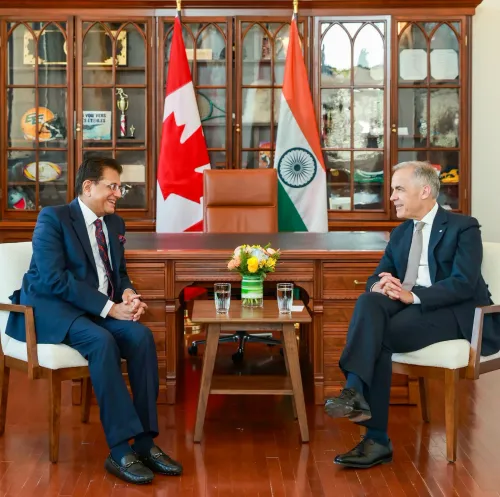
The agreements were signed by External Affairs Minister S. Jaishankar and Canadian Foreign Affairs Minister Anita Anand in the presence of both prime ministers.
Further, both sides established terms of reference for the Comprehensive Economic Partnership and signed an agreement to bolster cooperation in the critical minerals sector. This partnership aims to establish robust and dependable supply chains for the future.
Prime Minister Modi commended Carney for revitalizing India-Canada relations.
“Both nations uphold strong democratic principles, embrace diversity, and are devoted to enhancing global welfare,” PM Modi remarked.
“The discussions centered on transforming these shared values into a more profound and advanced partnership,” he added.
The two leaders also broadened their cooperation in renewable energy and climate action. PM Modi welcomed Canada's participation in the International Solar Alliance and the Global Biofuel Alliance.
On the subject of technology and innovation, PM Modi stated that India and Canada are natural allies. He underscored the growing collaboration in areas like artificial intelligence, quantum technologies, supercomputing, and semiconductors.
Point of View
This agreement marks a pivotal moment in India-Canada relations, reflecting shared values and mutual interests. It highlights the commitment of both nations to foster economic growth through strategic energy partnerships and technological collaboration.
NationPress
7 Oct 2026
Frequently Asked Questions
What is the value of the uranium deal between India and Canada?
The uranium supply agreement is valued at $2.6 billion.
When do India and Canada aim to finalize their trade agreement?
Both countries are targeting to finalize the Comprehensive Economic Partnership Agreement by the end of 2026.
What are the main areas of cooperation outlined in the agreements?
The agreements focus on cooperation in critical minerals, renewable energy, and cultural exchanges.
Who signed the agreements on behalf of India and Canada?
The agreements were signed by External Affairs Minister S. Jaishankar and Canadian Foreign Affairs Minister Anita Anand.
What is the goal for bilateral trade between India and Canada by 2030?
The goal is to increase bilateral trade to $50 billion by 2030.