Did India Really Influence Rohingya Refugee Treatment After the Pahalgam Massacre?
Synopsis
India has fiercely rejected a UN report claiming the Pahalgam massacre influenced the treatment of Rohingya refugees. BJP MP Dilip Saikia argues that the report is biased and lacks factual support. The ongoing Rohingya crisis highlights complex issues of radicalization and humanitarian aid in the region.
Key Takeaways
India criticizes a UN report as biased.
The Pahalgam massacre occurred in April 2025.
The Rohingya crisis remains a humanitarian challenge.
Political dialogue is essential for lasting peace.
India’s approach involves balancing security and humanitarian concerns.
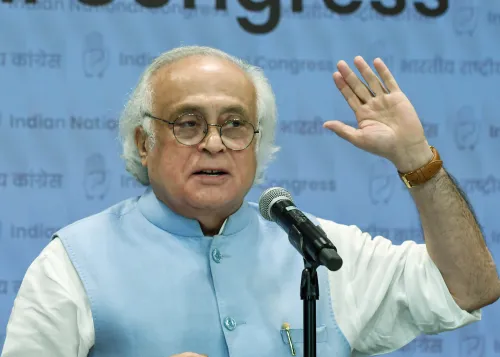
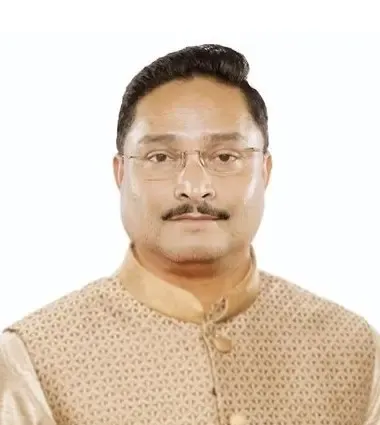
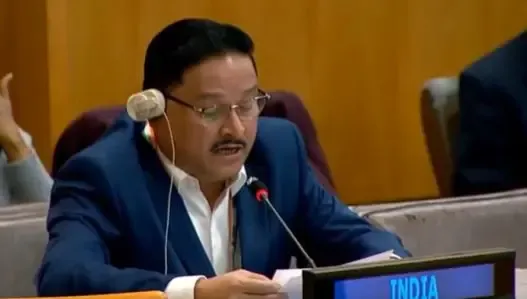
United Nations, Oct 29 (NationPress) India has vehemently criticized a human rights report concerning Myanmar, labeling it as biased and communal. The report alleges that the Pahalgam terrorist massacre in April has had an impact on the treatment of Rohingya migrants. BJP MP Dilip Saikia expressed his strong disapproval of the report, stating, “I strongly denounce the biased approach adopted by the SR [special rapporteur] regarding the innocent civilian victims of the April 2025 terrorist attack in Pahalgam, through a biased communal lens.”
Saikia further stated, “The claim that this terrorist attack has influenced the treatment of displaced persons from Myanmar holds no factual validity.” His remarks were in response to allegations from the UN special rapporteur on human rights in Myanmar, Thomas Andrews, who is a former Democratic politician from the US and currently a professor at Harvard.
“My country categorically rejects such prejudiced and narrow-minded ‘analysis’ from the special rapporteur,” Saikia declared. He is part of India's delegation at the General Assembly.
Discussing the Rohingyas in India, he noted, “We are witnessing an alarming degree of radicalization among these displaced individuals, which is putting pressure on our law and order situation.” The group behind the crisis in Myanmar, the Arakan Rohingya Salvation Army (ARSA), is led by Ataullah abu Ammar Jununi, a Karachi-born Rohingya.
Back in August 2017, ARSA initiated communal violence against Hindus in Myanmar, resulting in the deaths of 99 individuals—including women, men, and children, alongside numerous abductions, as reported by Amnesty International.
On India's stance towards its neighbor, Saikia called for an immediate halt to violence, the release of political prisoners, unobstructed humanitarian aid, and inclusive political discussions. “We firmly believe that lasting peace can only be achieved through inclusive political dialogue and the prompt restoration of democratic processes via credible and participatory elections,” he asserted.
In his report, Andrews claimed that following the Pahalgam attack, “refugees from Myanmar are facing immense pressure in India, despite no individuals from Myanmar being involved in the attack.” He added a communal aspect to the narrative, stating the attack targeted “Hindu tourists,” although the motives of the terrorists included killing non-Muslims, with victims also comprising a Christian.
Saikia urged Andrews to refrain from relying on unverified and biased media reports, which seemingly aim to tarnish India's reputation, where over 200 million Muslims reside—about 10% of the world's Muslim population.
Special Rapporteurs are unpaid independent experts appointed by the UN Human Rights Council to monitor human rights conditions in various countries and do not necessarily represent the views of the Secretary-General or the UN.
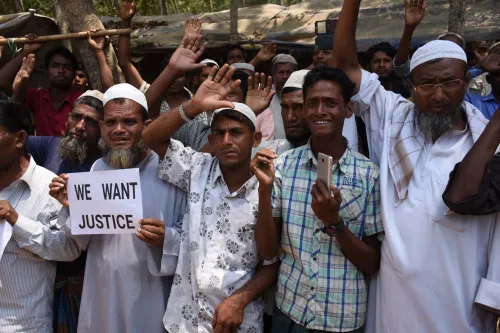
Andrews, a former member of the US Congress, now leads the Southeast Asia Human Rights Project at Harvard. He claimed that recent interactions with Rohingya refugees revealed they have been “summoned, detained, interrogated, and threatened with deportation by Indian authorities.” He also alleged that around 40 Rohingya refugees were taken by sea and released off Myanmar's coast, while others faced deportation to Bangladesh.
The Rohingya exodus commenced after ARSA attacked Myanmar security posts in August 2017, triggering a massive military response.
Point of View
It is crucial to acknowledge the complexities surrounding the Rohingya crisis. India faces challenges balancing humanitarian needs and national security while addressing international criticisms. Upholding national integrity is paramount, yet the plight of the Rohingya demands attention and action.
NationPress
1 Oct 2026
Frequently Asked Questions
What is the Pahalgam massacre?
The Pahalgam massacre refers to a terrorist attack in April 2025, where innocent civilians were targeted, leading to significant political ramifications in the region.
Who are the Rohingya?
The Rohingya are a Muslim minority group from Myanmar who have faced persecution and violence, leading to mass displacement and refugee crises in neighboring countries.
What is the stance of India on the Rohingya refugee issue?
India has expressed concern over the radicalization among Rohingya refugees while emphasizing the need for humanitarian assistance and political dialogue.
Who is Thomas Andrews?
Thomas Andrews is the UN special rapporteur on human rights in Myanmar, known for his advocacy for the Rohingya's rights and humanitarian needs.
What does the UN report claim?
The UN report alleges that the Pahalgam terrorist attack has negatively impacted the treatment of Rohingya refugees in India, a claim India vehemently denies.