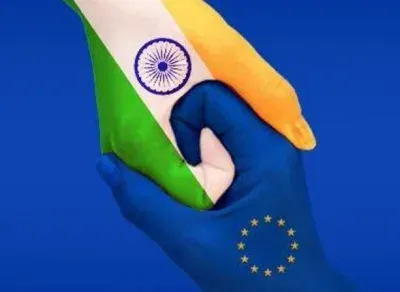
India-EU free trade pact: EU must deliver as India accelerates implementation
Synopsis
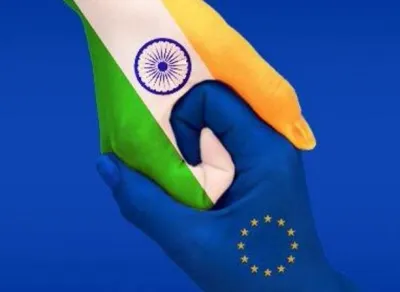
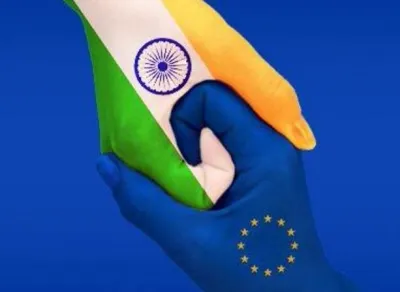
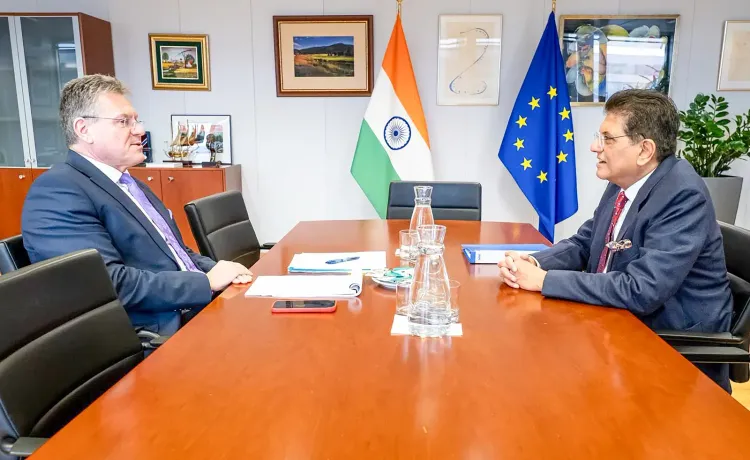
India is moving fast on its free trade deal with the EU — and the bloc is being put on notice. With €180 billion in annual bilateral trade and €4 billion in potential tariff savings on the line, New Delhi is already in implementation mode while Brussels faces a credibility test: can it act as a reliable trading partner, or will geopolitical ambition once again outrun execution?
Key Takeaways
India-EU bilateral trade in goods and services already exceeds €180 billion annually.
The European Commission estimates the FTA could save European exporters approximately €4 billion per year in tariffs.
The Indian government has begun proactive implementation of FTA commitments, not waiting for the EU to set the pace.
India has sought guarantees from Brussels against future restrictions on metal scrap exports used by the steel and aluminium sectors.
Geopolitical shifts — including Donald Trump's return to power, China's isolation, and the Russia-Ukraine war — have elevated India's strategic importance to Western economies.
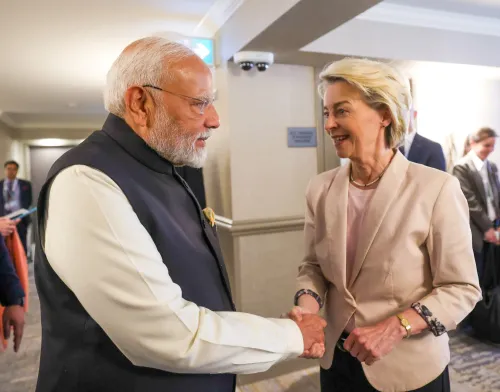
India and the European Union are pressing ahead with a landmark free trade agreement (FTA), but analysts warn that the onus is now firmly on Brussels to prove it can execute on its commitments — even as New Delhi moves swiftly to implement its side of the deal. The assessment, published in The European Conservative, comes as shifting global dynamics have elevated India's strategic importance to Western economies.
Why India Matters More Now
According to the report by Javier Villamor, a Spanish journalist, three converging forces have reshaped the geopolitical calculus: US President Donald Trump's return to the White House, China's deepening isolation from Western supply chains, and the protracted Russia-Ukraine war. Together, these developments have pushed Europe to diversify its markets, reinforce supply chains, and identify reliable strategic partners — with India emerging as a top candidate.
Bilateral trade in goods and services between India and the EU already exceeds €180 billion annually. The European Commission estimates that the FTA could save European exporters roughly €4 billion a year in tariffs alone — a figure that underscores the agreement's commercial weight.
India's Proactive Stance
Notably, India is not waiting passively for Brussels to set the tempo. The Indian government has begun working to implement FTA commitments as rapidly as possible, with a focus on locking in economic gains from the agreement's earliest phase. This proactive posture reflects New Delhi's confidence in the deal's value — and its intent to shape its terms before implementation momentum slows.
This comes amid India's broader push to cement its position as an indispensable partner, given what Villamor describes as the country's 'market size, demographic weight, industrial capacity, and strategic position in the Indo-Pacific.'
The Recyclable Materials Test Case
One early friction point has already surfaced. India has formally asked Brussels for guarantees against future European restrictions on exports of certain recyclable materials — specifically metal scrap used by the steel and aluminium industries. While the issue is technical in nature, it functions as a stress test: can the EU reconcile its internal regulatory rules with the trade commitments it signs with strategic partners? The answer will carry implications well beyond this single commodity.
What Remains to Be Seen
The report concludes that while India and Western Europe will continue to tighten their relationship, the defining question is whether the EU can act as a credible trading bloc — or whether its geopolitical ambition will once again outpace its capacity for execution. Critics have long pointed to the EU's tendency to negotiate ambitious agreements that stall at the implementation stage, and the India FTA will be a significant test of that critique.
With New Delhi already in implementation mode, the pressure is squarely on Brussels to match pace — and intent with action.
Point of View
The larger market-access commitments will face far greater friction. The real risk is not that the deal collapses, but that it quietly underdelivers while both sides claim credit for signing it.
NationPress
8 Oct 2026
Frequently Asked Questions
What is the India-EU free trade agreement?
The India-EU free trade agreement (FTA) is a bilateral trade pact between India and the European Union aimed at reducing tariffs and deepening market access. Bilateral trade in goods and services between the two already exceeds €180 billion annually, and the European Commission estimates the deal could save European exporters around €4 billion a year in tariffs.
Why has the India-EU FTA gained urgency now?
The agreement has gained fresh momentum due to major geopolitical shifts: US President Donald Trump's return to office, China's growing isolation from Western supply chains, and the ongoing Russia-Ukraine war. These developments have pushed Europe to seek reliable strategic partners, with India emerging as a top priority.
What is India's stance on implementing the FTA?
India is not waiting for Brussels to lead. The Indian government has already begun working to implement FTA commitments as quickly as possible and is focused on securing economic benefits from the agreement's earliest phase, according to the report.
What is the dispute over metal scrap exports?
India has asked the EU for guarantees against future European restrictions on exports of certain recyclable materials, including metal scrap used by the steel and aluminium industries. The issue is technical but is seen as a test of whether the EU can reconcile its internal regulations with its external trade commitments.
What is the key concern about the EU's ability to deliver?
Analysts cited in the report question whether the EU can act as a credible trading bloc or whether its geopolitical ambition will outpace its capacity for execution — a criticism that has followed the EU in previous trade negotiations. The India FTA is seen as a significant test of Brussels' ability to follow through on its strategic promises.