Is India Keeping an Eye on China's Expanding Influence in Bangladesh?
Synopsis
As Bangladesh grapples with instability, India remains alert to the implications for medical visas and trade. The rise of China's influence is causing diplomatic ripples, prompting a careful balancing act from New Delhi. Will India successfully navigate this complex landscape?
Key Takeaways
Medical visas are being prioritized amidst ongoing instability.
China's influence in Bangladesh is a growing concern for India.
Trade relations have faced significant disruptions due to political upheaval.
Despite challenges, bilateral trade continues to show resilience.
India must balance geopolitical sensitivities with economic imperatives.
New Delhi, Dec 19 (NationPress) The current instability in Bangladesh raises significant concerns for patients requiring immediate specialized medical care.
India is a key player in the country's visa operations, with a considerable percentage of applications falling under the medical category.
A report from the Parliamentary Committee titled "Future of India-Bangladesh Relationship" highlights that medical visas are prioritized, making up approximately 80 percent of all visas issued. The Committee indicated that further easing of visa numbers would occur in collaboration with the concerned Ministry of External Affairs, considering various factors.
Ongoing political turmoil in Bangladesh has severely impacted travel and trade, with reports suggesting a staggering 90 percent decline in travel to India.
Although medical tourism has been notably affected, it still falls under visa exceptions.
Businesses, including guesthouses and hospitals near border cities, have experienced a sharp decline in patients and visitors from Bangladesh, showcasing the extent of this disruption.
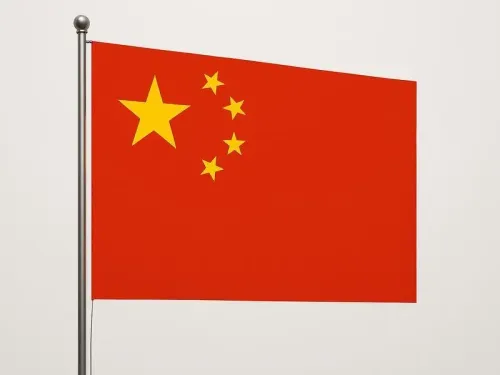
The Committee expressed concern over China's growing presence in Bangladesh, particularly regarding infrastructure projects, port expansions, and defense ties, citing the increasing influence of nations like China within Bangladesh's medical sector.
As indicated in the report, the Indian government must formulate strategies to counteract this influence without jeopardizing national security.
India is closely monitoring these developments, and while medical visas continue to be issued, they will also be evaluated based on the prevailing security situation.
Following the recent political upheaval and the resignation of Prime Minister Sheikh Hasina, trade relations between the two nations have faced numerous challenges.
Bangladesh has restricted imports from India, including essential goods like yarn and rice, prompting New Delhi to respond with limitations on imports from Bangladesh via Northeastern land ports.
Key Bangladeshi exports, especially ready-made garments worth millions, are now confined to sea ports like Kolkata and Navi Mumbai, raising costs and extending transit times.
These reciprocal actions have strained bilateral trade but have not entirely halted it, with some growth in Bangladesh's exports to India despite the challenges.
However, the geopolitical shifts following the regime change in Bangladesh have fostered closer ties between Dhaka and China, leading India to adopt a cautious approach, reflected in trade restrictions and the termination of certain transit agreements.
The Parliamentary Committee has flagged the alarming issue of dumping Chinese goods, particularly fabrics, into India through Bangladesh, leveraging preferential market access provisions under the South Asian Free Trade Area (SAFTA).
Interestingly, Bangladesh remains India's largest trade partner in South Asia, with New Delhi being Dhaka's second-largest trade partner in Asia.
Over the past decade, India-Bangladesh bilateral trade has witnessed significant growth, with exports from India in 2024-2025 reaching approximately $11,456 million and imports around $2,005 million, compared to $6,451 million and $621 million in 2014-2015, respectively.
For the year 2023-2024, these figures stood at $11,066 million and $1,845 million, respectively.
Currently, Bangladesh's foreign exchange shortages and soaring inflation complicate its trade capabilities.
Despite rising nationalist sentiments and policy reforms, deep economic interdependence ensures that trade volumes remain robust, underscoring the necessity for diplomatic and economic collaboration to sustain stability in bilateral relations.
Even amidst critical remarks against India from Bangladesh's interim leadership at international forums, New Delhi continues to monitor the situation closely, balancing geopolitical sensitivities with economic imperatives.
The regional economic stability of South Asia relies on resilient mechanisms that can withstand political shifts, ensuring essential trade and travel connections between Bangladesh and India.
Point of View
I observe the intricate balance India must maintain in its relationship with Bangladesh amidst rising Chinese influence. The necessity for diplomatic engagement is paramount to ensure regional stability and protect national interests.
NationPress
9 Oct 2026
Frequently Asked Questions
What is the current state of India-Bangladesh relations?
India-Bangladesh relations are currently strained due to ongoing political instability in Bangladesh, impacting trade and medical visa operations.
How is China's influence affecting Bangladesh?
China's increasing involvement in Bangladesh, particularly in infrastructure and the medical sector, has raised security concerns for India.
What measures is India taking regarding medical visas?
India continues to issue medical visas but is closely monitoring the situation, considering security implications.
How has trade been impacted between India and Bangladesh?
Trade has faced disruptions due to restrictions imposed by both countries, yet some growth in exports from Bangladesh to India is still observed.
What are the key exports from Bangladesh to India?
Ready-made garments are among the key exports from Bangladesh to India, valued at hundreds of millions annually.