India Boosts Tuvalu Ties: Heritage Aid, Sea Ambulance & Medical Support
Synopsis
India's MoS for External Affairs Pabitra Margherita handed over heritage preservation funds to Tuvalu under the Quick Impact Project, while also announcing a sea ambulance, food grain aid, and medical treatment for 10 patients under 'Heal in India' — a powerful display of India's people-first Pacific diplomacy amid growing regional geopolitical competition.
Key Takeaways
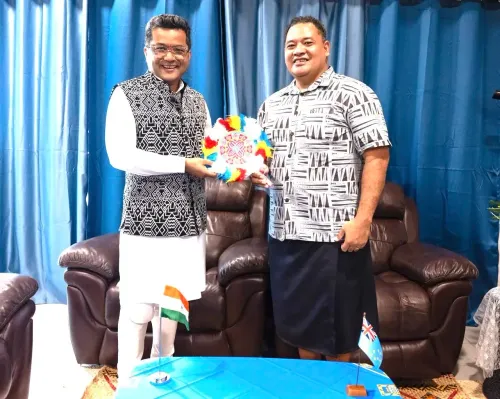
MoS Pabitra Margherita handed over the first tranche of Quick Impact Project (QIP) funds to Tuvalu for cultural and heritage site preservation during his official visit on April 26, 2025 .
India announced the provision of a sea ambulance and food grain assistance to Tuvalu as part of a comprehensive bilateral support package.
Under the 'Heal in India' initiative, India will sponsor 10 Tuvaluan patients for specialised medical treatment at Indian hospitals.
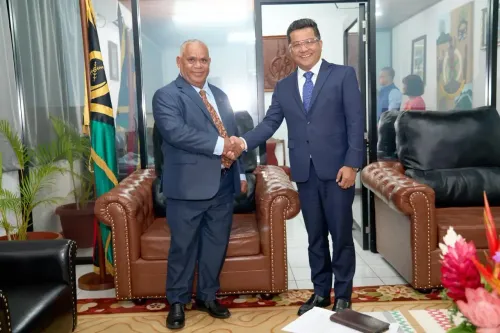
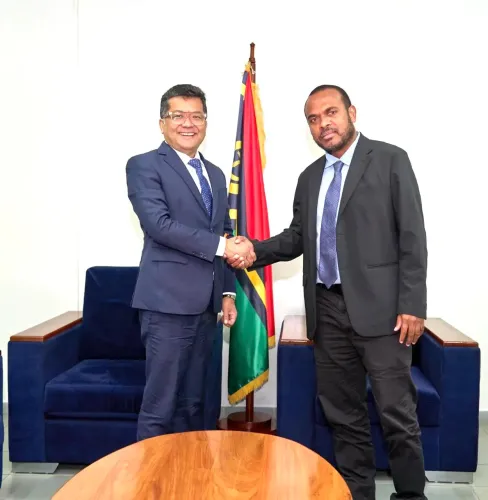
Margherita also visited Vanuatu from April 22 , meeting PM Jotham Napat and Acting Foreign Minister Xavier Emanuel Harry to advance bilateral cooperation.
The visits are aligned with India's Act East Policy and the Forum for India-Pacific Islands Cooperation (FIPIC) framework established at the third FIPIC Summit in May 2023 in Port Moresby.
India's Pacific engagement is seen as a strategic soft-power counter to China's growing influence in the region through infrastructure and security pacts.
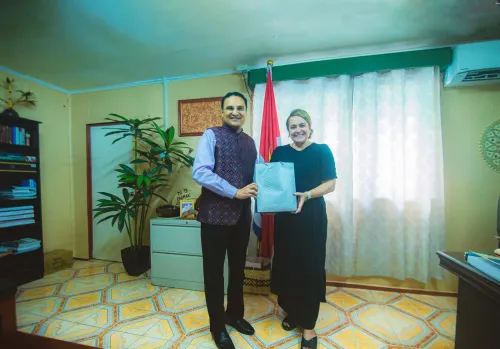
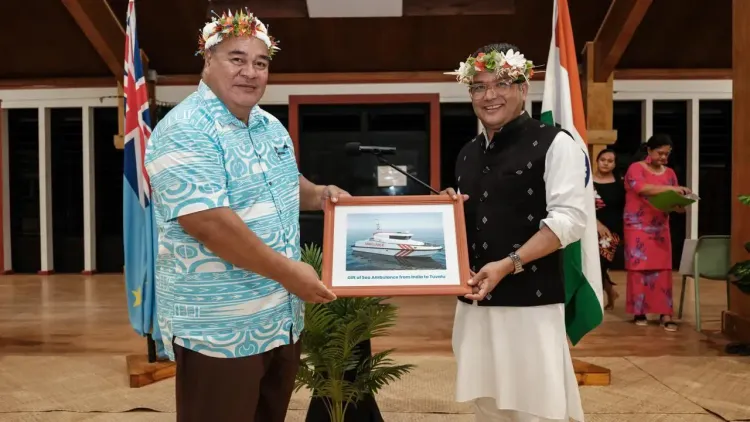
Funafuti, April 26: Union Minister of State for External Affairs Pabitra Margherita formally handed over financial assistance to Tuvalu for the preservation of its cultural and heritage sites during his landmark official visit to the South Pacific island nation. The cheque, presented as the first tranche under India's Quick Impact Project (QIP), marks a significant step in deepening bilateral ties between the two nations and underscores India's expanding footprint across the Pacific region.
Heritage Preservation and Cultural Exchange
The handover ceremony took place during the State Banquet hosted by the Government of Tuvalu, where Minister Margherita was the guest of honour. The QIP funding is specifically earmarked for the conservation of Tuvalu's cultural and heritage landmarks, which face growing threats from rising sea levels and climate-induced erosion — existential challenges for one of the world's most vulnerable island nations.
Margherita also witnessed a spirited performance of the traditional Tuvaluan fatele dance by local community members, describing it on his official X (formerly Twitter) account as "a true celebration of the country's rich culture." The gesture reflects India's approach of combining diplomatic engagement with genuine cultural appreciation.
India's Comprehensive Support Package for Tuvalu
Beyond heritage preservation, Minister Margherita announced a wide-ranging support package for Tuvalu, including the provision of a sea ambulance — a critical asset for an archipelago nation where inter-island medical emergencies are a recurring challenge. He also confirmed food grain assistance to address food security concerns on the islands.
In a significant healthcare initiative, India announced the sponsorship of 10 Tuvaluan patients for specialised medical treatment in India under the flagship "Heal in India" programme, according to the Ministry of External Affairs (MEA). This initiative positions India as a medical diplomacy leader across the Pacific, rivalling other regional powers for soft-power influence.
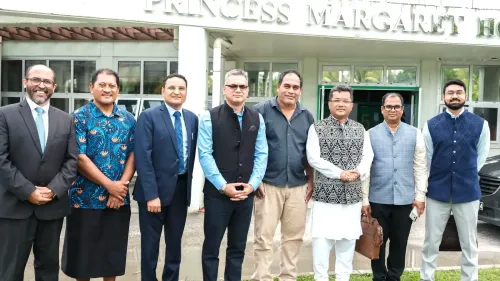
Margherita also visited the Princess Margaret Hospital in Funafuti on Saturday, where he interacted with frontline healthcare workers serving the island community — a gesture that reinforced India's people-centric diplomatic approach.
Vanuatu Bilateral Talks: Key Sectors Discussed
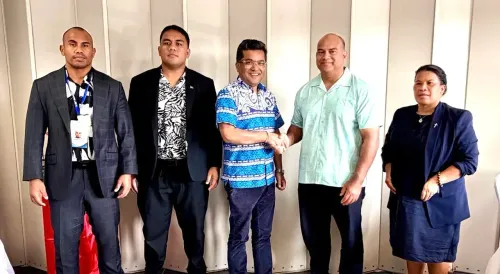
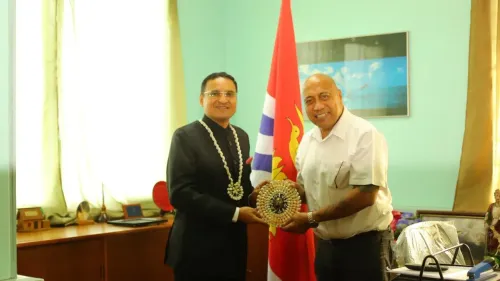
Prior to his Tuvalu engagements, Minister Margherita arrived in Port Vila on April 22 for his first official visit to Vanuatu. On Thursday, he held substantive talks with Vanuatu Prime Minister Jotham Napat, focusing on strengthening India-Vanuatu bilateral cooperation across critical sectors including health, trade, and climate resilience.
He also met Vanuatu's Acting Minister of Foreign Affairs, International Cooperation, and External Trade, Xavier Emanuel Harry. The discussions centred on advancing bilateral development cooperation, with particular emphasis on health infrastructure, capacity building, and climate-resilient construction — areas where Vanuatu faces acute developmental gaps.
India's Pacific Strategy: Act East Policy in Action
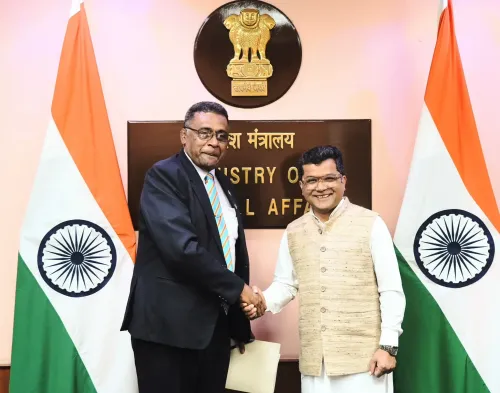
The twin-nation visit is being viewed by the MEA as a direct extension of India's Act East Policy and its engagement framework under the Forum for India-Pacific Islands Cooperation (FIPIC). India has been systematically deepening ties with Pacific island nations, a region that has historically been dominated by Australia, China, and the United States.
Notably, the visit follows the historic third FIPIC Summit held in May 2023 in Port Moresby, Papua New Guinea, where Prime Minister Narendra Modi personally engaged with Pacific island leaders — the first Indian PM to visit the region. That summit laid the groundwork for the kind of project-level follow-through now being executed through ministerial visits like Margherita's.
This comes amid growing geopolitical competition in the Pacific, where China has signed security and infrastructure agreements with several island nations, raising alarm in New Delhi, Canberra, and Washington. India's QIP-based, people-first engagement — offering medical care, food security, and cultural preservation — presents a markedly different model of partnership compared to debt-heavy infrastructure deals.
Strategic Implications and What Comes Next
India's deepening engagement with Tuvalu and Vanuatu signals a broader strategic pivot toward the Pacific as part of its Indo-Pacific vision. With climate vulnerability, food insecurity, and healthcare deficits defining the lived reality of Pacific islanders, India's targeted assistance addresses real ground-level needs — building durable goodwill that translates into diplomatic capital at multilateral forums like the United Nations.
The "Heal in India" initiative, in particular, has the potential to grow into a flagship medical diplomacy programme, with Tuvalu becoming one of several Pacific beneficiaries. As India continues to expand its FIPIC engagement, further ministerial visits, capacity-building programmes, and project disbursements are expected across the region in the coming months.
Point of View
New Delhi is quietly but decisively expanding its sphere of influence across the Pacific — a region increasingly contested by China, the US, and Australia. Minister Margherita's visit to Tuvalu and Vanuatu is not routine diplomacy; it is a calculated soft-power offensive that combines cultural sensitivity, medical outreach, and targeted development aid — precisely the tools that build lasting alliances. India's 'Heal in India' initiative for Pacific islanders is particularly shrewd: it creates human-level connections that no infrastructure loan can replicate. The real story here is that India is playing a long game in the Pacific, and it is winning hearts before the competition even shows up.
NationPress
24 Sept 2026
Frequently Asked Questions
What aid did India give to Tuvalu during Pabitra Margherita's visit?
India handed over the first tranche of financial assistance to Tuvalu for preserving cultural and heritage sites under the Quick Impact Project (QIP). Additionally, India announced a sea ambulance, food grain assistance, and medical sponsorship for 10 Tuvaluan patients under the 'Heal in India' initiative.
What is the Quick Impact Project (QIP) that India uses for Pacific island nations?
The Quick Impact Project (QIP) is India's diplomatic tool for providing targeted, small-scale development assistance to partner nations, producing visible results quickly. It is frequently used in India's engagement with Pacific island countries under the FIPIC framework.
What is the 'Heal in India' initiative for Tuvalu?
'Heal in India' is an Indian government initiative that sponsors patients from partner nations for specialised medical treatment at Indian hospitals. Under this programme, India has committed to sponsoring 10 Tuvaluan patients for advanced medical care in India.
Why is India engaging with Pacific island nations like Tuvalu and Vanuatu?
India's engagement is driven by its Act East Policy and the Forum for India-Pacific Islands Cooperation (FIPIC), aimed at building strategic partnerships in the Indo-Pacific region. It also serves as a counterbalance to China's growing influence in the Pacific through infrastructure and security agreements.
What was discussed during Pabitra Margherita's visit to Vanuatu?
Minister Margherita met Vanuatu Prime Minister Jotham Napat and Acting Foreign Affairs Minister Xavier Emanuel Harry to discuss strengthening bilateral cooperation in health, capacity building, and climate-resilient infrastructure. The talks aimed to advance India-Vanuatu development cooperation across key sectors.