China's Arunachal renaming fails as India maps 27 locations ahead of BRICS
Synopsis
China's sixth batch of renamed Arunachal Pradesh locations met a direct Indian counter — 27 standardised names on the official map — just days before a key border dialogue and weeks ahead of the BRICS Summit where Xi Jinping is expected in New Delhi. The cartographic duel exposes Beijing's central contradiction: it claims naming rights over territory it does not administer, while objecting to India doing exactly the same on land it governs.
Key Takeaways
India's Survey of India standardised 27 locations in Arunachal Pradesh on the official map on 7 August 2026 , including Sambho Sarovar and the Sher-e-Thapa Memorial .
China's Ministry of Civil Affairs issued its sixth batch of Chinese names for Arunachal Pradesh locations in April 2026 , claiming them as part of 'Zangnan' (southern Tibet).
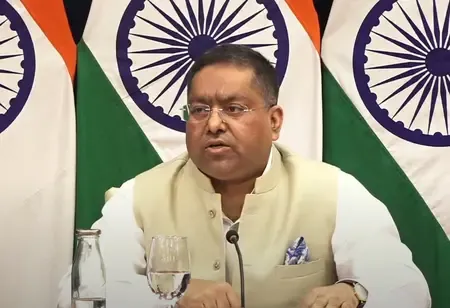
India's Ministry of External Affairs reaffirmed on 11 August 2026 that Arunachal Pradesh is an 'inalienable and integral part of India.' Unverified allegations of Chinese intrusions in the Taksing sector , Upper Subansiri district , emerged from a People's Party of Arunachal fact-finding team.
The 36th India-China Border Affairs Working Mechanism meeting was held in New Delhi on 6 August 2026 , a day before the cartographic move was reported.
The BRICS Summit is scheduled in New Delhi on 12-13 September 2026 , with President Xi Jinping expected to attend.
India's Survey of India on 7 August 2026 formally standardised names for 27 locations in Arunachal Pradesh on the country's official map, directly countering Beijing's long-running strategy of publishing Chinese-language names for territory it claims as 'Zangnan' — part of southern Tibet. The move, covering mountain passes, settlements, Sambho Sarovar, and the Sher-e-Thapa Memorial, is India's clearest cartographic assertion yet that sovereignty is determined by administration, not nomenclature.
China's Naming Campaign and Its Contradictions
Beijing has issued multiple batches of what it terms 'standardised geographical names' for locations inside Arunachal Pradesh. In April 2026, China's Ministry of Civil Affairs released its sixth such batch. Chinese Foreign Ministry spokesperson Guo Jiakun defended the practice as an exercise of China's claimed 'sovereign rights.' The position, however, carries a glaring internal contradiction: Beijing insists its own naming exercises are legitimate acts of sovereignty, while simultaneously objecting when India standardises names on its own officially administered territory. A principle that applies only to one party is not a principle — it is a claim.
Ground Reality vs. Cartographic Pressure
Arunachal Pradesh functions as a fully constituted state within the Indian Union, with civilian governance, elected representation, and administrative infrastructure. Beijing's repeated publication of alternative names does not alter that reality. India's Ministry of External Affairs reiterated on 11 August 2026 that Arunachal Pradesh is an 'inalienable and integral part of India' and made clear that border conditions would inevitably shape the broader bilateral relationship. Cartography, as India's response implicitly argues, should describe political reality — not be deployed as a substitute for negotiated settlement.
Taksing Sector Allegations and Border Tensions
The naming dispute has coincided with more serious allegations from the Taksing sector of Upper Subansiri district. A four-member fact-finding team from the People's Party of Arunachal reported alleged Chinese intrusions in the area. The claims remain unsubstantiated and uncorroborated. Beijing has characterised the overall border situation as 'generally stable,' though reports cited claims of a late-July patrol confrontation near Taksing and allegations from a local welfare body of increasing Chinese activity in the sector.
Diplomatic Context: BRICS Summit and Border Talks
The timing of these developments carries particular weight. The 36th meeting of the Working Mechanism for Consultation and Coordination on India-China Border Affairs was held in New Delhi on 6 August 2026 — a day before reports of India's cartographic move emerged. Both governments have publicly endorsed dialogue, but border stability remains the real measure of whether relations are genuinely improving. Notably, the latest tensions have surfaced ahead of the BRICS Summit scheduled in New Delhi for 12-13 September 2026, which Chinese President Xi Jinping is expected to attend. The optics present a direct challenge for Beijing: it cannot advocate for stable bilateral ties while simultaneously running administrative naming campaigns that reinforce contested territorial claims.
India's Broader Strategic Response
Analysts and officials have consistently argued that India's most effective answer to cartographic pressure lies beyond competing name lists. Roads, telecommunications infrastructure, forward logistics, civilian settlements, reliable intelligence, and regular patrolling carry far greater strategic weight than symbols on a map. China's renaming strategy depends on repetition building political familiarity over time. India's counter, according to this view, must rest on effective administration, rigorous historical documentation, and credible on-ground presence — not an endless cycle of duelling nomenclature. The fundamental lesson of this cartographic contest is unambiguous: sovereignty cannot be manufactured by renaming someone else's geography, and unilateral labels cannot resolve one of Asia's most complex boundary disputes.
Point of View
But whether India's physical presence — roads, settlements, patrols — keeps pace with its cartographic assertions. With the BRICS Summit approaching and Xi Jinping expected in New Delhi, Beijing faces an uncomfortable optics problem of its own making: it is simultaneously seeking summit-level diplomacy and running a naming campaign that India's own foreign ministry has called out. That is not a stable diplomatic posture, and the Taksing allegations — unverified as they are — suggest the ground situation may be more volatile than either capital is willing to formally acknowledge.
NationPress
5 Oct 2026
Frequently Asked Questions
Why did India standardise 27 location names in Arunachal Pradesh?
The Survey of India formally identified 27 locations in Arunachal Pradesh by their standard names on 7 August 2026 to facilitate accurate identification and improve public awareness of their geographical and historical significance. The move is widely seen as a direct counter to China's repeated publication of Chinese-language names for the same territory.
What is China's 'Zangnan' claim over Arunachal Pradesh?
China refers to Arunachal Pradesh as 'Zangnan' and claims it as part of southern Tibet. Beijing has issued six batches of 'standardised geographical names' for locations inside the state, with its Foreign Ministry defending the practice as an exercise of sovereign rights — a position India firmly rejects.
What are the allegations from the Taksing sector?
A four-member fact-finding team from the People's Party of Arunachal reported alleged Chinese intrusions in the Taksing sector of Upper Subansiri district. The claims are unsubstantiated and uncorroborated; Beijing has described the overall border situation as 'generally stable,' though reports cited a late-July patrol confrontation near Taksing.
How does the BRICS Summit factor into the India-China border dispute?
The BRICS Summit is scheduled in New Delhi on 12-13 September 2026, with Chinese President Xi Jinping expected to attend. The latest naming tensions and border allegations have emerged in the lead-up to the summit, creating a diplomatic contradiction for Beijing, which is simultaneously seeking high-level engagement while running naming campaigns India has publicly rejected.
What was discussed at the 36th India-China Border Affairs Working Mechanism meeting?
The 36th meeting of the Working Mechanism for Consultation and Coordination on India-China Border Affairs was held in New Delhi on 6 August 2026, a day before reports of India's cartographic move emerged. Both governments have publicly supported dialogue, though specific outcomes of the meeting were not detailed in available reports.