Bhupender Yadav Meets Saudi Energy Minister at COP31
Synopsis
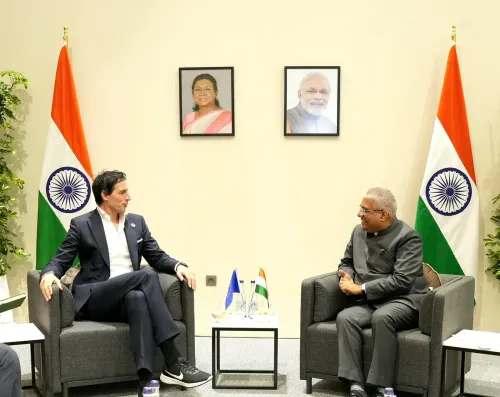
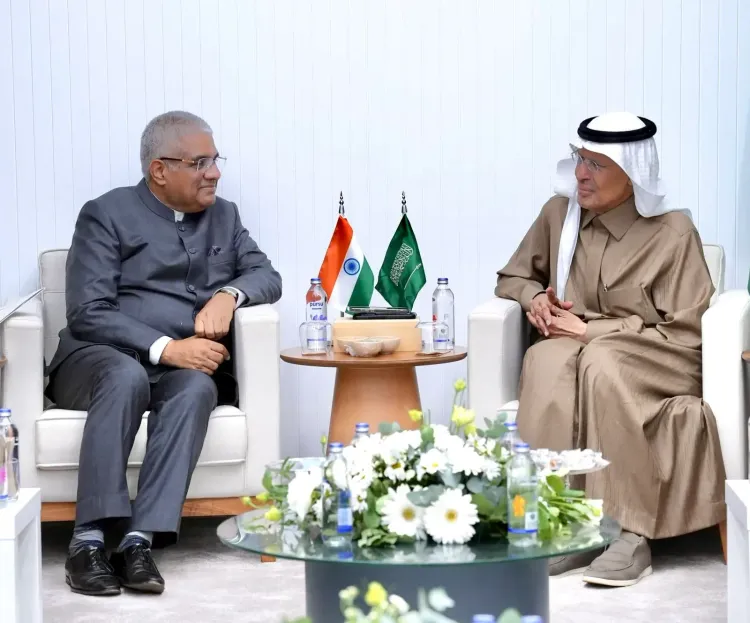
Union Environment Minister Bhupender Yadav met Saudi Arabia's Energy Minister Prince Abdulaziz bin Salman at COP31 in Antalya, Türkiye, discussing climate negotiations, energy security, and the urgent need to deliver on climate finance commitments for developing nations.
Key Takeaways
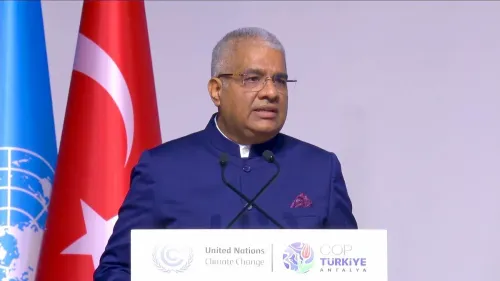
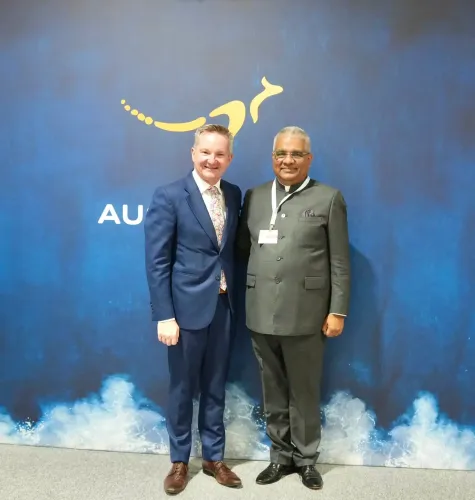
Bhupender Yadav held a bilateral meeting with HRH Prince Abdulaziz bin Salman of Saudi Arabia at COP31 in Antalya, Türkiye on 20 November 2026 .
Discussions covered climate negotiations, energy security, and delivery on climate finance.
Climate finance delivery was jointly 'emphasised' by both ministers as essential for effective climate action.
India has committed to a net-zero by 2070 target, first announced at COP26 in Glasgow in 2021 .
The Paris Agreement (2015) framework obligates developed nations to finance climate action in developing countries — a commitment whose fulfilment remains contested.
India and Saudi Arabia share common ground at COP on demanding financed, just transition timelines rather than blanket fossil fuel phase-outs.
At the margins of COP31 in Antalya, Türkiye, two of the world's most consequential energy voices sat down — one representing the planet's largest democracy pushing a 2070 net-zero target, the other the nerve centre of global oil supply. Union Environment Minister Bhupender Yadav met with HRH Prince Abdulaziz bin Salman, Saudi Arabia's Minister of Energy, on Friday, 20 November 2026, for a bilateral exchange spanning climate negotiations, energy security, and the perennial fault-line of climate finance.
What the two ministers put on the table
Yadav described the meeting as a wide-ranging dialogue covering 'climate negotiations and energy security' — the twin tracks that developing and energy-producing nations are always trying to run simultaneously at COP. The ministers also 'emphasised delivery on climate finance for effective climate action,' a phrase that carries specific weight this year as negotiators wrestle over the architecture of a new collective quantified goal to replace the long-disputed $100 billion per year pledge that developed nations struggled to fulfil under the Paris Agreement framework established in 2015.
The finance demand is not rhetorical. For India and other large developing economies, the credibility of the entire COP process rests on whether wealthy nations and multilateral institutions actually transfer capital — not loans dressed as grants — to fund renewable buildouts, adaptation infrastructure, and loss-and-damage responses.
India and Saudi Arabia: an unlikely climate-floor alliance
India and Saudi Arabia occupy unusual terrain inside the UNFCCC tent. India anchors itself in the developing-world bloc — pushing hard on historical emissions responsibility and the right to growth — while Saudi Arabia remains the world's most influential oil exporter and a nation whose fiscal future is intricately tied to fossil fuel demand. Yet at COP sessions, the two countries frequently find shared ground on resisting one-size-fits-all phase-out timelines and on demanding that finance flows match rhetoric.
India's bilateral meetings at COP have become a signature feature of Yadav's tenure at the Ministry of Environment, Forest and Climate Change. Since India announced its net-zero by 2070 commitment at COP26 in Glasgow, the minister has used COP corridors to reinforce that the transition must be 'just' — meaning financed and phased in a way that does not penalise economies still building basic energy access.
Why climate finance is the make-or-break issue at COP31
The meeting lands at a moment when the gap between climate ambition and climate money is under a harsh spotlight. Developing nations have argued for years that the new collective quantified goal must be set in the trillions — not billions — annually, and must distinguish clearly between public grants and private finance. For India, a country simultaneously operating coal capacity and commissioning the world's largest renewable energy projects, the ability to accelerate the green transition is directly conditional on concessional finance arriving on schedule.
Saudi Arabia's engagement at this meeting is also notable. As an energy-transition stakeholder with massive sovereign wealth and growing renewable investment ambitions domestically, Riyadh's posture on climate finance for developing nations has evolved — the kingdom understands that an orderly global transition, properly funded, is preferable to a chaotic one that disrupts oil markets unpredictably.
The question now is whether the hallway conversations in Antalya translate into binding finance commitments on the COP31 floor — because without the money, every net-zero pledge is just a calendar entry.
Point of View
India signals that it views both issues as inseparable — an implicit message to developed nations that developing economies will not decouple growth from fossil fuels without credible, large-scale financial support. The optics of an Indian environment minister and a Saudi energy minister aligning on climate finance also complicates the North-South framing that developed countries often use to dilute finance obligations. If COP31 delivers a robust new collective quantified goal, this meeting will appear in the footnotes; if it stalls, it will serve as evidence that the real climate diplomacy happened in corridors, not on the floor.
NationPress
20 Nov 2026
Frequently Asked Questions
What did Bhupender Yadav discuss with Saudi Arabia's Energy Minister at COP31?
Union Environment Minister Bhupender Yadav met HRH Prince Abdulaziz bin Salman at COP31 in Antalya, Türkiye and exchanged views on climate negotiations, energy security, and the need for timely delivery on climate finance to enable effective climate action.
Where is COP31 being held?
COP31 is being held in Antalya, Türkiye , as referenced in Union Environment Minister Bhupender Yadav's post on 20 November 2026 .
What is India's net-zero target?
India has committed to achieving net-zero carbon emissions by 2070 , a target first announced by Prime Minister Narendra Modi at COP26 in Glasgow in 2021 .
Why is climate finance a key issue at COP31?
Climate finance is central because the existing commitment under the Paris Agreement (2015) — where developed nations pledged to mobilise $100 billion per year for developing countries — has repeatedly fallen short, and negotiators at COP31 are working to agree on a new, larger collective quantified goal.
What is India's position on energy transition at COP?
India advocates for a 'just transition' — one that is adequately financed by developed nations — arguing that developing economies cannot phase out fossil fuels without concessional funding and technology transfer to support their renewable energy buildout.