Exercise Rahat Mitra: India-Myanmar HADR drill underway in Chennai
Synopsis
India and Myanmar are running their most operationally detailed joint disaster-response drill yet — Exercise Rahat Mitra in Chennai — just days after completing their 8th Army-to-Army Staff Talks in Naypyidaw. With training simulators handed over and tri-service flood-response capabilities on live display, the bilateral military relationship is moving well beyond formality.
Key Takeaways
Exercise Rahat Mitra , India and Myanmar's integrated HADR joint exercise, is being held in Chennai from 5 to 7 November 2026 .
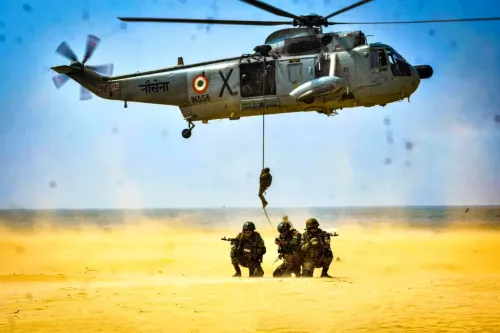
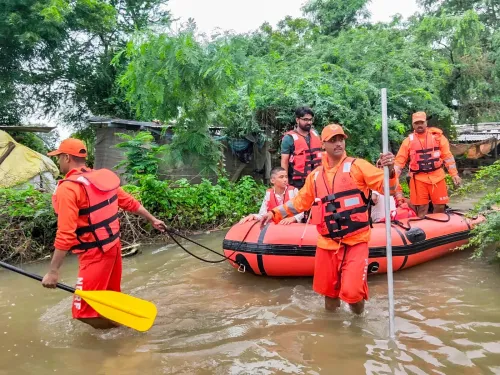
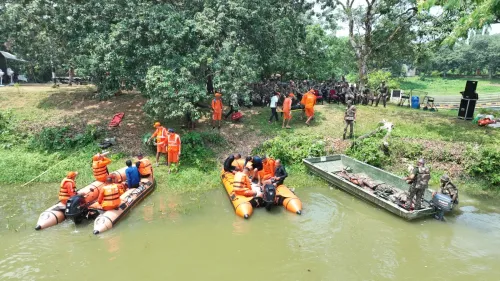
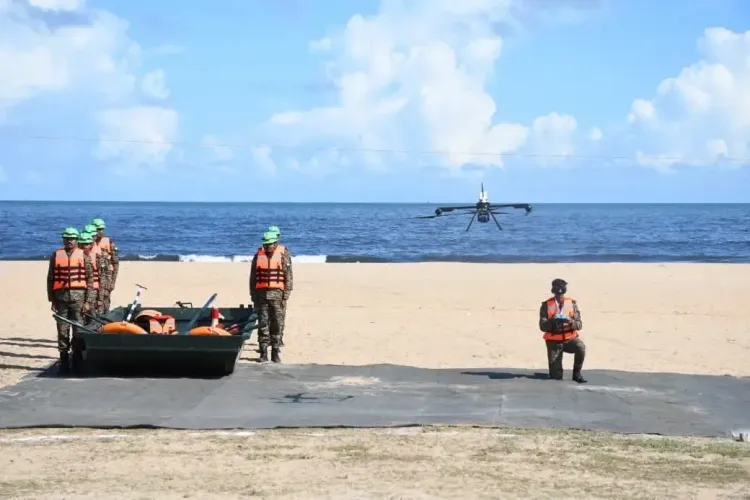
The Indian Army , Indian Navy , and Indian Air Force are demonstrating Flood Relief Columns , rescue operations, dewatering, and bridge-laying capabilities.
The exercise is part of India's broader MAHASAGAR regional security framework.
Last week, the 8th India-Myanmar Army-to-Army Staff Talks were held at Naypyidaw , focusing on joint training and capacity building.
India handed over training simulators to the Myanmar Army during the Naypyidaw visit, reinforcing bilateral military ties.
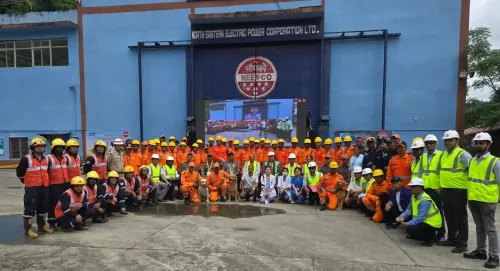
India and Myanmar are conducting Exercise Rahat Mitra, their integrated joint exercise for Humanitarian Assistance and Disaster Relief (HADR), in Chennai from 5 to 7 November 2026. The bilateral drill aims to enhance interoperability in disaster response, with personnel from the Indian Army, Indian Navy, and Indian Air Force participating alongside Myanmar counterparts, according to a statement released by the Indian Embassy in Myanmar.
What the Exercise Involves
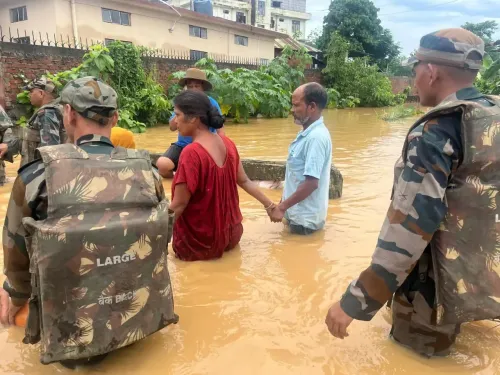
The three-day drill has seen Indian armed forces showcase a range of HADR capabilities including Flood Relief Columns and Engineer Task Forces. Live demonstrations covered rescue operations, dewatering procedures, and bridge-laying techniques designed to restore connectivity in disaster-hit areas.
The Indian Embassy in Myanmar described the exercise as part of the broader MAHASAGAR framework — Mutual and Holistic Advancement for Security and Growth Across Regions — underscoring New Delhi's strategic intent to deepen regional security cooperation through practical, field-level collaboration.
Indian Armed Forces' Role
Army personnel coordinated with the Indian Navy and Indian Air Force to demonstrate integrated disaster response workflows. The Public Relations Officer of the Directorate of Public Relations, Ministry of Defence, Chennai, confirmed the joint capability demonstrations, which focused on scenarios replicating large-scale flood emergencies — a recurring and severe threat across both India's northeast and Myanmar's low-lying river basins.
Backdrop: Bilateral Military Ties Deepening
Exercise Rahat Mitra follows closely on the heels of the 8th India-Myanmar Army-to-Army Staff Talks, held last week at Naypyidaw. Those talks centred on joint training, exercises, capacity building, and professional exchanges between the two militaries. Notably, the Indian Army delegation also met with the Chief of Armed Forces Training, Myanmar Army, to explore new avenues of engagement.
During the Naypyidaw visit, the Indian delegation handed over training simulators to the Myanmar Army, reaffirming New Delhi's commitment to building Myanmar's military capacity. The Indian Army's Additional Directorate General of Public Information confirmed the handover, calling it a step toward 'reinforcing bilateral military ties and mutual trust.'
Strategic Significance
India and Myanmar share a 1,643-kilometre land border, making disaster coordination a practical imperative beyond the diplomatic optics. Both nations are exposed to cyclones, floods, and seismic events, and joint HADR frameworks reduce response time and resource duplication when crises hit border regions. This comes amid India's broader 'Act East' foreign policy push, which increasingly uses defence cooperation and humanitarian frameworks to cement ties with Southeast Asian neighbours. The Chennai exercise signals that military-to-military engagement between the two countries is gaining operational depth, moving beyond ceremonial exchanges toward tested, interoperable response structures.
Exercise Rahat Mitra is scheduled to conclude on 7 November 2026, with outcomes expected to inform future bilateral HADR protocols.
Point of View
Yet India has consistently maintained defence-to-defence links rather than allowing the relationship to atrophy. The timing of Rahat Mitra, coming immediately after the 8th Army-to-Army Staff Talks and the handover of training simulators, suggests a deliberate sequencing: dialogue, then equipment, then joint operations. What mainstream coverage tends to miss is that HADR exercises double as interoperability rehearsals — the same logistics chains, communication protocols, and command structures that move food and rescue boats can, in a crisis, move troops and equipment. For India, keeping that channel functional with Myanmar is as much a border-security calculation as a humanitarian one.
NationPress
6 Nov 2026
Frequently Asked Questions
What is Exercise Rahat Mitra?
Exercise Rahat Mitra is an integrated India-Myanmar joint exercise for Humanitarian Assistance and Disaster Relief (HADR), currently underway in Chennai from 5 to 7 November 2026. It involves coordinated demonstrations by the Indian Army, Indian Navy, and Indian Air Force alongside Myanmar counterparts to enhance interoperability in disaster response.
Where and when is Exercise Rahat Mitra being held?
The exercise is being held in Chennai from 5 to 7 November 2026. It is conducted under India's MAHASAGAR regional security cooperation framework.
What capabilities are being demonstrated at Exercise Rahat Mitra?
Participating forces are showcasing Flood Relief Columns and Engineer Task Forces, with live demonstrations of rescue operations, dewatering procedures, and bridge-laying to restore connectivity — all scenarios modelled on large-scale flood emergencies.
What happened at the India-Myanmar Army-to-Army Staff Talks last week?
The 8th India-Myanmar Army-to-Army Staff Talks were held at Naypyidaw last week, focusing on bilateral military cooperation through joint training, exercises, capacity building, and professional exchanges. India also handed over training simulators to the Myanmar Army during the visit.
Why does India prioritise military cooperation with Myanmar?
India and Myanmar share a 1,643-kilometre land border, making disaster coordination and defence interoperability a strategic necessity. The relationship is also central to India's 'Act East' policy, which uses defence and humanitarian frameworks to strengthen ties with Southeast Asian neighbours.