Assam's ‘Exercise Jal Rahat’: A Major Step in Flood Preparedness
Synopsis
On April 18, the Indian Army's Red Horns Division conducted ‘Exercise Jal Rahat’ in Guwahati, enhancing collaboration among multiple agencies for improved flood response. With advanced technology and community involvement, the exercise aimed to bolster disaster management strategies in flood-prone regions.
Key Takeaways
Enhanced Collaboration: Multiple agencies worked together to improve flood response.
Advanced Technology: Drones were utilized for surveillance and logistical support.
Community Involvement: Emphasis on public participation for effective disaster management.
Operational Readiness: Focus on preparing security forces and response agencies.
Future Commitment: Regular joint training and capacity building planned for improved emergency responses.
Guwahati, April 18 (NationPress) The Red Horns Division of the Indian Army, part of the Gajraj Corps, executed a comprehensive flood relief drill named ‘Exercise Jal Rahat’ at the Indian Institute of Technology Guwahati this Saturday. This initiative aimed to enhance inter-agency collaboration and elevate disaster response capabilities in regions susceptible to flooding, as confirmed by officials.
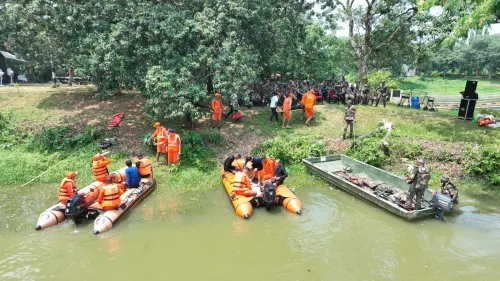
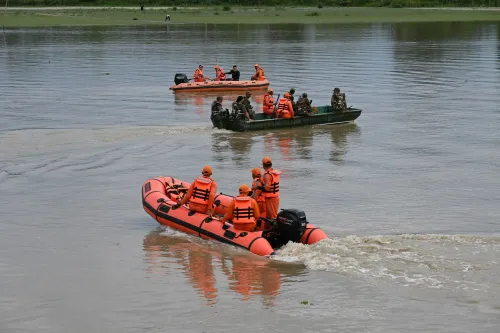
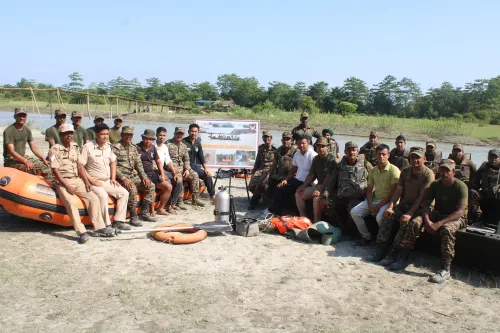
This extensive exercise unified various agencies, including the Army, National Disaster Response Force, State Disaster Response Force, and Sashastra Seema Bal, demonstrating a collaborative strategy to address natural calamities.
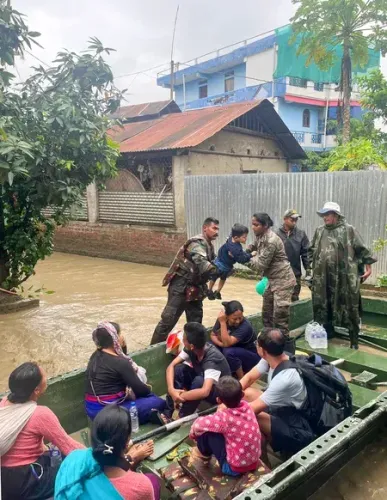
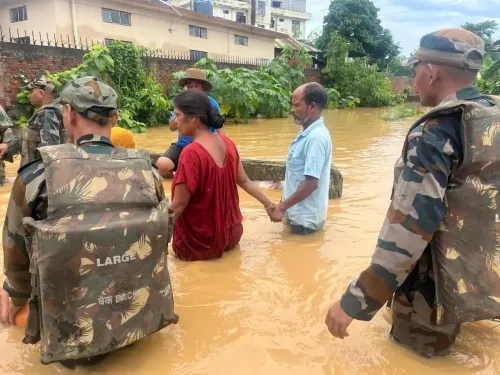
By replicating realistic flood scenarios, the exercise showcased a variety of rescue and relief operations, such as deep-water rescues, the evacuation of trapped civilians, and the use of cutting-edge technology like drones for surveillance and logistical assistance.
Teams displayed synchronized efforts to rescue individuals in perilous situations and deliver immediate aid to impacted communities.
Officials indicated that the primary goal of the exercise was to bolster preparedness and operational efficiency in the face of serious flooding, a persistent issue in Assam and the Northeast.
The drills emphasized the critical nature of interoperability among agencies and the necessity for prompt, coordinated action during emergencies.
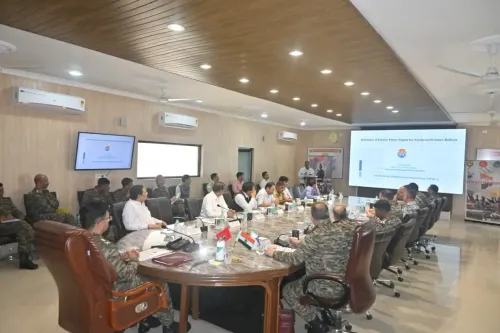
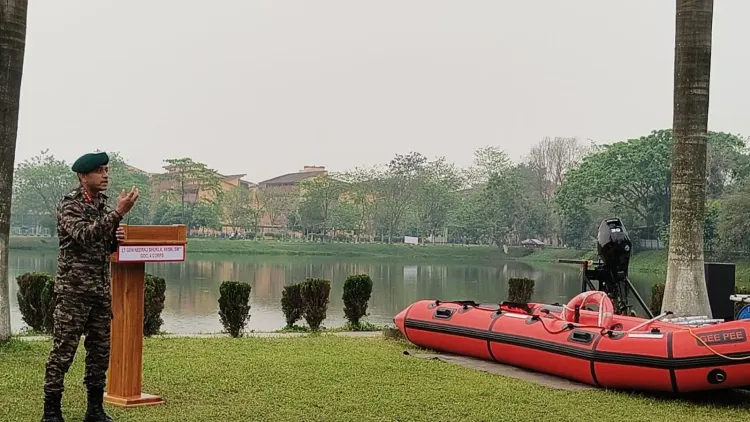
Lieutenant General Neeraj Shukla, the General Officer Commanding of Gajraj Corps, oversaw the operational readiness of all participating units.
While addressing attendees, he highlighted the significance of a “whole-of-society” approach to disaster management and urged all involved to embrace the foundational principles of “Predict, Prepare, Protect, and Provide.”
Shukla further emphasized that community involvement, termed “Janbhagidari,” is vital for effective disaster management and building resilience. The exercise also sought to bolster public confidence in the preparedness of security forces and disaster response teams.
The event attracted senior Army officials, state administration representatives, members of Central Armed Police Forces, and disaster management organizations. Approximately 800 individuals, including National Cadet Corps and National Service Scheme cadets, as well as students from various schools and colleges in Guwahati, observed the drill.
Officials mentioned that the participating agencies have committed to regular joint training, revising standard operating procedures, and investing in capacity-building initiatives to enhance emergency response systems.
This exercise reinforced the primary objective of ensuring public safety through timely and coordinated disaster response.
Frequently Asked Questions
What is ‘Exercise Jal Rahat’?
‘Exercise Jal Rahat’ is a joint flood relief exercise conducted by the Indian Army's Red Horns Division to enhance disaster response capabilities and inter-agency coordination.
Which agencies participated in the exercise?
The exercise included the Indian Army, National Disaster Response Force, State Disaster Response Force, and Sashastra Seema Bal.
Where was the exercise conducted?
The exercise took place at the Indian Institute of Technology Guwahati.
What were the main objectives of the exercise?
The main objectives were to improve preparedness, response efficiency, and community confidence in disaster management.
How many people attended the exercise?
Approximately 800 individuals, including cadets and students, attended the exercise.