India-Namibia ties reviewed a year after PM Modi's historic 2025 state visit
Synopsis
A year after PM Modi's first-ever Indian prime ministerial visit to Namibia — where he received the country's highest civilian honour and signed two MoUs — India's High Commissioner and Namibia's foreign minister met in Windhoek to take stock of what has actually been delivered. With critical minerals, defence, and clean energy on the table, this is more than a diplomatic courtesy call.
Key Takeaways
India's High Commissioner Rahul Shrivastava and Namibia's Selma Ashipala-Musavyi met on 20 July 2026 in Windhoek to review one year of bilateral progress.
The meeting follows PM Modi's July 2025 state visit to Namibia — the first by an Indian prime minister.
Modi was awarded Namibia's highest civilian honour, the 'Order of the Most Ancient Welwitschia Mirabilis' , during the visit.
Two MoUs were signed in 2025 — on an Entrepreneurship Development Centre and on Health and Medicine cooperation.
Namibia joined the Coalition for Disaster Resilient Infrastructure (CDRI) and the Global Biofuels Alliance (GBA) during Modi's visit.
Cooperation areas include defence, digital technology, agriculture, critical minerals , and hydrocarbons .
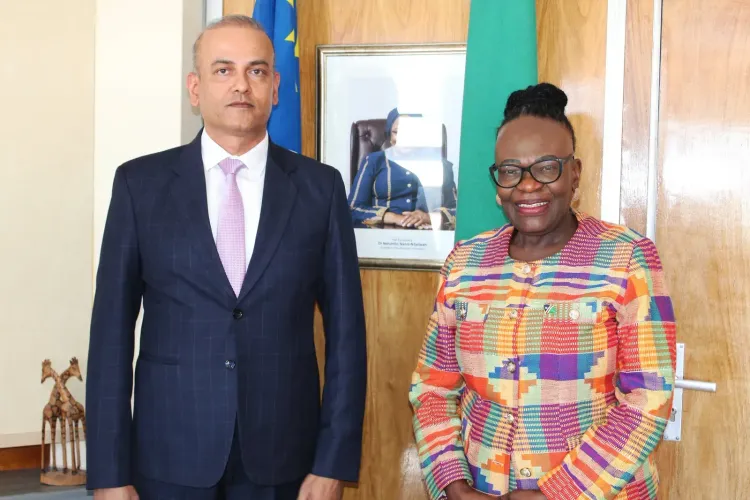
India's High Commissioner to Namibia, Rahul Shrivastava, and Selma Ashipala-Musavyi, Namibia's Minister of International Relations and Cooperation, met on 20 July 2026 in Windhoek to review the progress made in bilateral ties since Prime Minister Narendra Modi's landmark state visit to the southern African nation in July 2025. The meeting signals that both governments are actively tracking the commitments made during what Namibia officially described as a 'historic' visit.
What the Meeting Covered
According to Namibia's Ministry of International Relations and Cooperation, the discussions centred on advancing the implementation of agreed areas of cooperation and identifying fresh opportunities for mutually beneficial collaboration. The ministry noted that the engagement also focused on sustaining the positive momentum that has characterised the bilateral relationship since the state visit.
'The engagement reaffirmed the shared commitment of Namibia and India to deepening their strategic partnership for the mutual benefit of both countries and their peoples,' the ministry stated in an official post on X.
What Modi's 2025 Visit Established
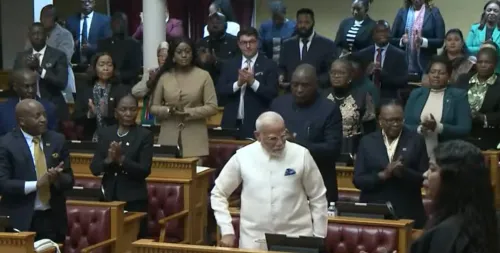
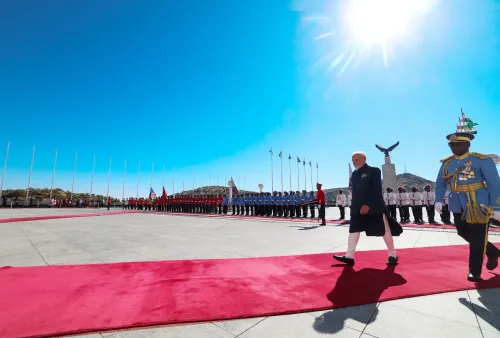
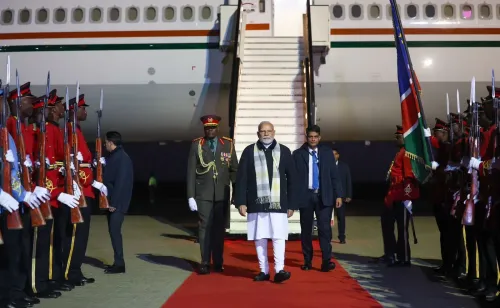
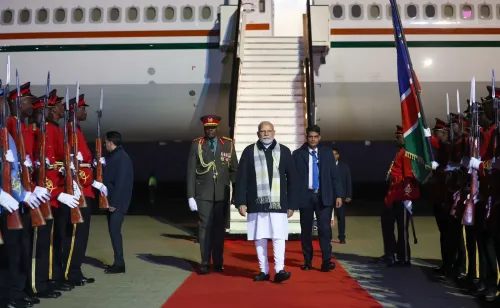
During his July 2025 state visit, Prime Minister Modi became the first Indian head of government to visit Namibia, and was conferred with the country's highest civilian honour, the 'Order of the Most Ancient Welwitschia Mirabilis'. He held talks with Namibian President Netumbo Nandi-Ndaitwah on deepening cooperation across defence, digital technology, agriculture, health, education, critical minerals, and hydrocarbons.
The two leaders witnessed the signing of two Memoranda of Understanding (MoUs) — one on establishing an Entrepreneurship Development Centre in Namibia, and another on Cooperation in the field of Health and Medicine. Namibia also formally joined India-anchored multilateral platforms: the Coalition for Disaster Resilient Infrastructure (CDRI) and the Global Biofuels Alliance (GBA).
Why This Matters
The one-year review meeting is notable for its timing. India has been deepening its strategic footprint across Africa, with critical minerals — an area of explicit focus in the Modi-Nandi-Ndaitwah talks — increasingly central to New Delhi's supply-chain diversification strategy. Namibia holds significant reserves of uranium and rare earth elements, making it a priority partner as India scales up its nuclear and clean energy ambitions.
Notably, the bilateral review comes just weeks ahead of India's broader diplomatic calendar in the region, suggesting that Windhoek remains a key node in India's Africa engagement framework.
What Comes Next
The two sides are expected to continue working on the implementation of the signed MoUs, with the Entrepreneurship Development Centre in particular representing a tangible deliverable that both governments will be tracking. Progress on Namibia's integration into the CDRI and GBA frameworks is also likely to feature in subsequent diplomatic exchanges.
Point of View
And the public readout from Windhoek is notably light on specifics. The MoUs on health and entrepreneurship are yet to produce visible outcomes in the public domain, and Namibia's membership of CDRI and GBA — both India-led platforms — raises the question of reciprocity: what has Namibia concretely gained? The critical minerals angle is the real story here, and it is conspicuously absent from the official language. India's scramble for uranium and rare earths in southern Africa is a strategic imperative that diplomatic communiqués tend to understate. Until those supply-chain conversations produce binding agreements, the partnership risks remaining a well-worded framework in search of execution.
NationPress
20 Oct 2026
Frequently Asked Questions
Why did India and Namibia hold a bilateral review meeting in July 2026?
The meeting on 20 July 2026 was held to assess progress made in the one year since PM Modi's state visit to Namibia in July 2025 — the first by an Indian prime minister. Both sides reviewed implementation of agreed cooperation areas and explored new opportunities for collaboration.
What did PM Modi's 2025 Namibia visit achieve?
PM Modi's July 2025 state visit to Namibia resulted in two MoUs — on setting up an Entrepreneurship Development Centre and on Health and Medicine cooperation — and Namibia's formal entry into the Coalition for Disaster Resilient Infrastructure (CDRI) and the Global Biofuels Alliance (GBA). Modi also received Namibia's highest civilian honour during the visit.
What sectors are covered under India-Namibia bilateral cooperation?
The cooperation framework spans defence, digital technology, agriculture, health, education, critical minerals, and hydrocarbons, as agreed during the Modi-Nandi-Ndaitwah talks in 2025.
What is the significance of Namibia joining the CDRI and Global Biofuels Alliance?
By joining the Coalition for Disaster Resilient Infrastructure (CDRI) and the Global Biofuels Alliance (GBA) — both India-anchored multilateral initiatives — Namibia aligned itself with India's global climate and infrastructure frameworks, deepening institutional ties beyond the bilateral level.
Who represented India and Namibia at the July 2026 review meeting?
India was represented by High Commissioner Rahul Shrivastava, while Namibia was represented by Minister of International Relations and Cooperation Selma Ashipala-Musavyi.