Will the India-Oman Free Trade Agreement Be Operational in 3 Months?
Synopsis
Commerce Minister Piyush Goyal reveals that the India-Oman CEPA, granting zero-duty access to Indian exports, may be operational in three months. This agreement promises significant tariff concessions and enhanced opportunities for both countries, particularly in the services sector. The fast-tracking of this agreement signifies a pivotal moment in international trade relations.
Key Takeaways
CEPA expected to launch in three months.
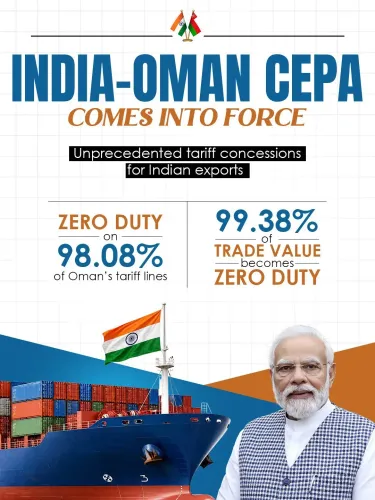
Zero-duty access on 98.08% of tariff lines.
Enhanced opportunities for Indian service providers.
Significant tariff concessions from both nations.
Improved mobility for Indian professionals.
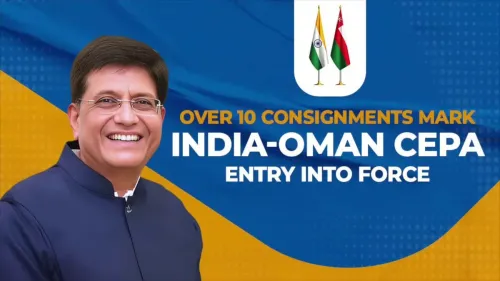
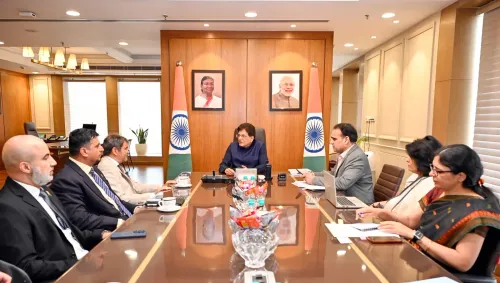
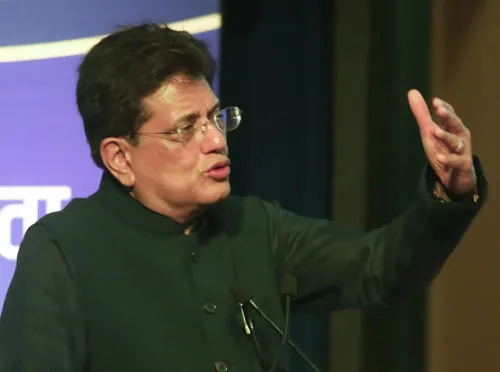
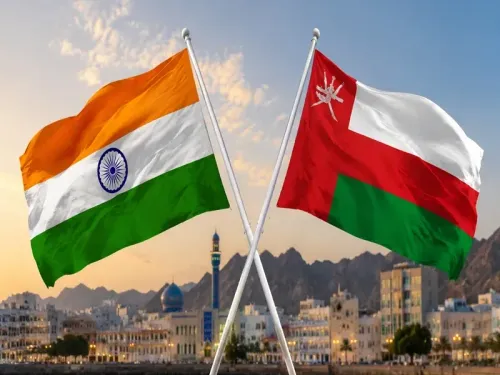
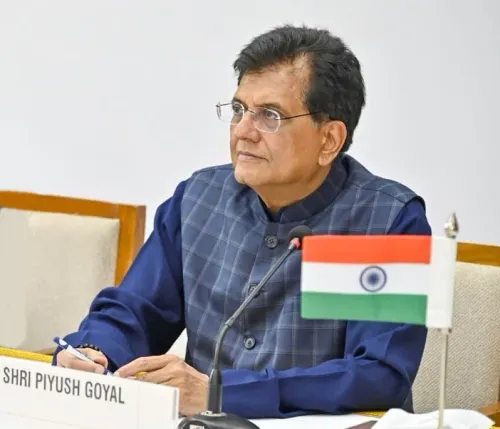
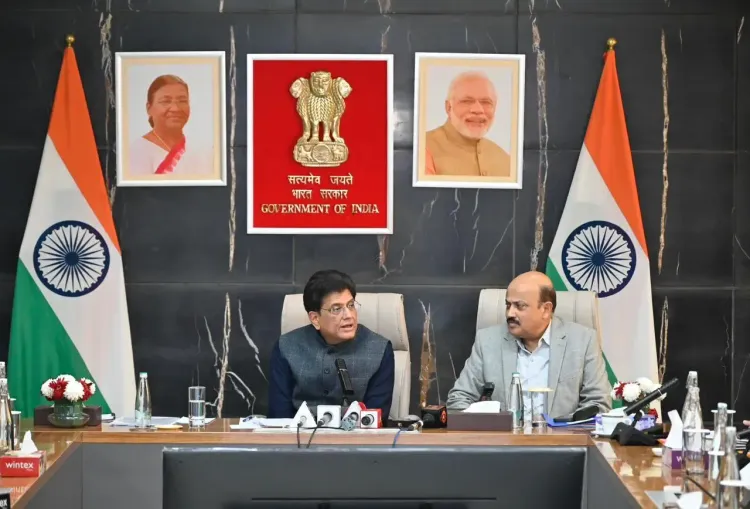
New Delhi, Dec 19 (NationPress) Commerce Minister Piyush Goyal announced on Friday that the Comprehensive Economic Partnership Agreement (CEPA) between India and Oman, which allows for zero-duty access to various Indian labour-intensive exports, is expected to commence within the next three months.
“The Oman-United States trade agreement, finalized in 2006, took almost three years to implement. Drawing lessons from that timeline, both India and Oman have opted for a quicker operationalization of this agreement,” the minister stated during a briefing.
This agreement ensures automatic approvals within 90 days for Indian pharmaceutical products and manufacturing entities recognized by multiple countries.
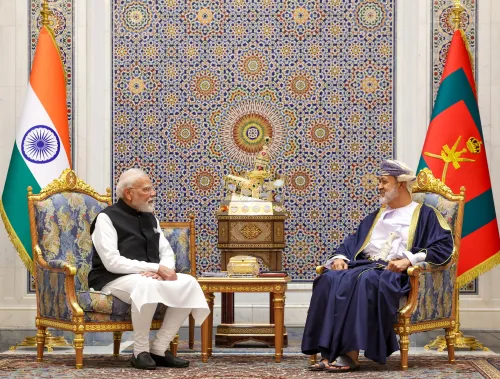
India and Oman formalized the Comprehensive Economic Partnership Agreement (CEPA) on Thursday, coinciding with the second day of Prime Minister Narendra Modi’s visit to Muscat.
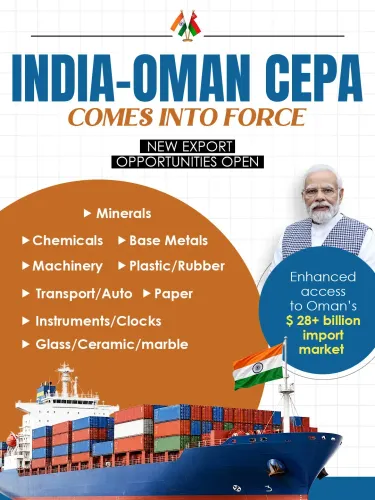
The CEPA guarantees unparalleled tariff concessions for India from Oman, with Oman providing zero-duty access on 98.08% of its tariff lines, which encompasses 99.38% of India's exports to Oman. All significant labour-intensive sectors—including gems & jewellery, textiles, leather, footwear, sports goods, plastics, furniture, agricultural products, engineering products, pharmaceuticals, medical devices, and automobiles—will experience complete tariff elimination.
India is extending tariff liberalization on 77.79% of its total tariff lines, representing 94.81% of India’s imports from Oman by value. For products of export interest to Oman that are sensitive to India, the offer predominantly relies on a tariff-rate quota (TRQ) based tariff liberalization.
To protect its interests, India has kept sensitive products in the exclusion category without offering any concessions, especially for agricultural products like dairy, tea, coffee, rubber, and tobacco; gold and silver bullion, jewellery; and other labour-intensive goods such as footwear and sports equipment.
The services sector, a vital engine of India’s economy, is also set to gain significantly. Oman’s substantial global services imports total $12.52 billion, with India's share in Oman's global imports standing at 5.31%, indicating considerable untapped potential for Indian service providers.
The agreement includes a comprehensive and forward-thinking services package, with Oman making significant commitments across various sectors, including computer-related services, business and professional services, audio-visual services, research and development, education, and health services. These commitments are anticipated to create extensive new opportunities for Indian service providers, foster high-value job creation, and enhance commercial engagement between the two nations.
A key feature of the CEPA is the improved mobility framework for Indian professionals. For the first time, Oman has made extensive commitments under Mode 4, increasing the quota for intra-corporate transferees from 20% to 50%, along with an extended duration of stay for contractual service suppliers—from the current 90 days to two years, with a potential further extension of two years.
The agreement also stipulates more flexible entry and stay conditions for skilled professionals in crucial sectors such as accountancy, taxation, architecture, and medical and allied services, facilitating deeper and more seamless professional collaboration.
Point of View
I believe the swift operationalization of the CEPA between India and Oman is a strategic move that reflects the evolving dynamics of global trade. This agreement not only opens doors for Indian exports but also strengthens bilateral ties with Oman. It shows India's commitment to enhancing its economic footprint globally while safeguarding its interests in sensitive sectors. The focus on services, a key driver of India's economy, demonstrates forward-thinking in utilizing untapped potential.
NationPress
1 Oct 2026
Frequently Asked Questions
What is the Comprehensive Economic Partnership Agreement (CEPA)?
The Comprehensive Economic Partnership Agreement (CEPA) is a trade agreement between India and Oman that facilitates zero-duty access for a range of Indian exports and promotes economic cooperation across various sectors.
How long will it take for the CEPA to become operational?
Commerce Minister Piyush Goyal indicated that the CEPA is expected to become operational within three months.
What sectors will benefit from the CEPA?
The CEPA will benefit numerous sectors, including gems & jewellery, textiles, pharmaceuticals, and services, by providing enhanced access and tariff concessions.
How does the CEPA affect Indian service providers?
The CEPA introduces substantial commitments from Oman in various service sectors, promoting opportunities for Indian service providers and enhancing job creation.
What are the mobility provisions for Indian professionals under CEPA?
The CEPA includes improved mobility provisions for Indian professionals, increasing the quota for intra-corporate transferees and extending the duration of stay for contractual service suppliers.