India showcases four Labour Codes, key employment gains at ILO Geneva conference
Synopsis
At the 114th ILO conference in Geneva, India made the case that consolidating 29 labour laws into four codes has delivered measurable results — unemployment halved to 3.1%, women's workforce participation jumped to 38.8%, and social protection now covers over a billion people. Whether these numbers hold up to independent scrutiny will determine how seriously the global labour community takes India's reform pitch.
Key Takeaways
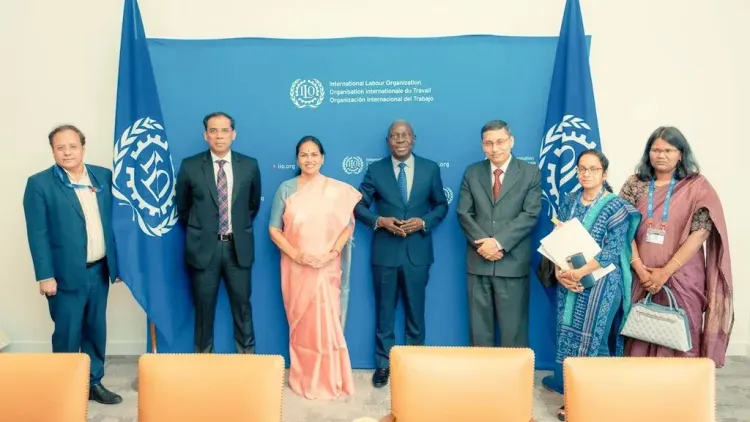
Shobha Karandlaje led India's delegation at the 114th International Labour Conference in Geneva on 11 June 2025 .
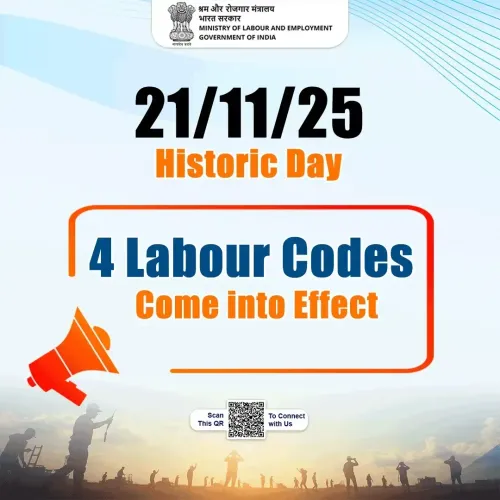
India consolidated 29 Central Labour Laws into four Labour Codes to simplify compliance and strengthen worker protections.
Youth employability rose from 34% in 2014 to over 56% in 2025 ; unemployment fell from 6% in 2017 to 3.1% in 2025 .
Women's workforce participation surged from 22% to 38.8% over the same period.
Social protection coverage has reached 68.4% of India's population, covering 1,001 million beneficiaries , per preliminary ILO estimates.
Rwanda and Sri Lanka engaged India on bilateral cooperation in labour reforms and digital employment platforms.
Union Minister of State for Labour and Employment Shobha Karandlaje led India's delegation at the 114th International Labour Conference (ILC) in Geneva, Switzerland, presenting the country's sweeping labour reforms and significant employment milestones to the global body. India highlighted the consolidation of 29 Central Labour Laws into four Labour Codes — a structural overhaul designed to simplify compliance, strengthen workers' welfare, and build a modern, transparent labour ecosystem guided by the principle of 'Antyodaya'.
Key Employment Gains Presented at the Conference
Addressing the Plenary Session, Karandlaje cited a series of labour market improvements over the past decade. Youth employability in India has climbed from 34 per cent in 2014 to over 56 per cent in 2025, according to the minister's address. Unemployment, meanwhile, fell from 6 per cent in 2017 to 3.1 per cent in 2025.
Notably, women's workforce participation registered a sharp rise — from 22 per cent to 38.8 per cent over the same period — a figure the delegation highlighted as a structural shift in India's labour landscape. The Pradhan Mantri Viksit Bharat Rozgar Yojana, aimed at boosting employment generation, was also presented as part of India's active labour market policy arsenal.
Social Protection Coverage Crosses 1 Billion Beneficiaries
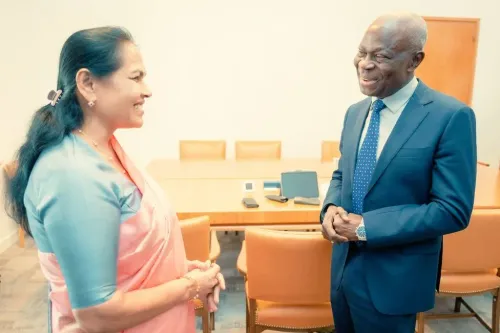
In a bilateral meeting with Gilbert F. Houngbo, Director-General of the International Labour Organisation (ILO), Karandlaje reaffirmed India's commitment to advancing decent work, social justice, and inclusive growth. She briefed Houngbo on the expansion of India's social protection coverage, which, according to preliminary ILO estimates, has reached 68.4 per cent of the total population — corresponding to 1,001 million beneficiaries.
Digital Public Goods and Bilateral Engagements
India spotlighted the National Career Service Portal and the e-Shram Portal as scalable Digital Public Goods, offering technical assistance and capacity-building support to partner nations for developing digital employment platforms. Karandlaje also held a bilateral with Christine Nkulikiyinka, Minister of Public Service and Labour of Rwanda, focusing on cooperation in employment services, skilling, workforce planning, and digital governance.
A separate meeting with Sri Lankan Labour Minister Anil Jayantha Fernando saw Sri Lanka express strong interest in India's four New Labour Codes and seek insights into their implementation. This comes amid broader efforts by India to position its labour reform model as a template for developing economies.
What the Four Labour Codes Mean
The consolidation of 29 Central Labour Laws into four codes — covering wages, industrial relations, social security, and occupational safety — is among the most significant restructuring of India's labour framework in decades. The stated aim is to reduce compliance burden for employers while expanding formal protections for workers, including those in the gig and informal economy. Full implementation across states, however, remains a work in progress.
As India continues to advocate its reform model on multilateral platforms, the focus will increasingly shift to whether the headline numbers translate into sustained, quality employment — particularly for women and youth entering the formal workforce.
Point of View
But they draw from a mix of government surveys and ILO preliminary estimates, which carry methodological caveats. The jump in women's workforce participation from 22% to 38.8% is the most consequential claim and deserves independent verification — because if real, it represents a structural labour market shift, not just a policy win. The gap between federal legislation and state-level implementation remains the reform's weakest link, and no multilateral stage appearance changes that.
NationPress
13 Sept 2026
Frequently Asked Questions
What are India's four Labour Codes?
India consolidated 29 Central Labour Laws into four Labour Codes covering wages, industrial relations, social security, and occupational safety. The aim is to reduce compliance complexity for employers while expanding formal protections for workers, including those in the gig and informal economy.
What employment statistics did India present at the ILO conference?
India reported that youth employability rose from 34% in 2014 to over 56% in 2025, unemployment fell from 6% in 2017 to 3.1% in 2025, and women's workforce participation climbed from 22% to 38.8% over the same period.
How many people does India's social protection system now cover?
According to preliminary ILO estimates cited by the Indian delegation, India's social protection coverage has reached 68.4% of the total population, corresponding to approximately 1,001 million beneficiaries.
What is the Pradhan Mantri Viksit Bharat Rozgar Yojana?
It is a government scheme aimed at promoting employment generation in India, highlighted at the ILO conference as part of India's active labour market policy. Specific outlay and target details were not elaborated in the conference statement.
Which countries held bilateral meetings with India at the ILO conference?
India held bilateral meetings with Rwanda and Sri Lanka on the sidelines of the 114th ILC. Rwanda discussed cooperation in employment services and digital governance, while Sri Lanka expressed interest in adopting India's four Labour Codes model.