India repatriated 274 fugitives from 36 nations since 2019, Centre says
Synopsis
India’s repatriation of 274 fugitives from 36 countries since 2019 is not just a law-enforcement milestone — it reflects a deliberate institutional overhaul. The launch of BHARATPOL, a near-fivefold jump in Red Corner Notices since 2022, and the Tahawwur Rana extradition signal that India is now willing to pursue fugitives across complex jurisdictions, not just easy bilateral cases.
Key Takeaways
India repatriated 274 fugitive criminals from 36 countries between 2019 and July 2026 , the MHA announced on 4 August 2026 .
BHARATPOL , launched in January 2025 , links over 1,400 law enforcement agencies with INTERPOL , cutting response times to 3–10 days in some cases.
INTERPOL Red Corner Notices surged from 40 in 2022 to 182 in 2026 so far; 401 notices issued in the past three years.
Assets worth ₹17,874 crore attached under PMLA ; restitution of ₹762 crore carried out between 2019 and 2026.
The extradition of Tahawwur Hussain Rana from the United States was cited as a landmark case in India’s counter-terror extradition efforts.
A Standing Focus Group under the Multi Agency Centre was established in January 2026 to further coordinate fugitive tracking.
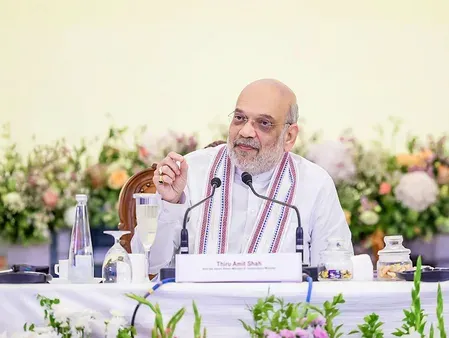
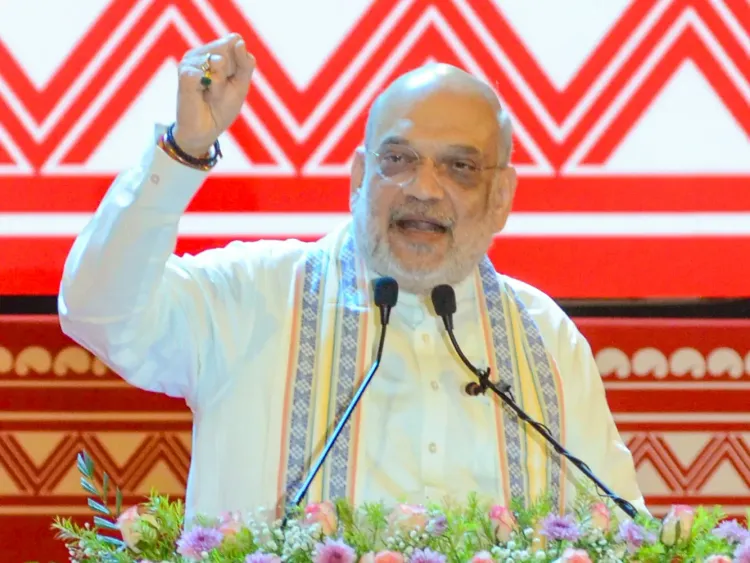
India has successfully repatriated 274 fugitive criminals from 36 countries between 2019 and July 2026, the Ministry of Home Affairs (MHA) announced on Tuesday, 4 August 2026, describing the drive as a national priority under the leadership of Prime Minister Narendra Modi and Union Home Minister Amit Shah. The fugitives include individuals wanted in cases ranging from terrorism and organised crime to financial fraud, narcotics trafficking, and offences under the Protection of Children from Sexual Offences (POCSO) Act.
Legal Framework Strengthened
The Centre said the legal architecture underpinning the campaign has been substantially overhauled. Key instruments include the Fugitive Economic Offenders Act, 2018, amendments to the National Investigation Agency (NIA) Act and the Unlawful Activities (Prevention) Act (UAPA) in 2019, and provisions under the Bharatiya Nagarik Suraksha Sanhita (BNSS) that permit trials in absentia under Sections 355 and 356.
The MHA stated that the government’s approach rests on three pillars: global outreach, stronger inter-agency coordination, and smart diplomacy. According to the Ministry, previous administrations ‘lacked the political will’ to pursue fugitives, whereas the current government has made extradition a stated national priority.
BHARATPOL and the Red Corner Notice Surge
A significant institutional development was the launch of BHARATPOL in January 2025 — an integrated platform connecting more than 1,400 state and central law enforcement agencies with INTERPOL. The MHA said the platform has sharply reduced information-exchange timelines, with responses in certain cases now arriving within three to ten days.
The government also reported a steep rise in INTERPOL Red Corner Notices: from 40 in 2022 to 100 in 2023, 107 in 2024, 112 in 2025, and 182 so far in 2026. In total, 401 Red Corner Notices were issued over the past three years.
Operation Trishul and Technology-Driven Tracking
The Ministry highlighted Operation Trishul as a key tool in the campaign, deploying satellite inputs, surveillance systems, digital footprints, and profile mapping to identify fugitives who had altered their identities while hiding abroad. Video conferencing has also been used to accelerate extradition proceedings, reducing delays caused by geographic distance.
Notably, the extradition of Tahawwur Hussain Rana from the United States was cited as a landmark case demonstrating India’s resolve in pursuing complex, long-standing terror-linked matters through sustained legal and diplomatic channels.
Financial Enforcement and Asset Recovery
On the economic front, properties and assets worth ₹17,874 crore belonging to fugitive criminals were attached under the Prevention of Money Laundering Act (PMLA) between 2019 and 2026. Restitution amounting to ₹762 crore was also carried out during the same period, including recoveries linked to economic offenders who had fled the country.
Agencies Involved and What Comes Next
The campaign has been driven by coordinated action among the Intelligence Bureau (IB), Central Bureau of Investigation (CBI), Research and Analysis Wing (R&AW), NIA, Enforcement Directorate (ED), Ministry of External Affairs (MEA), Narcotics Control Bureau (NCB), Directorate General of GST Intelligence (DGGI), and various state police forces.
In January 2026, a Standing Focus Group under the Multi Agency Centre (MAC) was established to further strengthen India’s fugitive management framework. The MHA also flagged the Jammu and Kashmir dimension, noting that fugitives operating from abroad have frequently been used to sustain terrorism, narco-terrorism, and cross-border support networks in the region. With the institutional scaffolding now in place, the pace of repatriations — and the volume of Red Corner Notices — is expected to continue rising through 2026.
Point of View
But the more telling metric is the Red Corner Notice trajectory: from 40 in 2022 to 182 in 2026. That acceleration suggests the institutional machinery, particularly BHARATPOL and the MAC Focus Group, is beginning to operate at scale rather than on a case-by-case basis. What the MHA statement does not address is the gap between fugitives identified and fugitives actually returned — the 401 notices against 274 repatriations implies a substantial cohort still at large. The Tahawwur Rana extradition, while politically high-profile, took years of litigation; the true test of this framework will be whether it can compress timelines on complex cases, not just low-hanging bilateral transfers.
NationPress
19 Sept 2026
Frequently Asked Questions
How many fugitives has India brought back since 2019?
India has repatriated 274 fugitive criminals from 36 countries between 2019 and July 2026, according to the Ministry of Home Affairs. The fugitives were wanted in cases involving terrorism, financial fraud, narcotics, organised crime, and offences under the POCSO Act.
What is BHARATPOL and how does it help track fugitives?
BHARATPOL, launched in January 2025, is an integrated platform connecting more than 1,400 state and central law enforcement agencies with INTERPOL. It has significantly reduced information-exchange timelines, with responses in certain cases now received within three to ten days.
How many INTERPOL Red Corner Notices has India issued in recent years?
India issued 40 Red Corner Notices in 2022, rising sharply to 100 in 2023, 107 in 2024, 112 in 2025, and 182 so far in 2026. In total, 401 notices were issued over the past three years.
What is Operation Trishul?
Operation Trishul is a technology-driven initiative that uses satellite inputs, surveillance systems, digital footprints, and profile mapping to trace fugitives who have changed their identities while hiding abroad. It is one of the key tools in India’s fugitive-tracking framework.
How much in assets has India seized from fugitive criminals?
Properties and assets worth ₹17,874 crore belonging to fugitive criminals were attached under the Prevention of Money Laundering Act between 2019 and 2026. Restitution amounting to ₹762 crore was also carried out during the same period.