India Slams Trump's 'Hellhole' Immigrant Remarks as Inappropriate
Synopsis
India's Ministry of External Affairs delivered a rare, blunt rebuke to US President Donald Trump after he shared a post calling nations including India a 'hellhole' and targeting Indian-American communities. The MEA called the remarks 'uninformed and in poor taste,' while Indian-American groups warned the rhetoric endangers their communities amid rising xenophobia.
Key Takeaways
India's MEA on April 23 called Trump's social media post "uninformed, inappropriate and in poor taste" — one of the sharpest public rebukes of a US President by New Delhi in recent memory.
Trump's post referred to immigrants from India and China arriving from "hellholes on the planet" and alleged white men face job discrimination in California's tech sector.
The Hindu American Foundation condemned the post as a "hateful, racist screed" and warned it would endanger Indian-American and Chinese-American communities.
The US Embassy had already issued a distancing statement before India's formal response, indicating active diplomatic engagement behind the scenes.
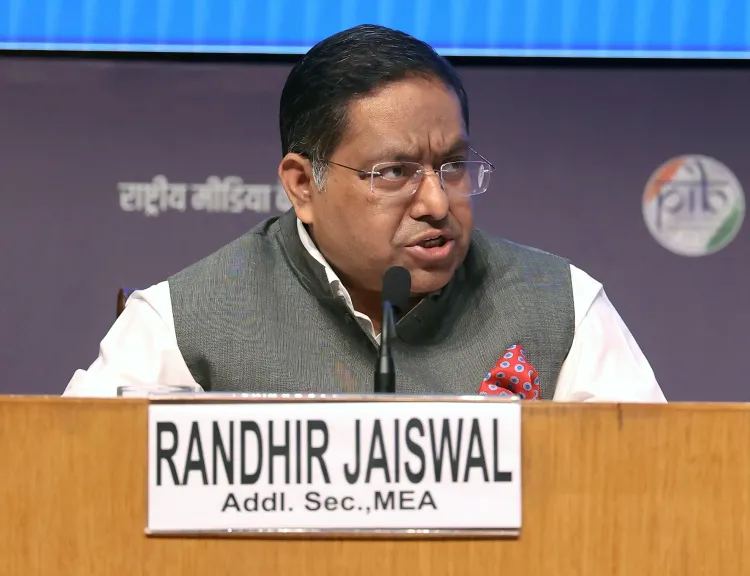
MEA Spokesperson Randhir Jaiswal reaffirmed that India-US relations are built on "mutual respect and shared interests" — implicitly rejecting the tone of Trump's remarks.
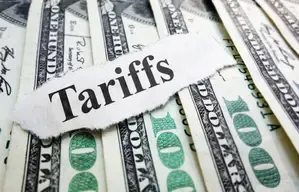
The episode adds new friction to India-US ties already under pressure from tariff disputes and H-1B visa tightening under Trump's second term .
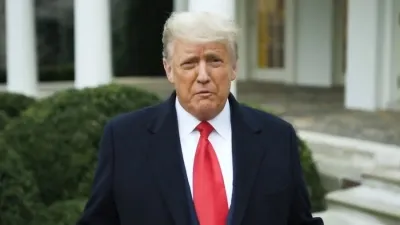
New Delhi, April 23: India issued a sharp diplomatic rebuke on Thursday after US President Donald Trump shared a social media post containing derogatory references to immigrants from India and China, with the Ministry of External Affairs (MEA) declaring the remarks "obviously uninformed, inappropriate and in poor taste." The statement marks one of the most direct public responses from New Delhi to a sitting US President's remarks in recent years.
India's Official Response
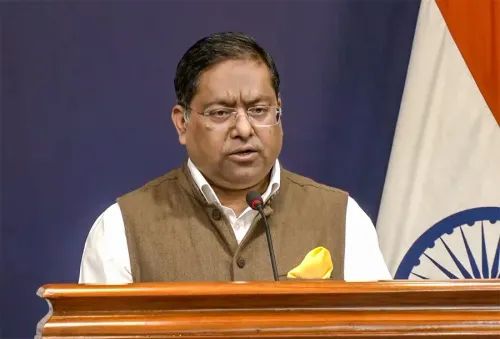
MEA Spokesperson Randhir Jaiswal addressed the controversy at a press briefing, stating: "We have seen the comments, as also the subsequent statement issued by the US Embassy in response. The remarks are obviously uninformed, inappropriate and in poor taste. They certainly do not reflect the reality of the India-US relationship, which has long been based on mutual respect and shared interests."
The measured yet firm response signals that New Delhi is unwilling to overlook rhetoric that directly targets Indian nationals and the Indian-American diaspora, even as it seeks to preserve the broader strategic partnership with Washington. Notably, the US Embassy had already issued a clarifying statement before India's formal response, suggesting diplomatic back-channels were active.
What Trump's Post Actually Said
Trump's post contained sweeping and inflammatory claims about birthright citizenship, immigration policy, and demographics. Among the most controversial lines was the assertion that "a baby here becomes an instant citizen, and then they bring the entire family in from China or India or some other hellhole on the planet."
The post also alleged racial discrimination in California's hiring practices, claiming: "White men need not apply to jobs in the state of California. You're not getting a job at high-tech firms in California." These remarks directly implicate the large Indian-American tech workforce concentrated in Silicon Valley.
Trump also attacked the American Civil Liberties Union (ACLU), labelling it "a gangster criminal organisation" and claiming it had "done more damage to this nation than Iran has ever done directly to this nation."
Backlash from Indian-American Community
The post drew swift and fierce condemnation from Indian-American organisations. The Hindu American Foundation said it was "deeply disturbed" by the content, releasing a statement that read: "We are deeply disturbed by @POTUS sharing this hateful, racist screed targeting Indian and Chinese Americans."
The foundation further warned that "endorsing such rants as the president of the United States will further stoke hatred and endanger our communities, at a time when xenophobia and racism are already at an all-time high." The statement reflects growing anxiety within the 3.2 million-strong Indian-American community — one of the most economically influential diaspora groups in the United States.
Deeper Context: India-US Relations Under Strain
This incident comes against a complex diplomatic backdrop. India and the United States have deepened defence, trade, and technology ties significantly since 2020, with Prime Minister Narendra Modi and Trump cultivating a personal rapport during Trump's first term. However, Trump's second term has already introduced friction points — including new tariff threats and tightening of H-1B visa norms that disproportionately affect Indian tech professionals.
Critically, the Indian-American community contributed significantly to Trump's 2024 electoral coalition in key swing states. Critics argue the post represents a troubling contradiction — courting Indian-American votes while simultaneously sharing content that demeans their heritage and communities.
This is not the first time derogatory language about India has emerged from US political discourse, but it is rare for such language to be amplified directly by a sitting US President. The MEA's unusually direct public pushback — rather than quiet diplomatic messaging — suggests New Delhi calculated that silence would be misread as acceptance.
What Happens Next
Diplomatic observers will closely watch whether Trump issues any clarification or retraction following the US Embassy's distancing statement and India's formal rebuke. The episode is likely to be raised in upcoming bilateral diplomatic engagements, particularly as both nations navigate sensitive trade negotiations and the Quad alliance framework.
For the Indian-American community, advocacy groups have signalled they will continue to demand accountability, with some calling for formal Congressional responses. The broader implication for US immigration policy — especially birthright citizenship legislation that Trump has repeatedly sought to challenge — remains a live and consequential debate that directly affects tens of thousands of Indian families annually.
Point of View
And the choice to do so suggests the MEA calculated that silence risked being interpreted as endorsement. The deeper irony is glaring: Trump actively courted Indian-American voters in 2024, yet is now amplifying content that calls their ancestral homeland a 'hellhole.' This contradiction exposes the transactional and volatile nature of identity politics in Trump's America. For India, the challenge is to protect diaspora dignity and national honour without derailing a strategic partnership that serves vital security and economic interests — a tightrope that will only get harder to walk.
NationPress
19 Sept 2026
Frequently Asked Questions
What did India say about Trump's post on immigrants from India?
India's Ministry of External Affairs called Trump's social media post 'obviously uninformed, inappropriate and in poor taste.' MEA Spokesperson Randhir Jaiswal stated the remarks do not reflect the reality of the India-US relationship, which is based on mutual respect.
What did Trump say about India in his social media post?
Trump's post claimed that babies born in the US to immigrant parents bring 'the entire family in from China or India or some other hellhole on the planet.' The post also alleged racial bias against white men in California's tech hiring.
How did Indian-American groups react to Trump's immigrant remarks?
The Hindu American Foundation said it was 'deeply disturbed' by the post, describing it as a 'hateful, racist screed targeting Indian and Chinese Americans.' The group warned the remarks would stoke hatred and endanger communities at a time of rising xenophobia.
Did the US Embassy respond to Trump's post about India?
Yes, the US Embassy issued a statement in response to Trump's post before India's formal diplomatic rebuke. India's MEA acknowledged the Embassy's statement while still formally registering its objection to the remarks.
How does this affect India-US relations?
While India-US ties remain strategically important — spanning defence, trade, and technology — this incident adds friction at a sensitive time of ongoing tariff negotiations and H-1B visa scrutiny. Diplomatic observers expect the matter to be raised in upcoming bilateral engagements.